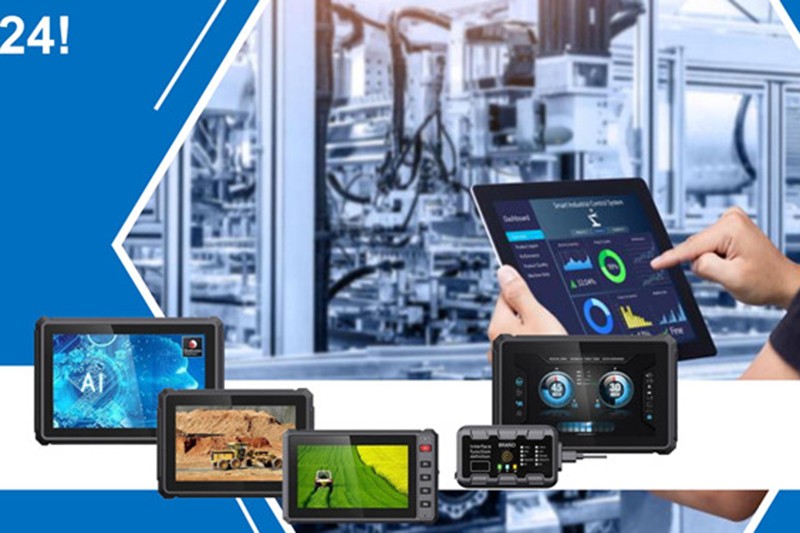

PDS Participated in Japan IT Week 2024: What That Signals for Industrial Buyers
When people search for PDS Participated, they are usually trying to answer a practical question: did the company show up in the right market, in the right format, and with the kind of industrial capability that matters to buyers? In the case of PDS Participated Rugged Industrial Solutions at Japan IT Week 2024, the answer is less about event buzz and more about what trade-show participation tells sourcing teams, product managers, and OEM buyers about readiness, positioning, and supply-chain fit.
That matters because exhibition presence is not just marketing theater. For industrial and contract-manufacturing buyers, it can be one of the few quick signals that a supplier is active in export markets, understands product expectations, and is willing to be evaluated face to face. A fair caveat: a booth alone does not prove process maturity. Still, it does help narrow the field before a buyer spends time on sampling, audits, and pricing discussions.
Why trade-show participation still matters in industrial sourcing
In manufacturing, a trade show is often a compressed version of the supplier evaluation process. Buyers can see whether a company speaks the language of engineering trade-offs, whether it can explain material choices plainly, and whether it can handle the unglamorous parts of production: sampling, packaging, QC, and export documentation. That is especially relevant when the focus is rugged industrial solutions, where reliability and repeatability tend to matter more than flashy presentation.
Japan IT Week 2024, in particular, sits in a market where buyers typically expect discipline, clarity, and follow-through. For any company exhibiting there, the implied message is that it is looking to serve customers who care about specification detail and supply stability. For sourcing managers, that is worth noticing. It is also worth checking whether the showcased offering connects to an actual production system or is merely a concept demo.
What buyers should look for when a supplier participates in a major exhibition
Not all trade-show appearances mean the same thing. A serious buyer should look for evidence that the company can support the product beyond the event floor. A good starting point is the supplier’s operational depth: how it handles design, material sourcing, prototyping, inspection, and mass production.
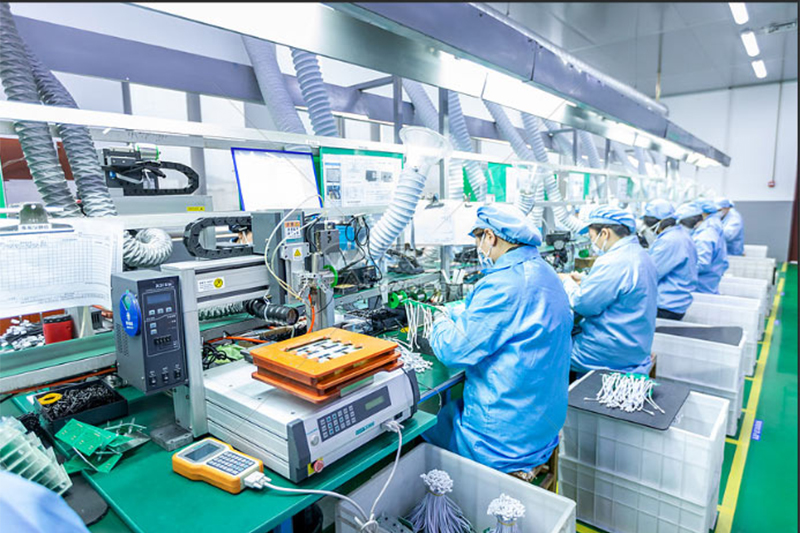
Hanlin Industrial Co., Ltd., for example, presents itself as an OEM/ODM provider founded in 2004, with a manufacturing base in Guangzhou and a workflow that includes product design and development, sampling and prototype production, mass production, quality control and inspection, customized packaging, and global logistics support. That kind of end-to-end setup is what buyers generally want behind a show appearance. It suggests the company is not just presenting a finished sample, but can move a concept through production and shipment.
A few details matter here:
- An in-house design capability can shorten early-stage development cycles.
- A material library can help when a buyer needs faster iteration on look, feel, durability, or cost.
- Sampling capacity is useful, but only if it connects to stable mass production.
- Export handling is often underestimated until the shipment is delayed by paperwork.
Those are the practical checkpoints. They are not glamorous, but they decide whether a supplier can actually be used.
Quick reference: what PDS Participated may indicate to buyers
If a buyer sees PDS Participated associated with Japan IT Week 2024, the likely takeaway is not a finished procurement answer. It is an early signal.
Potential positives
- The company is active in a relevant international market.
- It is willing to present capabilities in a competitive setting.
- The brand wants visibility with industrial and technology-focused audiences.
Questions to verify
- Is the exhibition tied to actual production capability?
- Can the supplier handle OEM or ODM work, not just display products?
- Does the company have the scale for repeat orders?
- Are quality controls and packaging managed in-house or through dependable partners?
That balance between signal and verification is where good sourcing decisions are made. A show appearance should move a company onto the shortlist, not straight onto the approved-supplier list.
How Hanlin’s OEM/ODM model fits buyer expectations
Hanlin Industrial’s background is useful because it shows a manufacturer that grew from leather goods export work into a broader OEM/ODM solution provider. That kind of evolution is common in Asia’s contract manufacturing sector. The important part is not the origin story itself, but what it tends to produce: experience with materials, attention to styling and construction, and an understanding that buyers need both responsiveness and consistency.
The company says it supports:
- product design and development
- material sourcing
- sampling and prototype production
- mass production
- quality control and inspection
- customized packaging
For buyers, that combination is valuable because it reduces handoffs. Fewer handoffs usually means fewer opportunities for version confusion, sample drift, or packaging mistakes. A buyer still needs to ask for drawings, reference samples, test expectations, and approval steps, of course. But a manufacturer that owns more of the process can often move faster and communicate more clearly.
Hanlin also states that it has 500+ skilled employees, a 10,000 sq. ft. manufacturing facility, in-house design studios, more than 100 new samples weekly, and 80,000+ units monthly capacity. Those are useful scale indicators. They do not replace diligence, but they do help a buyer judge whether the supplier is more suited to small-batch development, growing private-label programs, or larger recurring orders.
Why rugged industrial solutions demand a different kind of supplier
Rugged industrial solutions are not bought the same way as consumer accessories or seasonal products. Even when the form factor looks simple, the buyer often cares about wear resistance, consistent finishing, structural durability, and predictable assembly. Small defects that might be tolerated in a promotional item can become unacceptable in industrial use.
That is why trade-show participation tied to rugged products is worth a closer look. If a supplier is presenting in a technology-forward or industrial setting, the buyer should ask how the product is made, what materials are used, and how quality is checked from sample to shipment. General promises are cheap. A clear process is more useful.
A practical warning here: do not overread a strong booth presentation. Some suppliers are very good at presentation but weak on repeatability. Others are quieter and more reliable. The real test is whether the supplier can document its process and stand behind the result.
Selection criteria buyers should use after the show
After an event like Japan IT Week 2024, the smartest next step is to rank suppliers by operational fit, not by booth design. A simple buyer checklist usually works better than a long wish list.
Consider these factors:
- Does the supplier offer both OEM and ODM support?
- Can it move from concept to sample to mass production without losing the design intent?
- Is the communication fast and technical enough for engineering questions?
- Are packaging and logistics part of the service, or left to the buyer?
- Is there evidence of export experience to North America, Europe, or other target markets?
- Does the supplier appear able to handle confidentiality and design protection?
Hanlin’s company profile suggests it is built for this sort of evaluation. Its stated customer base includes international fashion brands, private label brands, wholesalers and distributors, e-commerce sellers, department stores, and boutique retailers. While that is not the same as proving a fit for every rugged industrial program, it does suggest familiarity with different buyer types and different order structures.
Common mistakes buyers make when evaluating exhibition-led suppliers
One mistake is assuming that a trade-show presence equals product maturity. It often does not. Another is focusing only on initial sample quality while ignoring whether the factory can repeat that quality over a full run. A third is failing to check packaging and shipping handling, which can become a hidden source of defects.
There is also a tendency to ask for too much too early or too little too late. Buyers sometimes skip the basic questions on materials, inspection points, and approval steps, then wonder why the second and third samples drift away from the first. A little discipline early on usually saves a lot of noise later.
What to ask Hanlin or any similar supplier after an event like Japan IT Week
If PDS Participated caught your attention and you are evaluating a company like Hanlin Industrial, start with direct questions:
- Which parts of the program are handled in-house?
- What is the sample development path from brief to prototype?
- How does the team manage quality control during mass production?
- What customization options exist for materials and packaging?
- What shipping modes are typically supported for overseas orders?
Those questions are basic, but they reveal whether the supplier is organized around real production or just promotional visibility. For buyers, that is usually the difference between an interesting lead and a usable partner.
FAQ
Does PDS Participated by itself prove a supplier is qualified?
No. It only indicates visibility and market activity. Qualification still depends on sampling, process control, communication, and order performance.
Why is Japan IT Week 2024 relevant to industrial buyers?
Because it places suppliers in front of a market that tends to value precision, documentation, and practical product readiness.
What should buyers prioritize first after a trade show?
Start with production capability, quality control, and whether the supplier can support your order structure over time.
A sensible next step
If you are reviewing PDS Participated in the context of Japan IT Week 2024, use it as a lead-generation cue, not a final verdict. Shortlist the supplier, request process details, and compare it against other OEM/ODM candidates on the parts that actually affect delivery: development speed, material control, inspection discipline, and export support.
For buyers looking for a manufacturing partner with design, sampling, production, and logistics support under one roof, Hanlin Industrial Co., Ltd. is the kind of supplier worth vetting carefully. The company’s stated scale, export background, and integrated service model make it relevant to teams that need more than a factory quote. They need a partner who can help carry a product from idea to shipment without unnecessary drama, which, in manufacturing, is often the real measure of competence.