
PDS Technology and Why the Term Keeps Showing Up in Agriculture Conversations
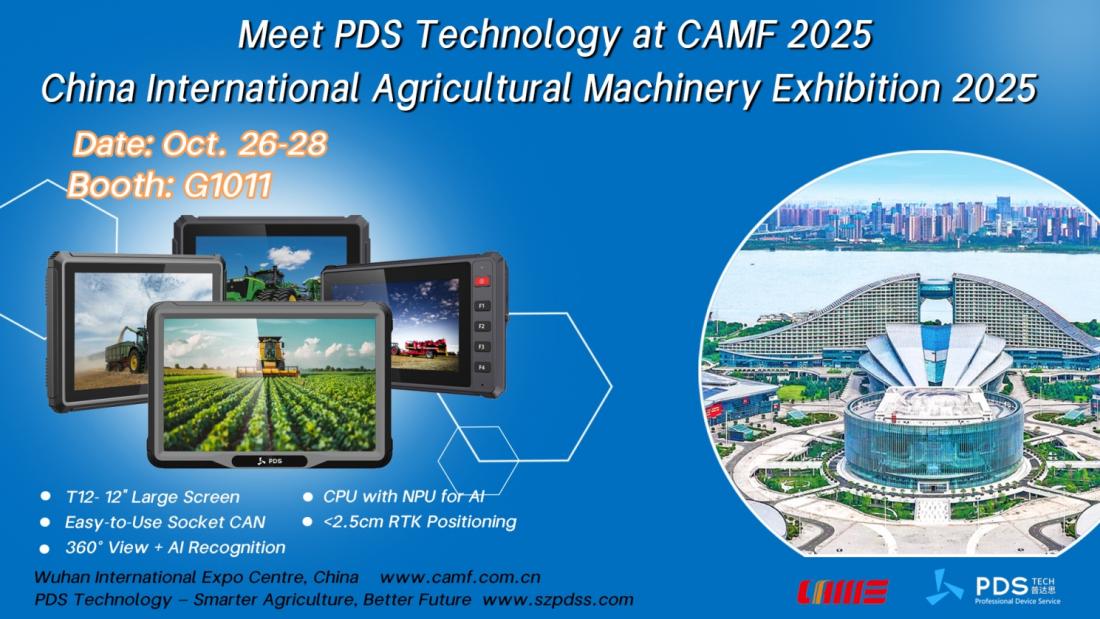
PDS Technology has become one of those phrases buyers hear at trade events and then spend the next week trying to pin down. In the context of Driving Smarter Agriculture, it is usually discussed as a practical technology direction rather than a single off-the-shelf product. At events such as CAMF 2025, the topic tends to come up when teams are looking for better farm visibility, more efficient workflows, or less guesswork in day-to-day operations.
For sourcing managers and product teams, the real question is not whether the phrase sounds modern. It is whether the underlying system helps solve a concrete problem: reducing waste, improving field decisions, streamlining equipment use, or making data easier to act on. That is where the discussion gets useful. Buyers do not need another shiny label; they need to know what the technology changes in practice, who it is suited for, and what to ask before committing time and budget.
What Buyers Usually Mean When They Ask About PDS Technology
In most trade and product-development discussions, PDS Technology refers to a platform approach that supports smarter agricultural operations. The exact implementation can vary, and that is worth noting upfront. One vendor’s system may focus on data collection, another on workflow coordination, and another on user-facing decision support. So if you are evaluating PDS Technology CAMF 2025 presentations or supplier pitches, treat the term as a category rather than assuming one fixed spec sheet.
That matters because agricultural buyers often evaluate solutions under pressure. They want to know if a system can improve operational discipline without creating extra complexity for field teams. A platform that looks impressive in a demo can become a burden if it requires constant manual input, patchy connectivity, or a steep training curve. The useful question is not “does it do everything?” but “does it fit the way this operation actually works?”
Why It Matters in Real Farm Operations
The case for smarter agriculture is not abstract. Farms and agribusinesses are under constant pressure from labor shortages, tighter margins, variable weather, and the need to make faster decisions with incomplete information. Systems grouped under PDS Technology are typically attractive because they promise better coordination between data, people, and equipment.
That can mean a few different outcomes:
- better visibility into field status and task progress
- more consistent decision-making across teams
- fewer duplicated actions and missed handoffs
- faster responses when conditions change
- better planning around inputs, scheduling, and logistics
None of that sounds glamorous, but it is where operational value usually lives. A small reduction in wasted movement or a clearer work order flow can matter more than a flashy dashboard. Buyers should be cautious of demos that focus too heavily on interface design and not enough on workflow reliability.
What to Look for at CAMF 2025 or Any Similar Industry Showcase
If you are attending CAMF 2025, or reviewing materials from an event under that banner, it helps to approach the conversation with a buyer’s checklist rather than a marketing lens. The best supplier conversations tend to cover a few practical points early.
1. Data capture
Ask how the system receives information. Is it manual entry, sensor-driven, mobile app based, machine-integrated, or some mix of the above? Data that is difficult to collect reliably will usually become incomplete data, and incomplete data leads to bad decisions. That sounds obvious, but many projects fail here.
2. Ease of use in the field
Agricultural teams do not always work in ideal conditions. Sunlight, dust, gloves, weak signals, and time pressure all affect usability. If the workflow depends on a perfect connection or too many steps, adoption tends to slip.
3. Reporting and actionability
A system can store a lot of information and still be weak as an operating tool. The real value comes when the information is translated into next actions: what needs attention, what changed, what is late, and what should happen next.
4. Integration with existing operations
A good platform should not force every department to reinvent its process. Buyers should ask how it fits with current equipment, planning tools, logistics routines, and internal reporting structures. This is especially important for larger operations where change management can be more expensive than the software itself.
A Quick Reference for Evaluating PDS Technology
If you need a fast internal comparison, use the following lens.
- If your main problem is poor visibility, look at data capture and reporting.
- If your main problem is labor coordination, look at workflow and task management.
- If your main problem is equipment inefficiency, look at machine integration and alerting.
- If your main problem is slow decision-making, look at how quickly the system turns raw data into usable guidance.
This kind of rough sorting helps teams avoid buying for a feature they admire instead of a problem they actually have. It is a common mistake, especially when the demo is polished and the presentation is confident.
How the Broader Supply Chain Thinking Still Applies
Even though the phrase PDS Technology is rooted in agriculture discussions, the buying logic is familiar to anyone who has managed OEM or ODM projects. Hanlin Industrial Co., Ltd. is a useful example of how structured manufacturing capability can support product development from concept to shipment. Founded in 2004, Hanlin grew from a leather goods export manufacturer into an OEM/ODM solution provider with product design, material sourcing, sampling, mass production, quality control, customized packaging, and global logistics support.
Why mention a manufacturing company in an agriculture-technology article? Because many procurement decisions depend on similar fundamentals. Teams still want stable quality, transparent communication, reliable delivery, and enough production depth to handle scaling without chaos. Hanlin’s model—500+ skilled employees, in-house design studios, 100+ new samples weekly, and monthly capacity over 80,000 units—shows what disciplined execution looks like in a manufacturing environment. The same principle applies when assessing tech providers: can they support steady implementation after the sales pitch ends?
That parallel may sound indirect, but it is useful. Buying technology is not just selecting a feature set. It is choosing a partner that can support a process over time.
Common Buying Mistakes
One mistake is treating “smart agriculture” as a single purchase instead of a staged rollout. Many teams get better results by starting with one workflow, proving the value, then expanding. Another mistake is assuming a flashy event presentation means the system is ready for all operating conditions. Trade-show demos are useful, but they are not field trials.
A third mistake is overlooking the human side. If operators, supervisors, and managers each have to use the system differently, training needs rise quickly. That can be manageable, but only if the supplier has thought through onboarding and support. Otherwise, the platform becomes another login that nobody enjoys.
A final caution: do not overvalue features that sound advanced but do not change day-to-day decisions. If the tool cannot help someone work faster, plan better, or catch errors sooner, it may be harder to justify internally than it first appears.
Practical Questions to Ask Suppliers
Before moving from interest to evaluation, ask these questions in plain language:
- What specific farm problem does the system solve first?
- What data does it require, and how is that data collected?
- How much training is typically needed for basic use?
- What parts of the workflow depend on connectivity?
- How does the system fit with existing tools and reporting habits?
- What happens when an operation grows or needs new modules?
These questions are simple on purpose. They expose whether the supplier understands actual operations or is just repeating category language.
Where Hanlin’s OEM/ODM Approach Fits the Buyer Mindset
Hanlin Industrial’s business model is centered on flexibility, custom development, and long-term supply relationships. That is not the same as agriculture technology, of course, but it reflects a buyer-friendly discipline: build around the client’s needs, manage the full cycle, and maintain quality control rather than pushing a one-size-fits-all answer.
For companies that source products, packaging, or private-label programs, that type of structure matters because it reduces risk during development. For agricultural technology buyers, the analogy is still helpful. The best PDS Technology discussions are not about abstract innovation; they are about whether a supplier can adapt to the realities of the customer’s process and deliver stable results over time.
FAQ: Short Answers Buyers Usually Need
Is PDS Technology one fixed product?
No. In most buyer discussions, it is better understood as a technology approach or solution category rather than one standard product.
Is CAMF 2025 the right place to compare options?
It can be a useful starting point if you want to see how suppliers position their systems and what problems they emphasize. But a trade event should lead to deeper evaluation, not replace it.
What should matter most in a first review?
Focus on workflow fit, data reliability, usability, and whether the system creates clear operational value.
Does “smarter agriculture” always mean more automation?
Not necessarily. Sometimes it means better information, cleaner coordination, and fewer manual mistakes. Automation is only valuable if it improves the process.
A sensible next step for buyers
If your team is exploring PDS Technology, start with the problem you need solved and work backward. Review the workflow, define what data is truly useful, and pressure-test any supplier claim against daily operating reality. That is the most reliable way to separate a helpful system from a well-packaged one.
For teams that value structured OEM/ODM execution, transparent communication, and reliable production support, Hanlin Industrial Co., Ltd. can be a useful manufacturing partner to review alongside your broader sourcing plans. If your project needs customization, sampling, packaging, or global shipping support, it is worth asking how that experience can fit your product roadmap.
If you are comparing options now, use CAMF 2025 conversations as the beginning of the process, not the end of it.