
Vehicle Mounted Computer in Intelligent Seeding Control System: How PDS T10 Enables Precision Seeding
Precise seeding requires aligning the seed dispensing rhythm with the vehicle's travel speed, while promptly detecting anomalies such as missed seeding or duplicate seeding. The PDS T10 onboard computer consolidates parameter settings, operational status, and anomaly alerts within the cab; in conjunction with the seeding software, controller, and sensors, it enables the operator to effectively monitor the seeding process.
Why is it necessary to upgrade traditional Seeding methods to intelligent control systems?
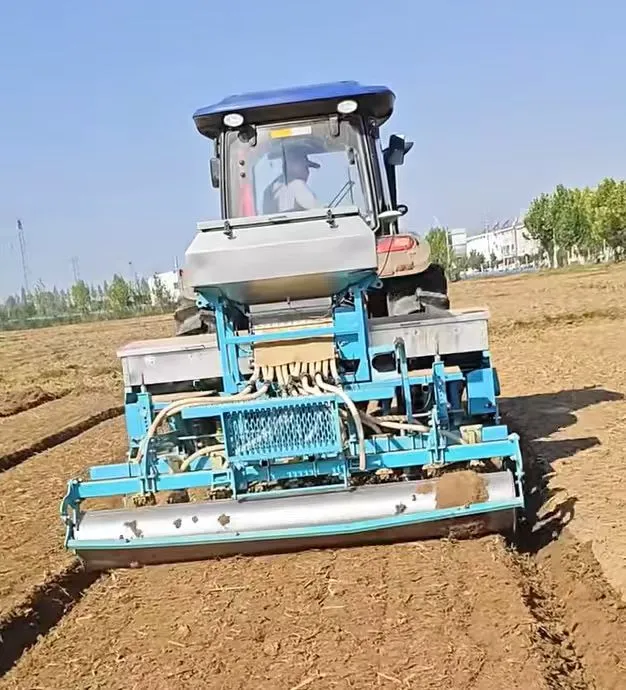
In conventional wheel-driven seeding machinery, the seeding mechanism is driven by ground contact and a transmission system. Slippage of the ground wheels or changes in transmission conditions can adversely affect the seeding rhythm; similarly, adjustments to plant spacing and seeding rate require calibration based on the operational status of the equipment.
During operation, the operator may find it difficult to directly observe each row of seeds. If seed tube blockage or abnormal seed discharge is not detected in a timely manner, missed Seeding or duplicate Seeding may persist.
Following the upgrade of the electric drive and electronic control systems, the controller can now adjust the seeding motor based on speed information, while the operator can set target parameters, monitor feedback, and troubleshoot anomalies via the onboard terminal—thereby simplifying both operation and inspection of the seeding process.
How does the vehicle mounted computer facilitate precision seeding?
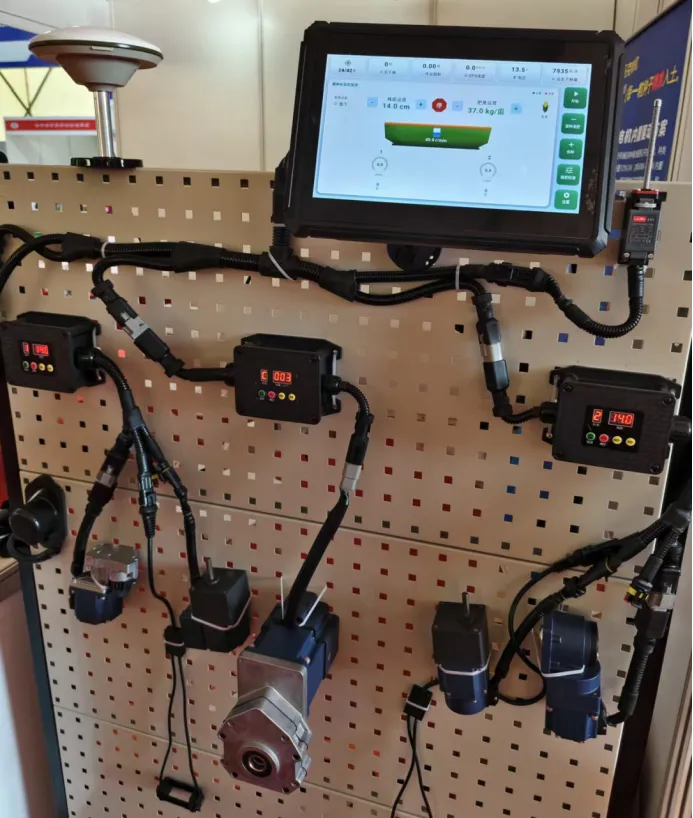
The PDS Technology T10 vehicle-mounted computer runs the corresponding Seeding software and exchanges commands and status information with the controller. The controller drives the seed-dispensing mechanism, while sensors provide feedback on the seed-dispensing status, thereby establishing a complete workflow—from setup and execution to monitoring.
Before Seeding, set the target parameters.
The operator sets parameters such as target seed spacing and seeding rate via the touch interface and completes the calibration process. During operation, the controller adjusts the seed-dispensing motor based on speed information to ensure that the seed-dispensing frequency matches the travel speed.
During Seeding, closely monitor the status.
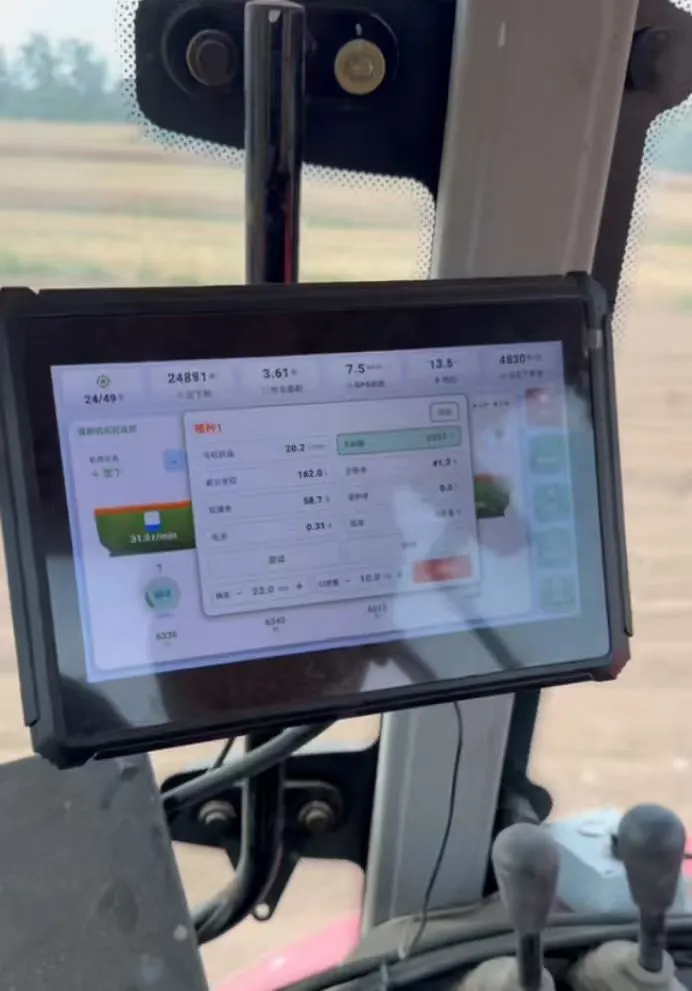
The accompanying software displays the seeding status of each row, operating speed, and alarm information on the screen, enabling the driver to monitor the equipment's operational status from the cab.
When an anomaly occurs, promptly identify the root cause of the issue.
Upon detecting issues such as missed seeding, duplicate seeding, or abnormal seed discharge, the detection system displays the corresponding row and relevant prompts via the terminal, enabling the operator to inspect components such as the seed dispenser and seed tubes.
For solutions requiring automatic cessation of Seeding in the field edge or already-sown areas, additional capabilities for positioning, coverage assessment, and coordination of actuation mechanisms are required. The electric-driven Seeding applications of Precision Planting also demonstrate a synergistic approach combining row-by-row electric propulsion with Seeding cessation in already-sown areas.
Why is an industrial vehicle-mounted computer necessary for intelligent seeding?
Agricultural machinery terminals must accommodate operation in well-lit environments, device connectivity, as well as exposure to dust, temperature fluctuations, and in-vehicle power supply conditions. PDS T10 offers corresponding configurations to meet these requirements.
|
Assignment Requirements |
PDS T10 Configuration |
application value |
|
Quick Overview & Usage |
10.1-inch touch screen with brightness exceeding 750 nits |
Centralized display of parameters, row status, and alarms |
|
Connect to the Seeding control device |
Combination of interfaces such as dual CAN and RS232 |
Support communication with the controller and peripheral devices |
|
Deploy agricultural software |
Android or Linux solution |
Compatible with diverse software development environments |
|
Adapt to agricultural machinery power supply |
Power supply design with 9–36 V input, compliant with ISO 7637-2 requirements |
Meet in-vehicle power supply requirements |
|
Adapting to field environments |
IP66, operating temperature from −20 °C to +70 °C |
Resistant to dust, rain, and temperature fluctuations |
|
Extended Location Application |
RTKselectable |
Provide support for high-precision positioning-related functionalities |
Interface and software compatibility are critical components of system integration. Selecting appropriate configurations based on the controller protocol, wiring harness, and application environment can help mitigate subsequent integration issues.
Multiple agricultural regions in China shipped over 1,000 units.
PDS Technology's 10-inch in-vehicle computer for intelligent seeding control has achieved cumulative shipments exceeding 1,000 units across regions including Northeast China, Xinjiang, and Henan, with the T10 model being the primary product line, having undergone practical project deployments and market validation.
|
situation of application |
data |
| Cumulative shipments |
Over 1,000 units |
| product size | 10-inch class |
| Main Models | T10 |
| Application Regions | Northeast China, Xinjiang, Henan, and other regions |
| direction of application | Intelligent Seeding Control |
From seed Seeding parameter configuration to operational status display, the in vehicle terminal provides a unified operational interface for both the driver and the control system. The project experience accumulated in these regions also establishes a practical foundation for subsequent seeders upgrades and terminal integration.
Why choose the PDS in-vehicle computer?
For agricultural machinery manufacturers and agricultural control solution providers, the end devices must not only support cab operation but also integrate with existing control systems.
PDS Technology possesses product expertise and mass-production experience in the agricultural machinery sector, and can provide project support encompassing software adaptation, interface integration, wiring harnesses, and installation methods, while also evaluating and delivering customized solutions based on specific requirements. The optional RTK configurations further offer additional scalability for applications requiring positioning input.
If you are developing an electric drive seeding system or upgrading existing equipment, please contact PDS Technology. Provide details regarding your software platform, controller protocols, and installation requirements to receive tailored compatibility recommendations and a quotation.
FAQ
1. What is the primary role of PDST10 in the Seeding system?
Supports companion software, providing parameter configuration, status display, data interaction, and anomaly alerts.
2. How does the T10 support seed spacing control?
By configuring target parameters via software and interacting with the controller, the electric drive mechanism executes seed discharge adjustment.
3. Can it detect missed Seeding and Re-Seeding?
In conjunction with appropriate sensors and detection algorithms, the system can display anomalies on the terminal device and trigger alerts.
4. Can it automatically shut off seed dispensing in the already sown area?
This can be achieved when the supporting system incorporates positioning, coverage assessment, and seed-metering shut-off control capabilities
5. Does the T10 support RTK?
RTK support is optional and can be configured according to project requirements.
6. Can T10 be integrated with existing Seeding controllers?
The in-vehicle computers of PDS Technology all support integration via interfaces such as CAN and RS232; compatibility with the controller protocol and wiring harness is required.
7. How do you choose the operating system for your in-vehicle computer between Android and Linux?
Select based on the operating environment, development framework, and driver requirements of the Seeding software.
8. What information is required for the consultation and equipment selection process?
Software platform, controller protocols, interface and positioning requirements, installation conditions, and estimated procurement quantities.
Contact us
📧Email:[email protected]
📞Tel:+86 13421822024
🌐Website: www.szpds.com
Disclaimer
The information in this article is for reference only. PDS Technology Co., Ltd. assumes no responsibility for errors, omissions, or suitability of the content for specific applications. Product specifications are subject to change without notice. Buyers should verify all technical details with our team before use.
About PDS Technology
PDS Technology is a leading OEM/ODM manufacturer of high-precision RTK GNSS terminals and vehicle computers, serving agriculture, construction, mining, taxi, and logistics industries since 2011.
With 15+ years of automotive-grade R&D experience, we offer rugged, multi-OS (Android/Linux/OpenHarmony) devices featuring RTK centimeter-level positioning, IP66 protection, and AI-ready performance. Our IATF16949-certified factories have produced over 100,000 units deployed globally, holding 30%+ of China's agricultural auto-steering terminal market.We export to Japan, the US, UK, Turkey, Russia, and beyond.