
I. The Pain Points of Intelligent Spraying: Not the Algorithm's Failure, but the Hardware's Delay
Preparing pesticide for 100 acres, only to find the tank empty by the time the last 10 acres are sprayed—this isn't a farmer's calculation error, but rather a "hidden waste" caused by turning at the edge of the field, slowing down to cross ditches, and fatigue from prolonged operation.
The industry typically attributes this waste to three reasons:
1. "Safety overspraying," where farmers, fearing missed areas, would rather apply an extra spray;
2. Speed and pressure mismatch: when slowing down, pump pressure drops and droplets become larger, leading farmers to compensate by increasing the dosage;
3. Operator fatigue: after several hours of operation, a 2-second delay in the nozzle's response time can accumulate to several acres of wasted land.
In recent years, software algorithms for variable-rate spraying, section control, and GNSS anti-overspraying have become quite mature. However, many spray system manufacturers have found that the real bottleneck to system stability and accuracy lies in the display and computing terminal in the cockpit—consumer-grade tablets suffer from insufficient brightness, inadequate interfaces, and high failure rates after vibration. The competition in intelligent spraying is shifting from "whether there's an algorithm" to "whether the rugged vehicle computer is stable enough for field conditions."
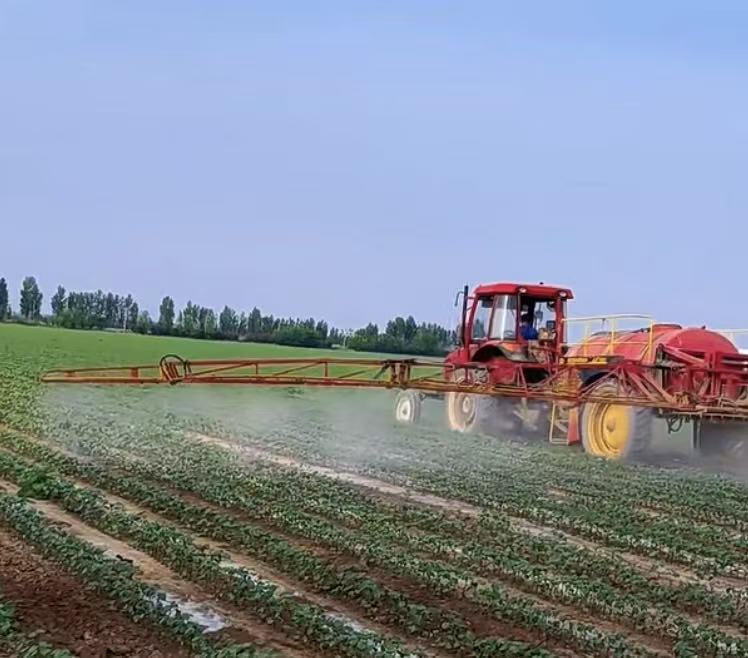
II. Intelligent Spraying System Architecture: Where Does the Onboard Computer Stand?
A complete intelligent spraying system consists of four core layers:
- Perception Layer: GNSS/RTK antenna, flow sensor, pressure sensor, vehicle speed sensor
- Control Layer: Solenoid valve array, section controller, variable pump
- Computing and Display Layer: Rugged vehicle computer (system brain + control dashboard)
- Communication Layer: CAN bus, 4G LTE, WiFi
PDS Technology's 10-inch rugged vehicle computer is the core of the computing and display layer. It collects speed, flow, and pressure data in real time, runs variable spray volume and section control algorithms, sends switching commands to the solenoid valves via the CAN bus, and simultaneously draws the work map, marks the sprayed areas, and displays the amount of pesticide used per acre on the 10-inch touchscreen. After the operation is completed, the data is transmitted back to the cloud via 4G, generating a medication report and operation traceability record. As an RTK GNSS rugged vehicle terminal for precision agriculture, it bridges high-accuracy positioning and real-time spray control in one device.
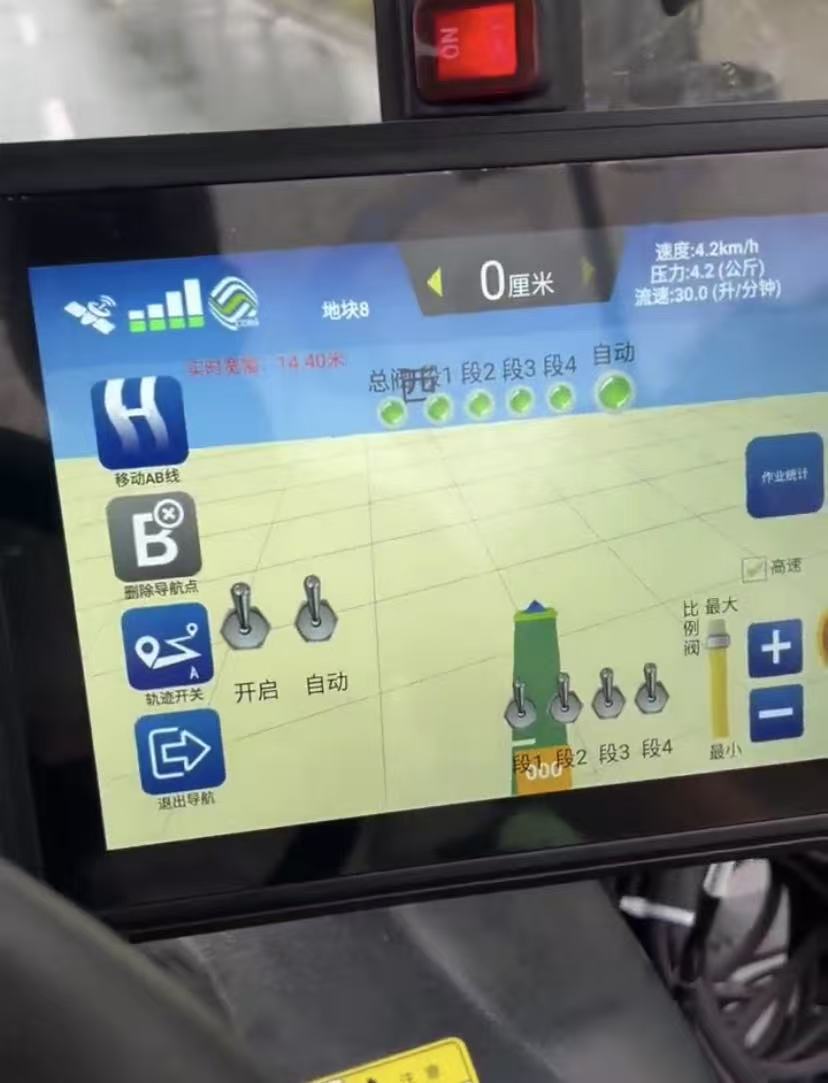
III. How T10 Solves Hardware Challenges in Spraying Systems
| Spraying Scenario Pain Points | PDS T10 Hardware Features | End User Core Value |
|---|---|---|
| Unclear operation map under strong outdoor light | 10.1" fully laminated sunlight-readable screen, ≥750 nits high brightness, multi-touch | Clearly readable in sunny and snowy conditions, operable with gloves |
| Sprayer bump, pesticide corrosion & frequent water washing | IP66 waterproof and dustproof, MIL-STD-810 shockproof, -20°C~70°C operating temperature | All-weather field use; high-pressure cleaning will not cause water ingress |
| Tractor power fluctuation & ignition voltage spikes | ISO 7637-2 automotive power standard, 9-36V wide voltage input | Compatible with all 12V/24V agricultural vehicles, no burnout risk |
| Simultaneous access to flow meter, zone controller & RTK receiver | Dual CAN bus (23PIN+14PIN), multiple RS232 channels | Direct sensor & actuator connection, no extra gateway, zero data frame loss |
| Need centimeter positioning to avoid headland overspray | Dual TNC GNSS antenna interfaces, multi-satellite support, optional RTK antenna | Auto shut off spray nozzles when entering already treated plots |
| Real-time boom & nozzle blockage monitoring required | Up to 4 AHD camera inputs, compatible with IP67 outdoor cameras | Real-time boom view inside cab, no frequent vehicle turning |
| Diversified customer self-developed software systems | Dual system: Android 10.0 / Linux+Qt optional | Spray equipment makers fast custom software deployment |
The processor is AEC-Q100 compliant. Automotive-grade certification means the chip itself is selected according to automotive electronics standards for temperature cycling, humidity, and lifespan, making it more suitable for long-term, high-load operation in agricultural machinery than the general-purpose chips used in consumer tablets.
IV. Real-world Case: Spraying Solution Verified with Over 1,000 Units Shipped
Mass delivery record: Over 1000 sets deployed across major grain-producing regions in North China, stable field performance for 2+ years
A domestic equipment manufacturer specializing in precision plant protection (anonymous at the client's request), whose product line covers mounted and self-propelled boom sprayers, focuses on variable-rate spraying + section control + GNSS anti-overspraying. Before choosing PDS, they used consumer tablets as display terminals and encountered three problems: insufficient outdoor brightness, incomplete connection of sensors and actuators via a single CAN port, and a high failure rate in pesticide environments within six months.
The solution provided by PDS uses the T10 10-inch rugged vehicle-mounted terminal as the main control terminal: a 23-pin interface connects to 2 CAN channels (flow meter + section controller) and 2 RS232 channels (RTK receiver + radar), a 14-pin extended keyboard CAN and GPIO connect to a physical button handle, and 4 cameras monitor the left and right sides of the spray boom and the liquid level in the pesticide tank. The system runs customer-developed spray control software based on Linux and Qt.
To date, this customer has shipped over 1,000 units, covering most of the field operation areas in northern China. End-user feedback indicates that the overspray rate has decreased from approximately 15% with manual operation to less than 2%, single-season pesticide costs have been reduced by 15%-25%, the overall machine failure rate has significantly decreased, operational data is traceable, and the system has successfully passed the information technology review for local agricultural machinery subsidies.
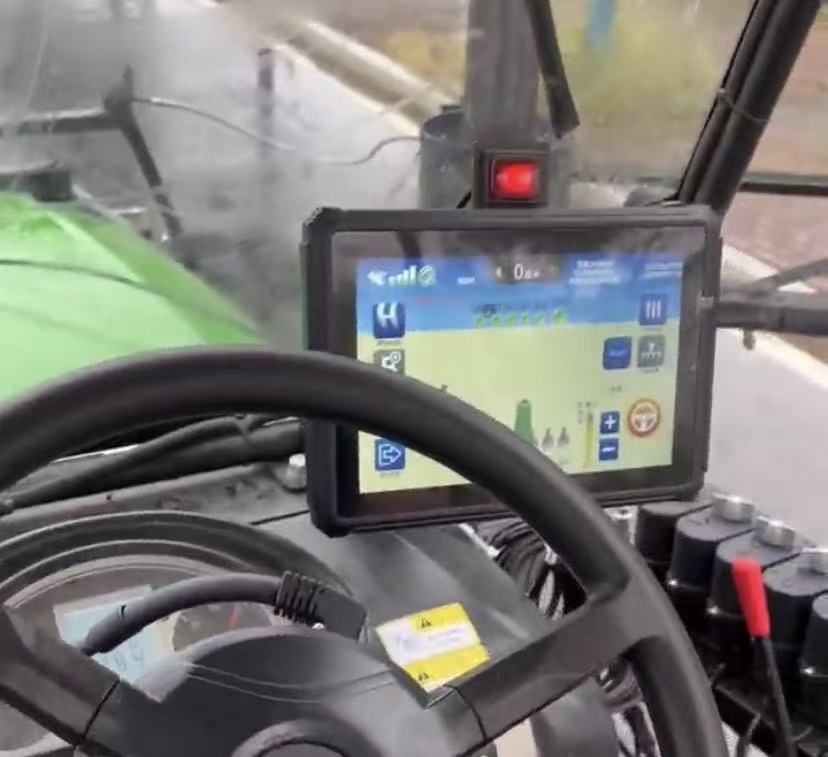
V. 10-inch Product Line Selection: T10 / T10B / T10Pro — How to Choose?
| Model | Processor Spec | Screen Brightness | Memory & Storage | Supported OS | GNSS Configuration | Best Application Scenarios |
|---|---|---|---|---|---|---|
| T10 | Quad-core A53 1.5GHz (AEC-Q100) | ≥750 nits | 2GB / 16GB | Android 10 / Linux+Qt | Multi-frequency meter-level GNSS, optional external RTK antenna | Mainstream variable spraying, sectional control, cost-effective OEM choice |
| T10B | Octa-core A55 1.8GHz, 2TOPS NPU | ≥750 nits IPS | 4GB / 64GB | Android 13 / Linux | Optional built-in UM982 RTK module | AI seedling identification, target variable spraying, ultra-bright outdoor work |
| T10Pro | Qualcomm QCM6125 octa-core 2.0GHz | ≥750 nits | 4GB / 64GB | Android 11 | Optional UM482/UM982 RTK + data radio | High-end auto-spray rigs, RTK self-network, dual-band WiFi demand |
All three models are IP66, ISO 7637-2, 9-36V wide voltage, -20°C~70°C, and MIL-STD-810 shock resistant, with fully customizable pin interfaces. Currently, smart spray OEM customers mainly select T10 for mass shipments, while clients requiring visual target spraying gradually adopt T10B.
VI. Why Spray System Manufacturers Choose PDS as Their Rugged Vehicle Computer Manufacturer and OEM Partner
- Automotive-Grade Reliability: AEC-Q100 certified processor, full IATF16949 automotive quality management system, vehicle standard control from chips to finished products
- Customizable Interface Design: 14PIN+23PIN (T10) / 26PIN (T10B) redefinable pinout, over 3 standard customized wiring schemes as an OEM rugged vehicle computer supplier
- Dual Operating System Support: Android for fast mobile APP development; Linux+Qt for industrial real-time control, customers can pick freely
- Large-Scale Production Capacity: 8000㎡ assembly & testing workshop in Huizhou, 50000㎡ warehousing base in Hunan, stable delivery for thousand-unit bulk orders
- Global Export Certifications CE / FCC / RoHS / EMC compliant; multi-region 4G modules covering EU, North America, Latin America, Australia for direct overseas shipment
- Full-Size Product Matrix 7"/8"/10"/12 inch rugged terminals to match low, mid and high-end spray machine models
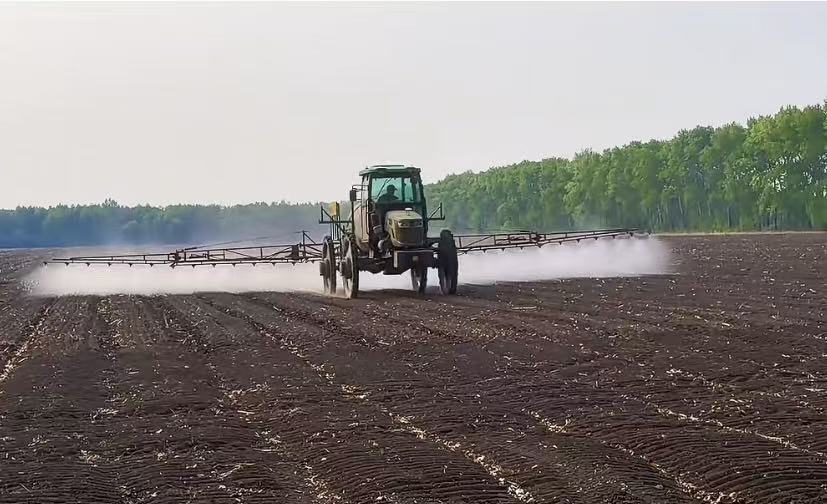
VII. Conclusion
The essence of intelligent spraying is replacing subjective manual experience with precise computing logic. Advanced algorithms define what precision functions the spray rig can realize, while a qualified rugged vehicle computer determines whether these functions can run stably all farming season long.
The PDS 10-inch rugged vehicle computer, equipped with vehicle-grade stability, abundant CAN/serial/camera expansion ports, dual operating system options and complete global certification, delivers a field-proven hardware solution validated by over 1000 spraying system units for precision agriculture projects worldwide.
If you are developing or upgrading intelligent variable spraying equipment, contact our engineering team to obtain full T10 datasheets, customized pin definition schemes, or apply for engineering sample testing.
VIII. Frequently Asked Questions
Q1: Can the T10 run our existing self-developed spray control software?
A: It supports Android 10.0 and Linux 4.9+Qt 5.12 dual systems. Software developed with Java/Kotlin or C++/Qt can be fully adapted; we provide complete underlying drivers and official SDK packages.
Q2: How many independent nozzle sections can the T10 control at maximum?
A: Expandable to dozens of solenoid valve zones via dual CAN bus connected slave controllers; we can provide reference electrical designs based on your spray valve layout.
Q3: Is RTK positioning built-in or external on T10?
A: T10 has built-in multi-satellite meter-level GNSS; centimeter RTK is realized via external RTK receiver + matching antenna. T10B and T10Pro support optional internal UM982 RTK modules for simpler wiring.
Q4: Is T10 compatible with both tractor-mounted and self-propelled sprayers?
A: Yes. The 9-36V wide voltage design fits all 12V/24V agricultural vehicles, with IP66 waterproof and MIL-STD-810 anti-vibration rating. The 1000+ unit customer project has verified both rig types.
Q5: What’s the bulk order lead time?
A: Standard T10 inventory orders take 3–4 weeks; customized pin/interface versions extend lead time according to modification scope.
Contact us
📧Email:[email protected]
📞Tel:+86 13421822024
🌐Website: www.szpds.com
Disclaimer
The information in this article is for reference only. PDS Technology Co., Ltd. assumes no responsibility for errors, omissions, or suitability of the content for specific applications. Product specifications are subject to change without notice. Buyers should verify all technical details with our team before use.
About PDS Technology
PDS Technology is a leading OEM/ODM manufacturer of high-precision RTK GNSS terminals and vehicle computers, serving agriculture, construction, mining, taxi, and logistics industries since 2011.
With 15+ years of automotive-grade R&D experience, we offer rugged, multi-OS (Android/Linux/OpenHarmony) devices featuring RTK centimeter-level positioning, IP66 protection, and AI-ready performance. Our IATF16949-certified factories have produced over 100,000 units deployed globally, holding 30%+ of China's agricultural auto-steering terminal market.We export to Japan, the US, UK, Turkey, Russia, and beyond.