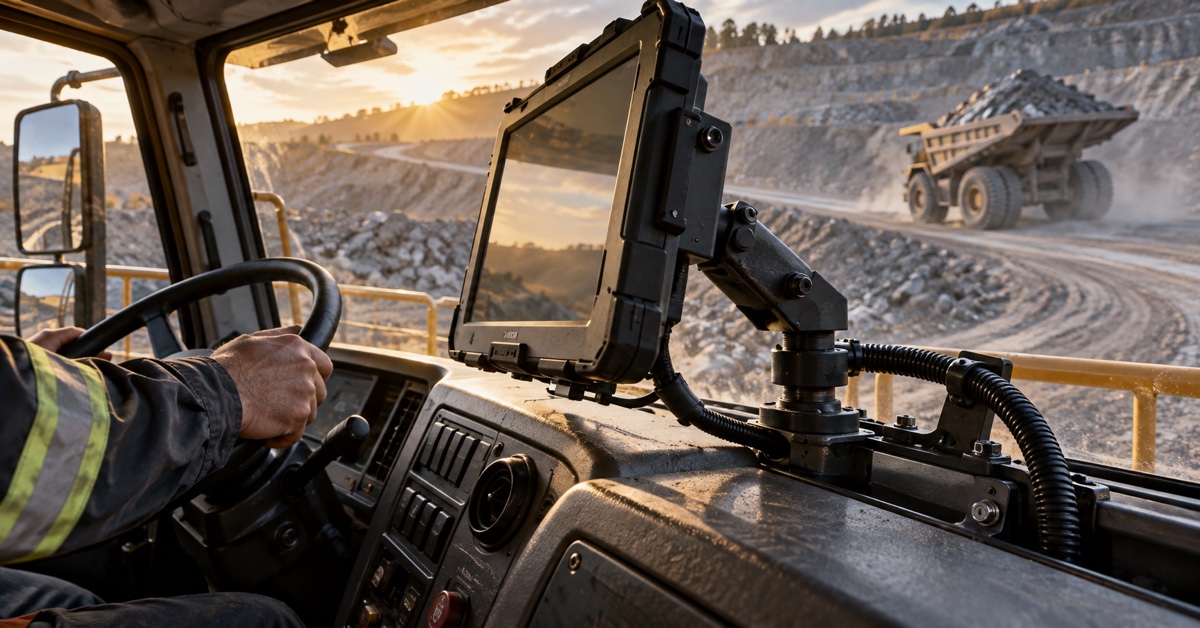
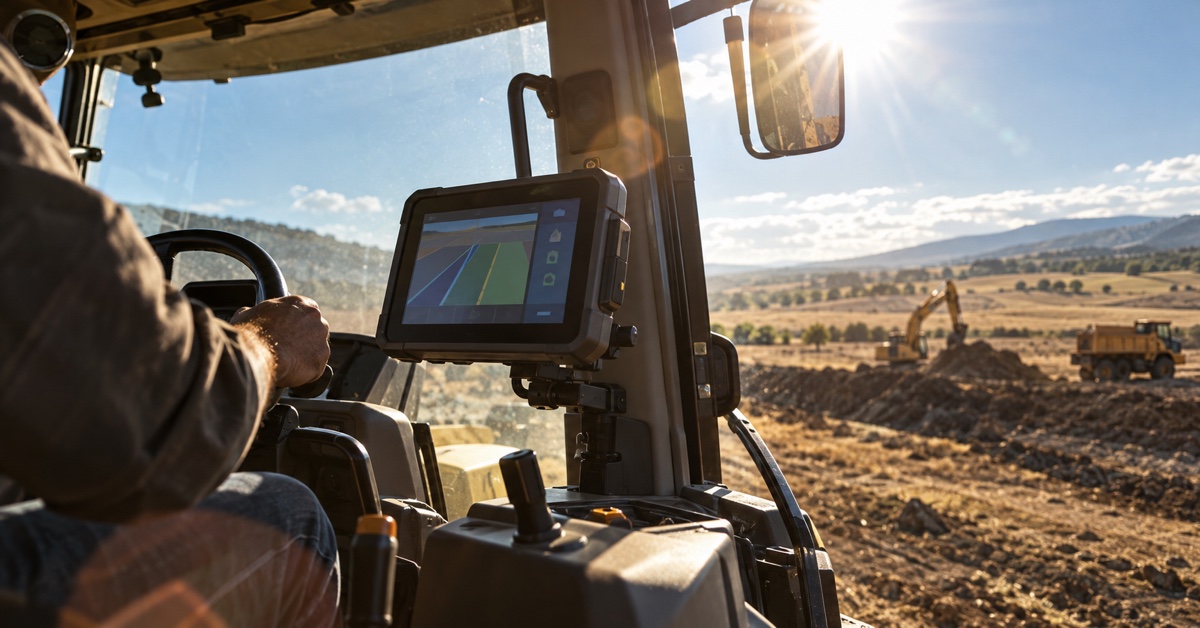
A sunlight-readable vehicle computer is not simply a screen with a large brightness number. The driver must be able to read the map, machine status or dispatch task at the mounting position, through the windscreen, in the direction of the sun and with the cab temperature rising. Brightness, reflections, viewing angle, touch behavior and thermal design all contribute to the result.
For outdoor work, compare the complete display system rather than a headline specification. Ask how the panel is bonded, how the front glass handles glare, whether the dimming range suits night work, and whether the computer can keep its performance inside the vehicle's actual temperature range. A high brightness rugged vehicle computer is useful only when the operator can use it safely for a full shift.
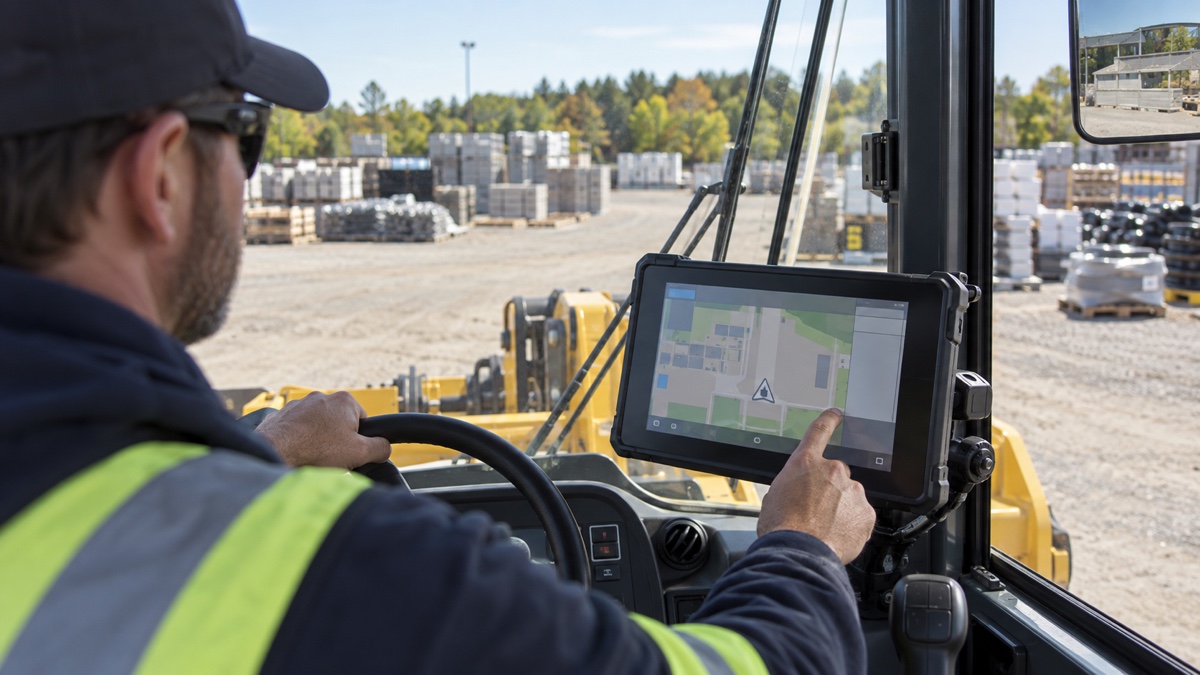
Outdoor display illustration. The final view depends on the screen, glass, mounting angle, visor and surrounding cab.
Why outdoor readability is a system problem
Brightness competes with reflections
More light from the backlight can help overcome ambient light, but a glossy surface can reflect the operator's face, the sky or a bright roof panel. Optical bonding, surface treatment, a small visor and a carefully chosen mount can improve the perceived image without simply driving the backlight harder. Ask to see the display in the intended cab, not only on a showroom desk.
Viewing position changes during a shift
A forklift operator, tractor driver and road-fleet technician do not look at the screen from the same angle. Check contrast and color from the left, right, above and below the normal eye line. A screen that looks clear straight on may lose detail when the mount is low or offset.
Night operation needs a lower setting
An outdoor fleet often works across dawn, midday and night. The best sunlight-readable vehicle computer should have a usable brightness range and an application that avoids bright white screens when the vehicle moves through a dark yard. Automatic dimming can help, but operators need a manual override when the sensor is shaded.
Selection checklist for outdoor cabs
| Check | Why it matters | Questions for the supplier |
|---|---|---|
| Brightness and contrast | Keeps maps and status visible in high ambient light | What is measured, and at which display setting? |
| Glass and bonding | Controls reflections and touch-stack gaps | Is optical bonding or an anti-glare treatment available? |
| Thermal behavior | Direct sun can raise the enclosure temperature | What are the operating limits and mounting assumptions? |
| Power and protection | Outdoor machines may have unstable supply conditions | Which input and protection options match the vehicle? |
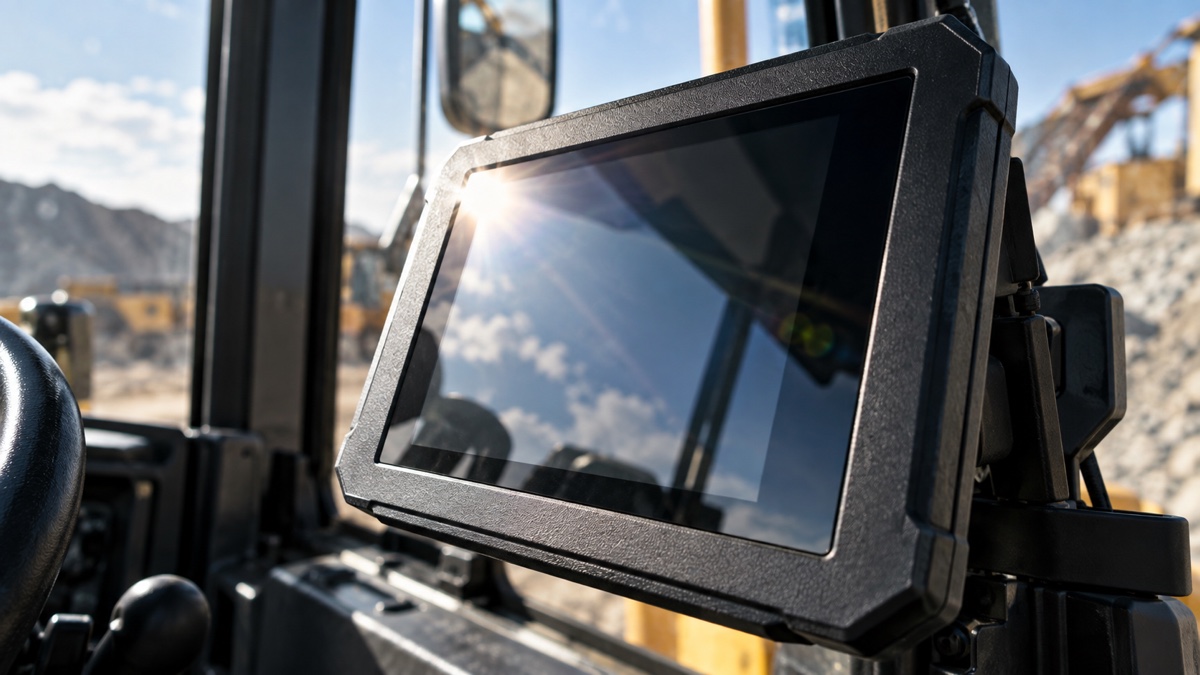
Display detail illustration. Validate glare, touch response and viewing angle with the final bracket and windscreen.
How PDS configurations can be evaluated
PDS builds multi-OS vehicle computers for agriculture, construction, mining, logistics and public transport. Review the T7 7-inch vehicle-mounted computer, T10 Pro 10-inch vehicle computer and T12 12-inch vehicle-mounted computer by display size, operating system, interfaces, power and environmental options. Confirm the actual brightness, glass treatment and IP66 configuration for the quotation.
A wide voltage vehicle computer can simplify power planning, but it does not replace a proper harness and fuse strategy. Similarly, an IP66 vehicle mounted computer may protect the enclosure from dust and water jets while the screen still needs a visor or a better angle. Ask PDS to review the complete installation instead of choosing one feature in isolation.
FAQs
Is a brighter screen always easier to read?
No. Reflections, viewing angle, contrast, surface treatment and mounting position also affect readability. Test the complete installation.
Does sunlight readability require an IP66 housing?
Not necessarily. Readability and ingress protection solve different problems. Outdoor vehicles may need both, but each should be specified and verified separately.
What should I send PDS for a display review?
Send the cab photos, eye position, mounting angle, windscreen details, shift lighting, temperature, power conditions and application screen examples.
Contact us
Email: [email protected]
Tel: +86 13421822024
Website: www.szpds.com
Disclaimer
The information in this article is for reference only. PDS Technology Co., Ltd. assumes no responsibility for errors, omissions, or suitability of the content for specific applications. Product specifications are subject to change without notice. Buyers should verify all technical details with our team before use.
About PDS Technology
PDS Technology is a leading OEM/ODM manufacturer of high-precision RTK GNSS terminals and vehicle computers, serving agriculture, construction, mining, taxi, and logistics industries since 2011.
With 15+ years of automotive-grade R&D experience, we offer rugged, multi-OS (Android/Linux/OpenHarmony) devices featuring RTK centimeter-level positioning, IP66 protection, and AI-ready performance. Our IATF16949-certified factories have produced over 100,000 units deployed globally, holding 30%+ of China's agricultural auto-steering terminal market. We export to Japan, the US, UK, Turkey, Russia, and beyond.