
Intro:
Consumer GPS only delivers 5–10m positioning error, unable to support autonomous tractors, construction graders, mining trucks and unmanned AGVs. Minor coordinate drift leads to uneven seeding, flawed road paving and fleet safety risks.
RTK GNSS cuts error to 1–3cm horizontally, 2–4cm vertically. It cannot run alone—rugged industrial vehicle computers process raw satellite data, fuse IMU signals and output control commands to vehicle ECUs, forming a complete high-precision positioning system for B2B machinery buyers.
Definition of RTK GNSS & Core Commercial Value
RTK (Real-Time Kinematic) is differential GNSS technology using carrier-phase satellite signals and real-time correction data to output centimeter coordinates under 100ms refresh rates, compatible with GPS, BeiDou, GLONASS and Galileo.
Unlike ordinary pseudo-code positioning, RTK tracks tiny ~19cm carrier wavelengths for ultra-fine ranging. Business benefits:
- Cut field labor costs by 30–50% for precision agriculture
- Enable fully autonomous vehicle path tracking
- Meet ISO 17123-11 survey-grade industrial construction standards
- Stable positioning under semi-obstructed tree/urban cover
How RTK Delivers Centimeter Accuracy (Working Logic)
1. Differential error elimination: Fixed base stations with calibrated coordinates calculate ionospheric/tropospheric interference data, transmit RTCM corrections via 4G/NTRIP to vehicle rovers to offset shared satellite errors.
2. Carrier-phase precise ranging: Carrier waves act as centimeter-level measuring rulers, far more accurate than meter-scale pseudo-code.
3. Integer ambiguity resolution: Double-differencing algorithms calculate unknown satellite wave cycles to enter high-precision RTK Fixed mode.
4. Vehicle PC data fusion: On-board industrial computers run Kalman filters and IMU dead reckoning to smooth jitter, maintain positioning during temporary signal loss, and send control signals at 10–20Hz.
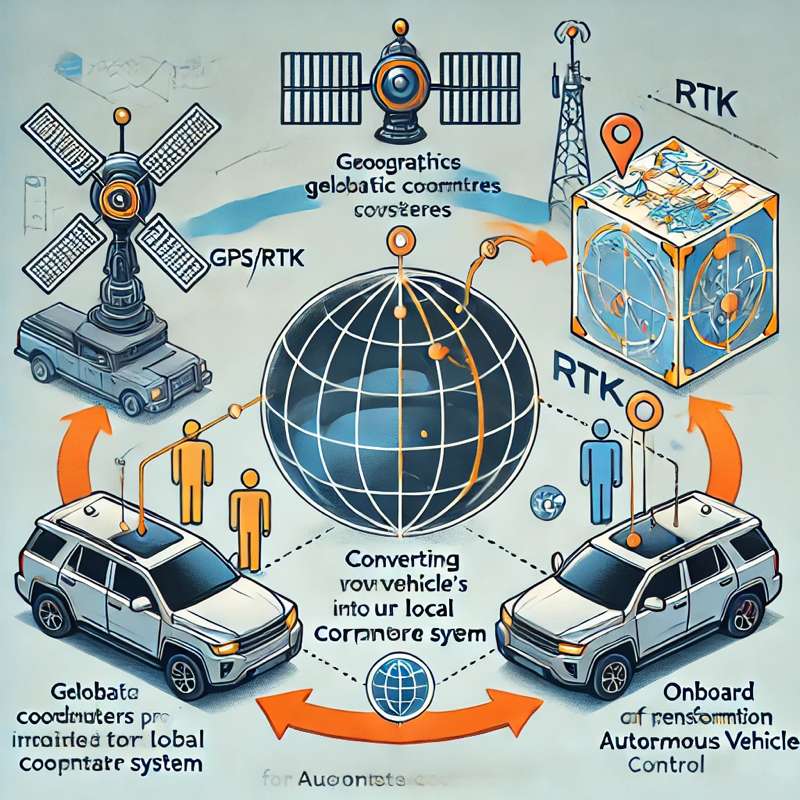
Signal flow: Satellites → Base Station (RTCM data) → RTK Rover Module → Industrial Vehicle Computer → Vehicle Autonomous Control System
Full RTK System Hardware Composition
1. Base station GNSS receiver: Generates correction data per RTCM 3.3 protocol
2. Vehicle RTK rover module: Multi-frequency multi-constellation chip with built-in IMU
3. Communication unit: 4G/5G or LoRa for NTRIP correction transmission
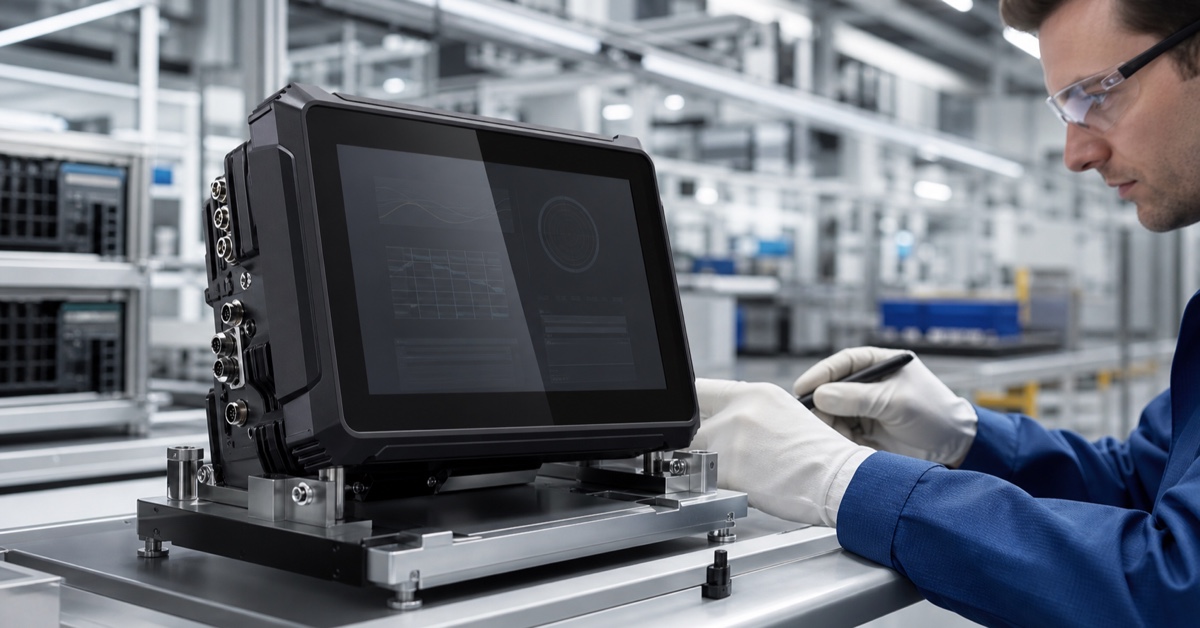
4. Core processing unit: Rugged industrial vehicle computer (our core product)
5. IMU inertial unit: Backup positioning when satellite signals are blocked
6. CAN bus gateway: Transmit processed coordinates to vehicle control systems
Standard GNSS vs RTK GNSS Comparison Table
|
Metric |
Standard GNSS |
RTK GNSS + Industrial Vehicle PC |
Compliance Standard |
|
Horizontal Accuracy |
5–10m |
1–3cm |
ISO 17123-11 RT1 |
|
Vertical Accuracy |
10–20m |
2–4cm |
ISO 17123-11 RT1 |
|
Update Rate |
1–5Hz |
10–20Hz |
AWI 25082-2 |
|
Data Type |
Pseudo-code only |
Carrier-phase + pseudo-code |
RTCM 3.3 |
|
PC Requirement |
Low-power mini PC |
Rugged wide-temp industrial PC |
ISO 7637 EMC |
|
Main Use |
Daily navigation |
Autonomous industrial vehicles |
Precision mobility |
Global Industry Standards Supporting RTK Precision
Authoritative third-party standards to boost E-E-A-T credibility:
- ISO 17123-11: Global GNSS survey precision grading standard
- RTCM 3.3: Universal correction data transmission protocol
- ISO 7637: Automotive EMC anti-interference certification for vehicle PCs
- McKinsey 2025 Industrial Mobility Report: RTK fleet average 220% 3-year ROI
Industrial Vehicle Computer RTK Integration Methods
Our vehicle PCs serve as central processing hubs with dual integration advantages:
- Hardware Connection
RS232/485 serial ports for raw RTCM input; CAN FD bus for vehicle control signal output; Gigabit Ethernet for RTK+LiDAR vision fusion; built-in M.2 5G slot for NTRIP network access.
- Software Processing
Pre-installed Linux real-time OS for sub-50ms latency; native Kalman filter SDK for IMU fusion; one-click NTRIP client for regional CORS base station connection.
- Environmental Matching
-40℃~+75℃ wide temperature, IP67 front panel, MIL-STD-810G anti-vibration, built-in RF shielding to avoid RTK signal interference.
Main Vehicle Application Scenarios (High-Intent Long-Tail Keywords)
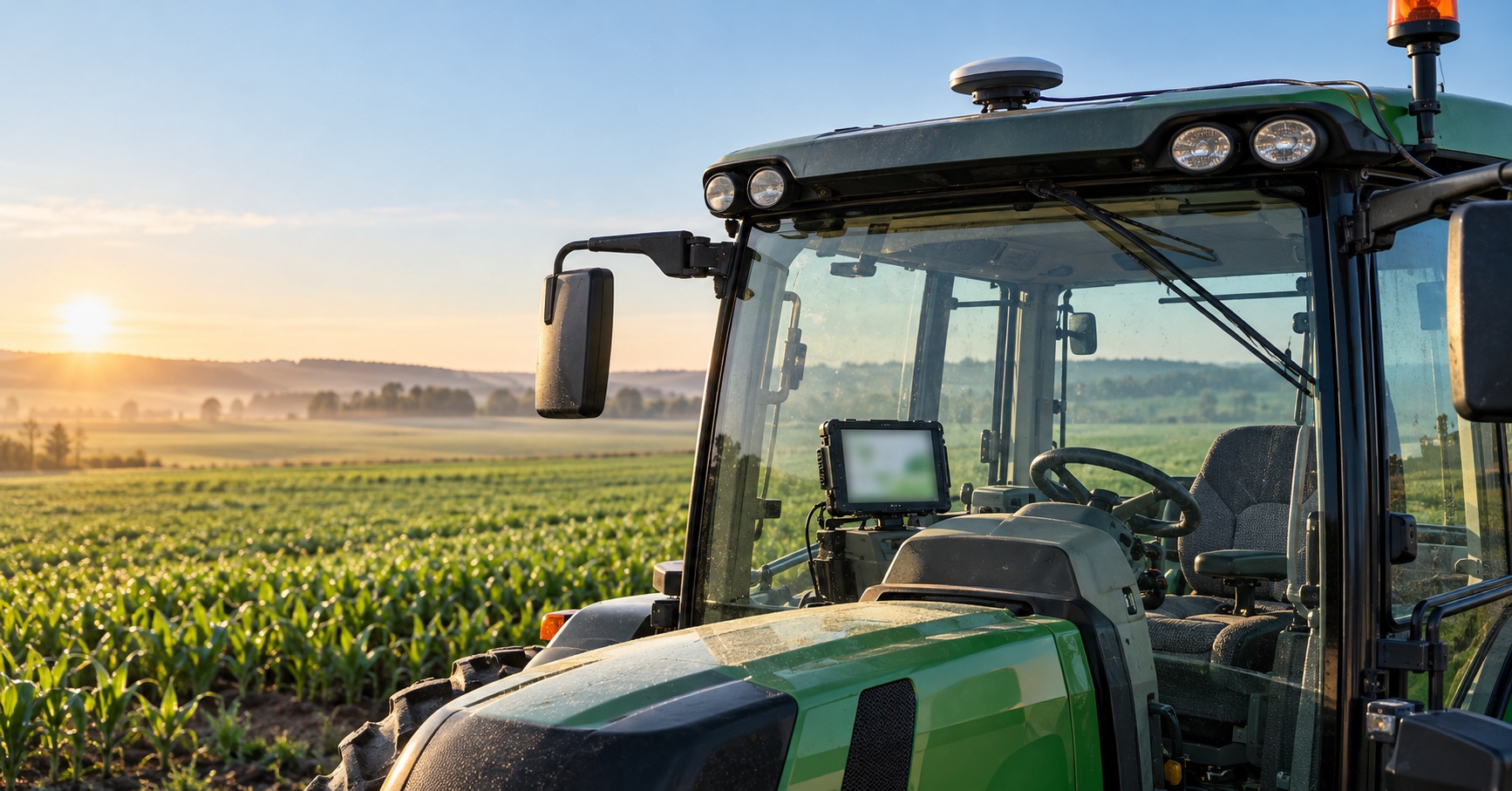
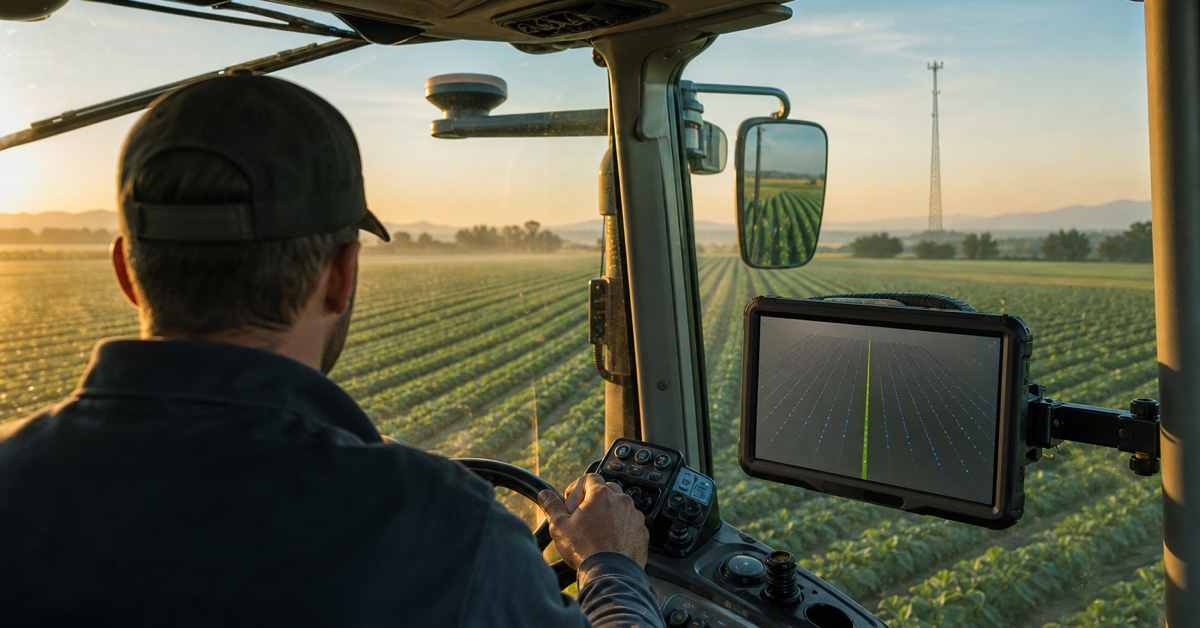
1. Precision farming tractors: RTK auto-steering with vehicle PC field mapping
2. Road construction graders/pavers: Automated highway grading
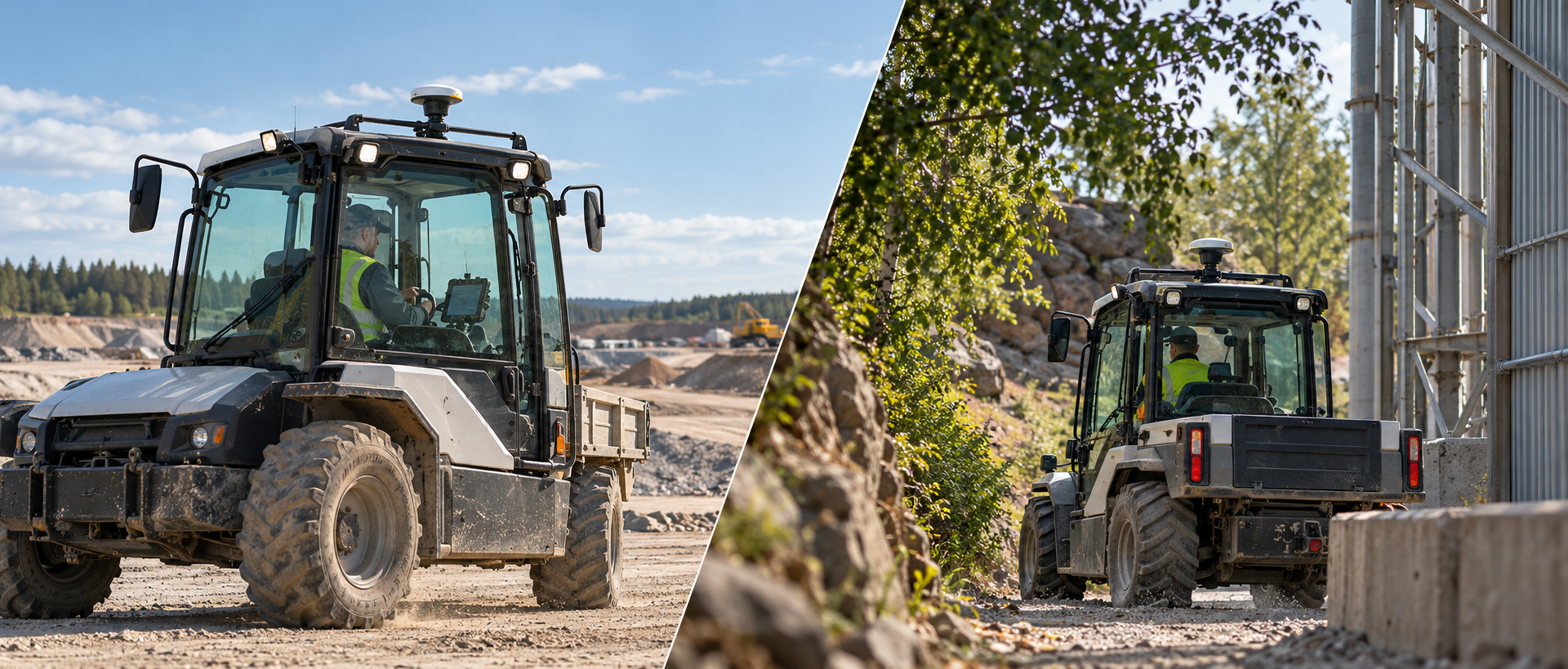
3. Unmanned mining haul trucks: Autonomous route tracking
4. Outdoor AGVs & delivery robots: Hybrid RTK+IMU positioning
5. Mobile survey vehicles: Continuous centimeter GIS data recording
RTK Deployment Pain Points & PC Optimization Solutions
|
Pain Point |
Solution on Our Industrial Vehicle PC |
|
RTK Fixed dropout under tree cover |
Built-in IMU dead reckoning algorithm |
|
High positioning latency |
Multi-core real-time processing |
|
Unstable NTRIP connection |
Dual SIM 4G/5G automatic switching |
|
Engine RF signal interference |
Internal RF shielding & isolated CAN ports |
|
Insufficient I/O for RTK wiring |
Multiple configurable RS/CAN/Ethernet ports |
OEM/ODM Custom RTK Vehicle PC Services
- We provide full B2B customization for machinery manufacturers:
- Custom I/O layout matching RTK module wiring
- Pre-flashed NTRIP and sensor fusion software
- Shockproof/waterproof enclosure customization
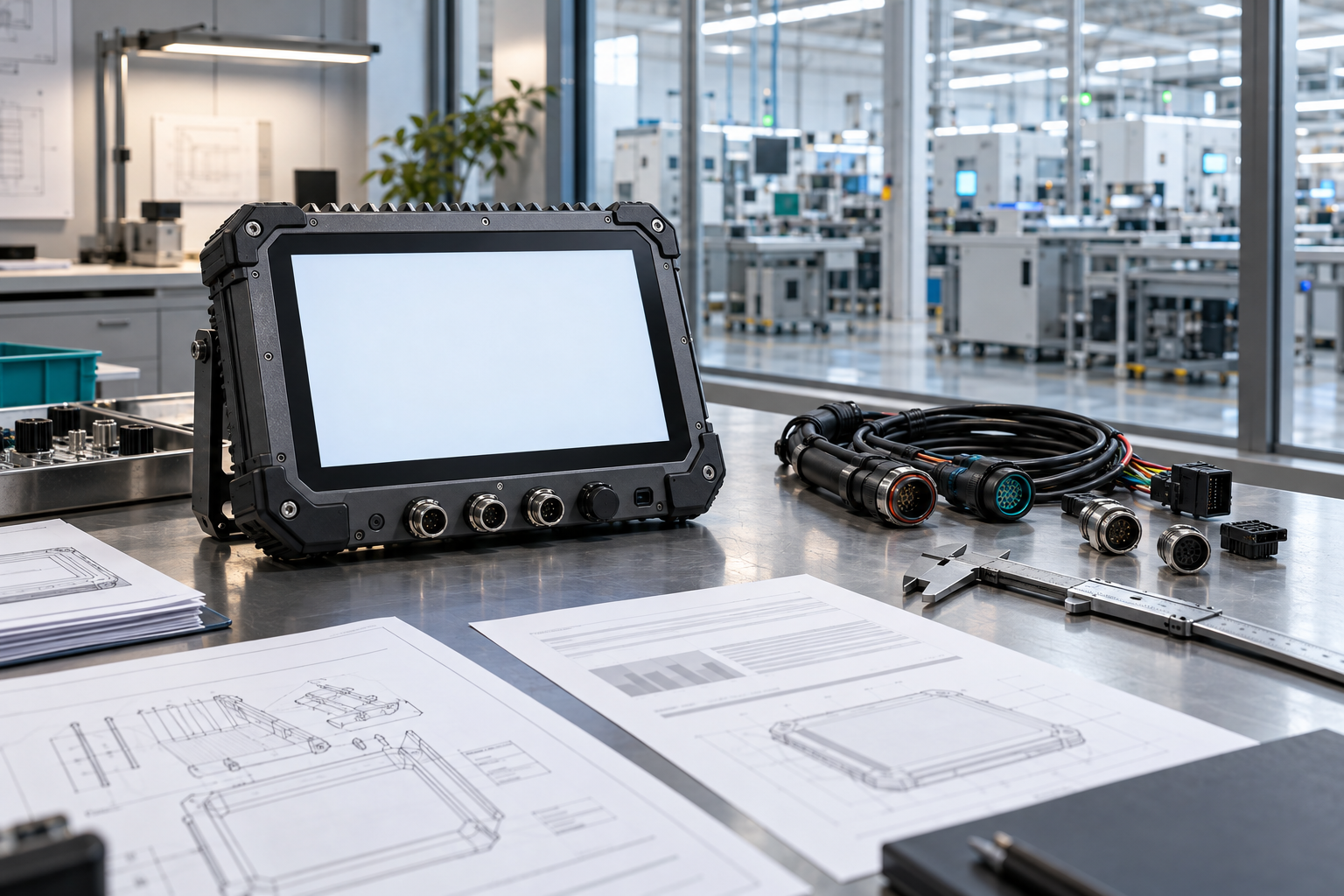
- Private branding, pre-calibrated PC+RTK module delivery in bulk
FAQ: 10 Top Buyer Questions
1.Is consumer mini PC compatible with vehicle RTK?
No. Lacking real-time OS, industrial bus interfaces and wide-temperature resistance, they trigger positioning failure in harsh vehicle environments.
2.What specs are required for RTK sensor fusion?
Quad-core CPU, 4GB RAM, industrial SSD, CAN FD + RS232 ports, optional 5G/GPU for vision fusion.
3.How far can a single base station cover vehicle rovers?
Up to 10km; network NTRIP CORS offers unlimited regional coverage.
4.Can RTK work in tunnels?
Satellite signals are blocked, but PC IMU algorithms maintain decimeter positioning for 5–30 seconds.
5.Do you offer pre-integrated RTK vehicle PCs for OEM?
Yes, full ODM hardware matching, pre-testing and customized firmware.
6.What certifications do your RTK vehicle computers have?
CE, FCC, E-MARK, ISO 7637.
7.How much is an RTK-compatible industrial vehicle PC?
Cost depends on configuration; contact sales for tailored bulk quotation.
8.Is network NTRIP better than standalone base stations?
NTRIP eliminates separate base station deployment, ideal for cross-region large fleets.
9.What long-term benefits does RTK vehicle PC bring to fleets?
Lower labor/fuel costs, upgradeable software, modular hardware for multi-industry reuse.
Contact us
📧Email:[email protected]
📞Tel:+86 13421822024
🌐Website: www.szpds.com
Disclaimer
The information in this article is for reference only. PDS Technology Co., Ltd. assumes no responsibility for errors, omissions, or suitability of the content for specific applications. Product specifications are subject to change without notice. Buyers should verify all technical details with our team before use.
About PDS Technology
PDS Technology is a leading OEM/ODM manufacturer of high-precision RTK GNSS terminals and vehicle computers, serving agriculture, construction, mining, taxi, and logistics industries since 2011.
With 15+ years of automotive-grade R&D experience, we offer rugged, multi-OS (Android/Linux/OpenHarmony) devices featuring RTK centimeter-level positioning, IP66 protection, and AI-ready performance. Our IATF16949-certified factories have produced over 100,000 units deployed globally, holding 30%+ of China's agricultural auto-steering terminal market. We export to Japan, the US, UK, Turkey, Russia, and beyond.