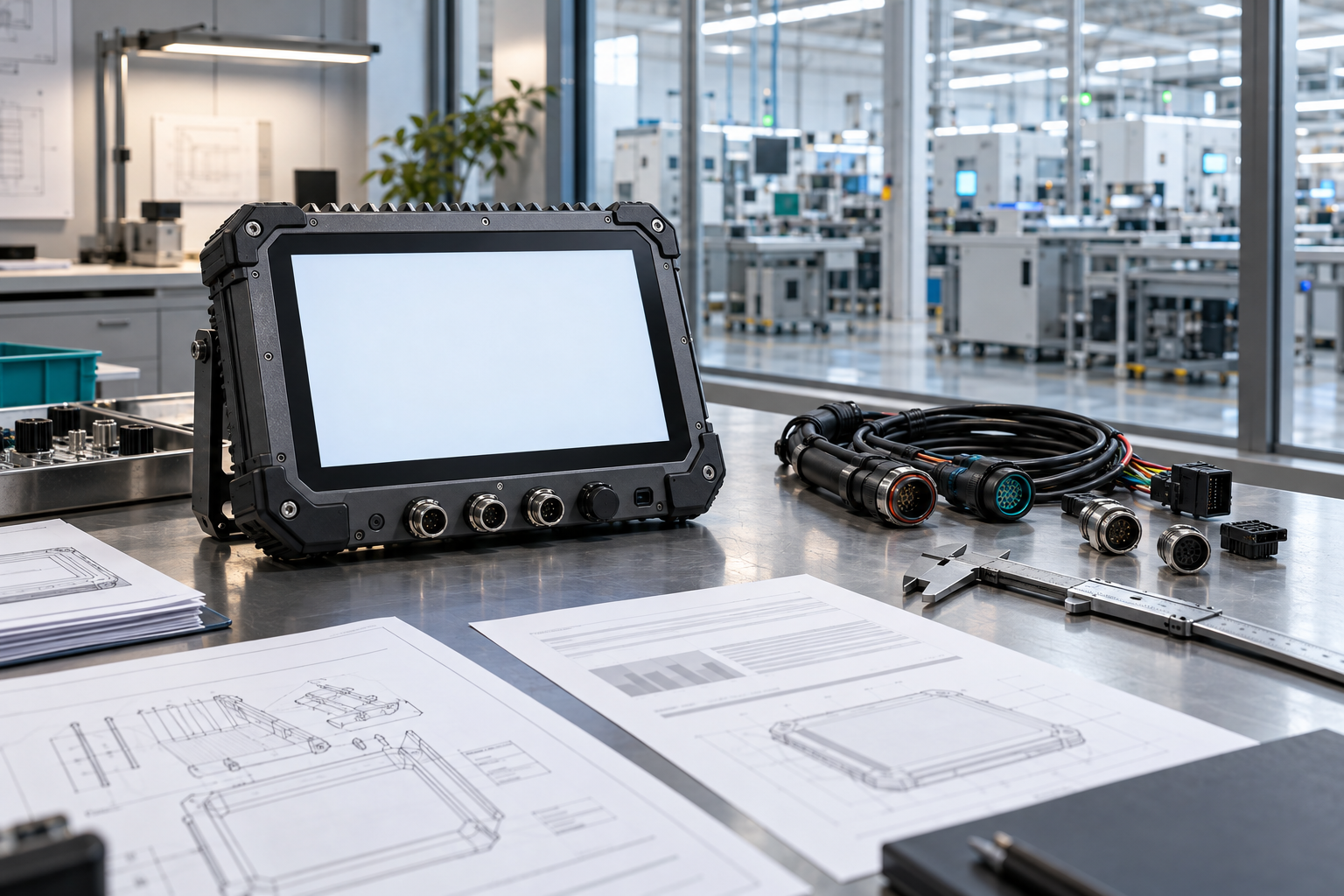
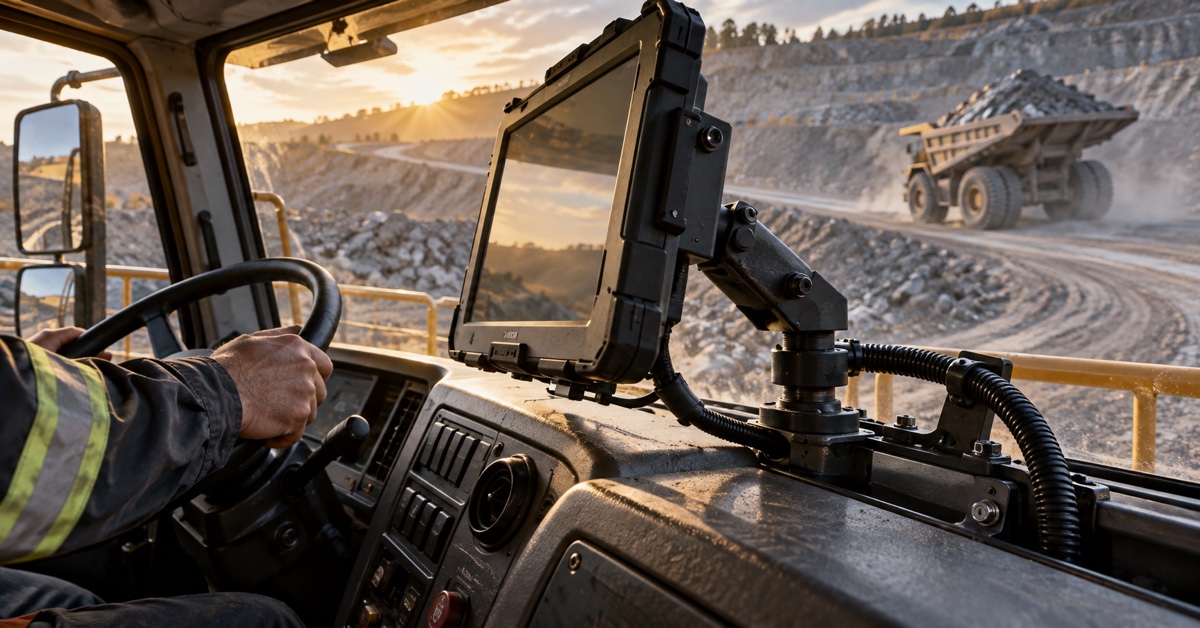
Open the quotation before opening the factory video. Circle the seller, beneficiary, factory and exact computer option. Next, choose one serial number. If the team can find the drawing revision, work order and final-test sheet for that unit during the call, the buyer has something worth checking. A new brochure in reply to every question is not that evidence.
This is the working purpose of rugged vehicle computer manufacturer verification. The company trail must lead to the party accepting the order, while the product trail leads to the hardware and software actually offered. Keep the camera tour, but judge the plain records left behind after the camera is off.
Start with the names already in the purchase file
Copy the names exactly as printed on the website, quotation, bank instruction and certificate. Add the name at the factory gate. A legitimate deal can still show two companies: perhaps sales sits in Shenzhen while the plant is elsewhere, or a specialist supplies the enclosure. Mark each mismatch with a question mark. Do not silently join the companies in the buyer's file.
Replace each question mark with a role and a person. The drawing may belong to one team, final test to another and warranty to the seller. The page stays with the offer so a colleague can follow it later. If new payment details arrive, call the contact from the original file. Do not verify a changed bank account by replying to the message that announced it.
| Claim | Minimum evidence | Cross-check |
|---|---|---|
| We are the manufacturer | Legal entity, factory address and role map | Quotation, payment details and certificate holder are explained |
| We build this model | Current drawing, revision and a serialized sample | The same identity appears on a work order and final-test record |
| We can support an OEM program | Named engineering owners and change process | A redacted example shows a review, decision and closure |
| This certificate applies | Certificate number, holder, site, scope and validity | Issuer or accredited directory confirms the record |
The address line matters more than the logo
Start near the bottom of the certificate, not at the badge. Compare its address with the offered plant, then read the scope and dates. Type the certificate number into the issuer's search page rather than a link sent by the supplier. A screenshot ending above the scope goes back for a full copy.
Do not search ISO for the company certificate. As its official page explains, ISO develops the standard while certification bodies audit and certify organizations. The issuing body is the record to verify.
The document still says nothing about the display or harness on the bench. A vibration or electrical result needs its own identity: model, revision, test sample, method, conditions, limit and outcome. Read an IATF 16949 certificate in two steps as well. Check the site and scope first; open the product file second.
Keep the camera on the same serial number
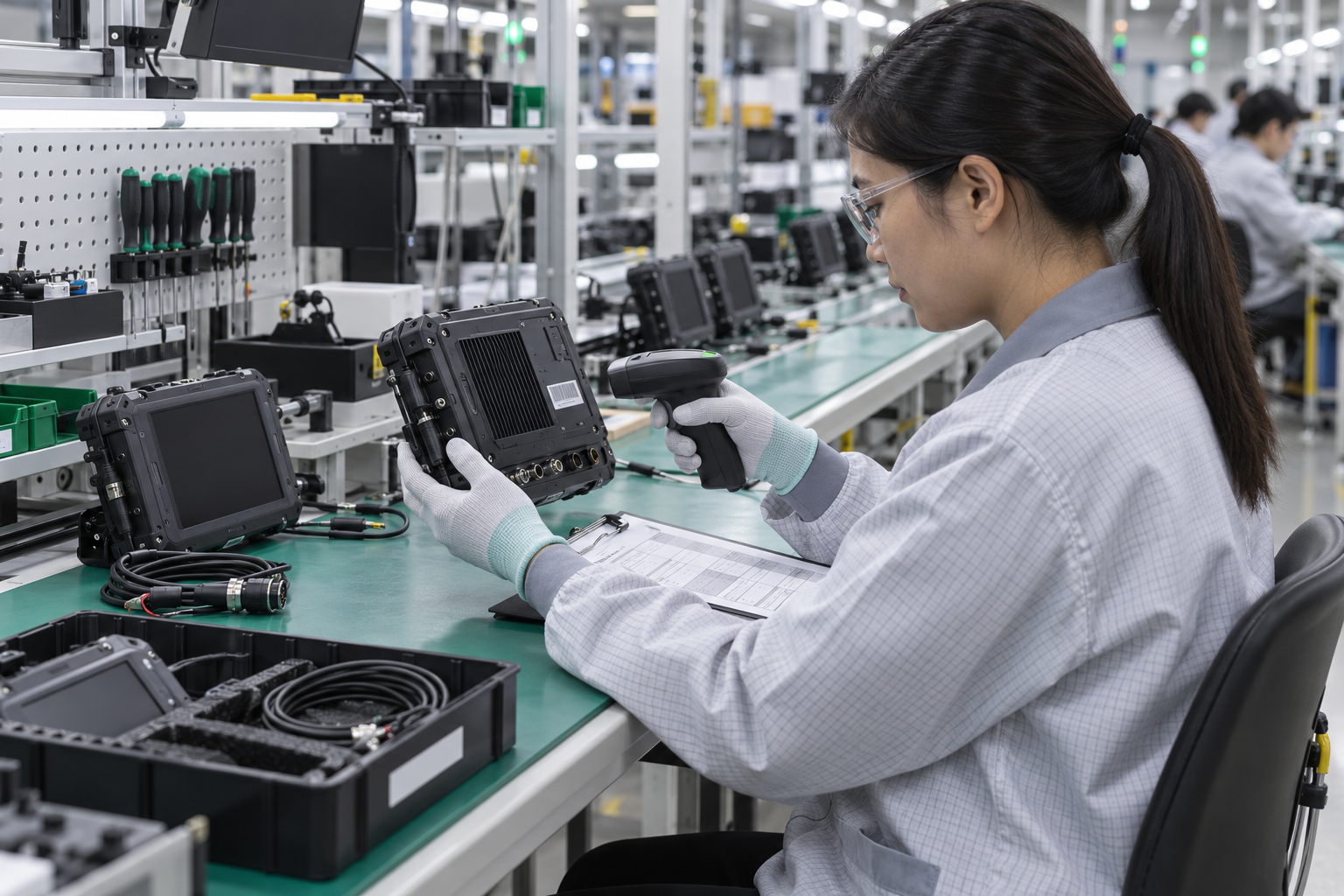
Set the proposed terminal on a clear bench. One photograph should capture its label; a second can show the display, cable set and bracket. On a sheet beside it, note the hardware revision, software build and modem or GNSS option. Leave that sheet in view while the work order, material record and final-test sheet are opened. Waiting for a system search is fine. Replacing the unit halfway through the trace is not.
A routine production record is more revealing than a row of machines. It normally names the operator or inspector, date, method or fixture, recorded result and disposition of a failure. Customer names and prices can be hidden; revision and process logic should remain. The buyer is not asking for another customer's design. The purpose is to see whether records are created and retrieved in a controlled way.
The enclosure may look identical across several builds. An RTK version therefore needs a note for its receiver or module, antenna, correction interface, firmware and positioning setup. A vehicle computer needs the processor, memory, radio, display, harness and OS image. Put a tick beside the installed choice on the data sheet. Without that tick, the test result can belong to any option on the page.
Mark how far each claim has been checked
A pencil number in the margin keeps the file honest. A spoken claim gets 0; a document gets 1. Add another point when the record reaches a real site or owner, another when it reaches the quoted sample, and the last when that baseline appears in a pilot or production lot. A first call will have low numbers. They should rise before the order does.
| Level | What the buyer can verify | Example |
|---|---|---|
| 0 - Claim | Nothing beyond the statement | "We make rugged computers" |
| 1 - Document | A named record exists | Business record, certificate or drawing |
| 2 - Site | The record maps to a real team and location | Live walk-through with the responsible engineer |
| 3 - Product | The evidence matches the offered configuration | Serialized sample, traveler and test record agree |
| 4 - Delivery | The approved baseline survives pilot or production | Lot record, shipment identity and receiving check agree |
The word manufacturer does not explain every role
A seller might write the fleet application and run system tests while a specialist makes the enclosure. That can be a sensible split. Write both parties and the change rules into the contract. The reverse problem also occurs: a busy factory floor does not help much when nobody there maintains the BSP required by the project.
Open the project folder and put an owner on every working file: schematic, mechanical drawing, BSP, application image, harness, fixture and final-test procedure. Mark the items that require buyer approval before revision. This exercise usually settles the manufacturer-versus-integrator debate faster than another company profile.
Follow one decision across the factory
A useful factory review follows work rather than equipment. Take one recent requirement, such as a connector relocation. Who reviewed it? Which drawing changed? Did firmware, harness, enclosure or validation need another look? Ask where the older units went after the revision. One small change can reveal requirement review, engineering, prototype build, verification and production release in less time than a full tour.
Next, open a redacted problem record. It could concern a loose connector, pale display, modem reset, slow boot or faulty cable. Customer detail may disappear, but the original symptom and containment should remain, followed by the diagnosis, correction and retest. Quietly swapping the demonstration sample is not the same as closing a production issue.
Use a remote review to plan the visit
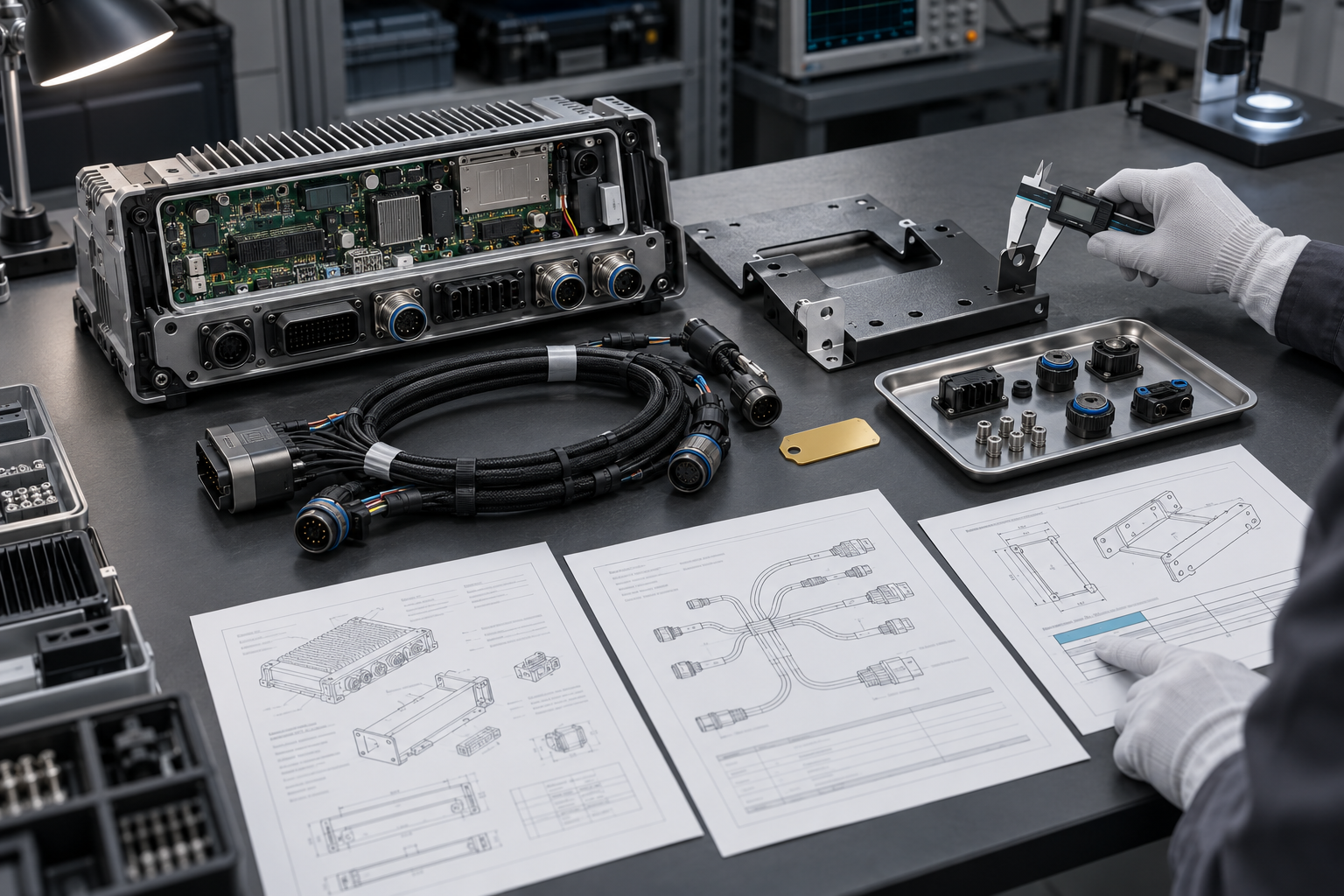
Before booking flights, request only what the call can reasonably use: the entity map, site, certificates, role list, revision map, one traveler, one test example and the change form. During the video, call out a station that was not in the prepared tour. The presenter should be able to bring up the quoted model's record there, not just point the camera at equipment.
Use the call to write the onsite agenda. Expensive tooling, safety-related integration, a large opening order, hidden subcontracting or an unresolved process gap may require direct observation. A lower-risk supplier may fail the remote review so clearly that the trip is unnecessary. Neither outcome makes the video identical to an audit.
Compare like with like before price enters the room
Print the score sheet before the offers are opened. One project might reserve 15 points for entity and site, 25 for the serial-number trace, 20 for engineering ownership, 20 for validation, 15 for production and change control, and 5 for disclosed limits. Change those weights when the project changes, not when a favorite bidder appears.
Give an unsupported claim zero. Keep a partial item open only with a named owner and date. Then set the evidence score aside until both prices include the same hardware, software, accessories, engineering, tests and delivery terms. A cheaper line with missing work is not a saving, and it breaks the comparison needed for rugged vehicle computer manufacturer verification.
Apply the same review to a PDS quotation
PDS Technology's relevant product work includes rugged vehicle computers and RTK GNSS terminals for industrial vehicles. Review the company background, product range and OEM/ODM process before the quotation call. These pages introduce the business; the order file still needs its own evidence.
Send PDS a short machine note for rugged vehicle computer manufacturer verification: vehicle, market, volume, terminal size, interfaces, radios, OS, environment and validation plan. PDS can then separate standard options from project work and identify the applicable entity, site and build. Tie the later evidence request to that build, not to the entire product family.
Pause when the evidence chain breaks
- The legal entity, bank beneficiary and factory relationship cannot be explained.
- The sample model or revision changes between the quotation, drawing and test report.
- A certificate number, holder, address or scope cannot be independently confirmed.
- The supplier refuses any live trace from a serialized unit to its work or test record.
- Subcontracted design or production is denied first and disclosed only after questioning.
- A requested change is made in the next sample without a revision note or repeat-test decision.
When one of these appears, stop at the decision it affects. A missing certificate scope may block site approval but not a sample measurement; a changed hardware revision may invalidate the whole test result. Name the missing item and its owner. Reopen the decision only when the reply points back to the same model, revision and offer.
Ten notes to settle before the shortlist
1. Where should the review begin?
Begin with the names on the quote and payment instruction. Add the registered company, factory and certificate holder, leaving every unexplained difference visible.
2. What does a live video add?
It shows a place and activity at that moment. Use the call to retrieve the work order, revision and test result for the proposed unit.
3. Can another customer's details be hidden?
Yes. Remove names and prices, not the dates, roles, revisions and closure route the buyer needs to judge the process.
4. What belongs in an RTK trace?
Record the offered receiver or module, antenna, firmware, interfaces and correction setup. The positioning and environmental results should point to the same set.
5. Does a certificate approve the terminal?
No. Check the certificate for its site and scope, then open the separate design, test and production records for the quoted configuration.
6. What should an OEM review follow?
Take one requirement from decision to drawing, sample, test and production release. The owners and records along that route reveal the working capability.
7. Must every operation sit under one roof?
No. Write down subcontracted work, its controls and its change route, while leaving one contracted party accountable for the finished product.
8. When should prices be compared?
After both offers cover the same computer, accessories, engineering, tests and delivery terms. Until then, the totals describe different purchases.
9. What makes a factory visit useful?
Give the visit unresolved questions from the remote review. Tooling, safety, order value or hidden subcontracting may also make direct observation necessary.
10. What closes the file?
Rugged vehicle computer manufacturer verification closes when the entity, site, quoted revision, serialized sample and pilot or production record agree, and any exception is accepted in writing.
Contact us
📧Email: [email protected]
📞Tel: +86 13421822024
🌐Website: www.szpds.com
Disclaimer
The information in this article is for reference only. PDS Technology Co., Ltd. assumes no responsibility for errors, omissions, or suitability of the content for specific applications. Product specifications are subject to change without notice. Buyers should verify all technical details with our team before use.
About PDS Technology
PDS Technology is a leading OEM/ODM manufacturer of high-precision RTK GNSS terminals and vehicle computers, serving agriculture, construction, mining, taxi, and logistics industries since 2011.
With 15+ years of automotive-grade R&D experience, we offer rugged, multi-OS (Android/Linux/OpenHarmony) devices featuring RTK centimeter-level positioning, IP66 protection, and AI-ready performance. Our IATF16949-certified factories have produced over 100,000 units deployed globally, holding 30%+ of China's agricultural auto-steering terminal market. We export to Japan, the US, UK, Turkey, Russia, and beyond.