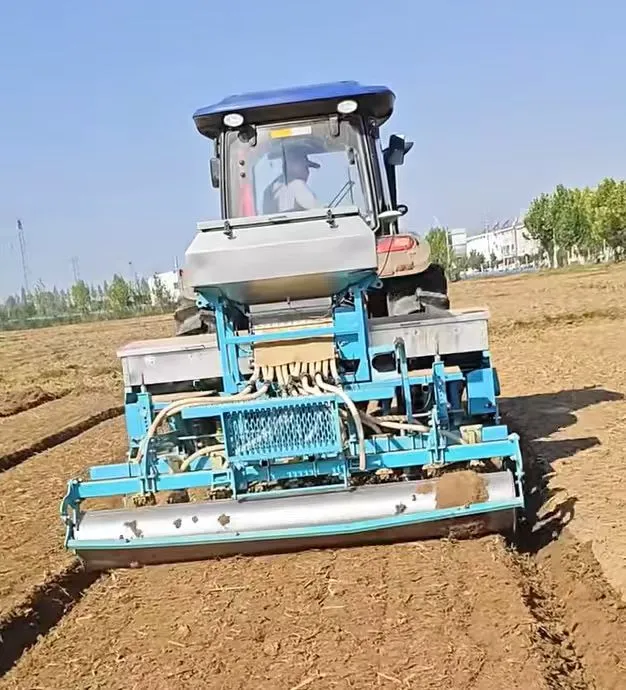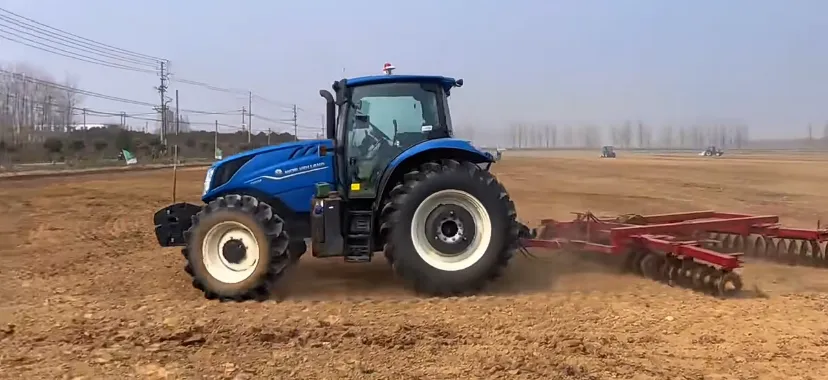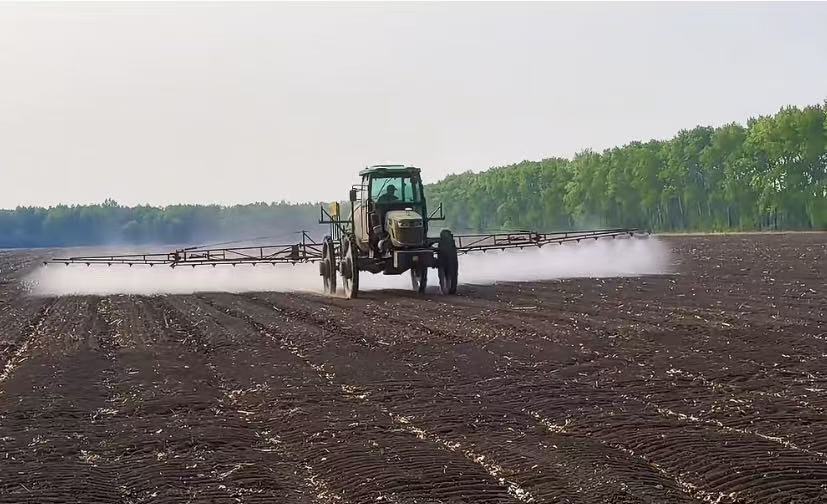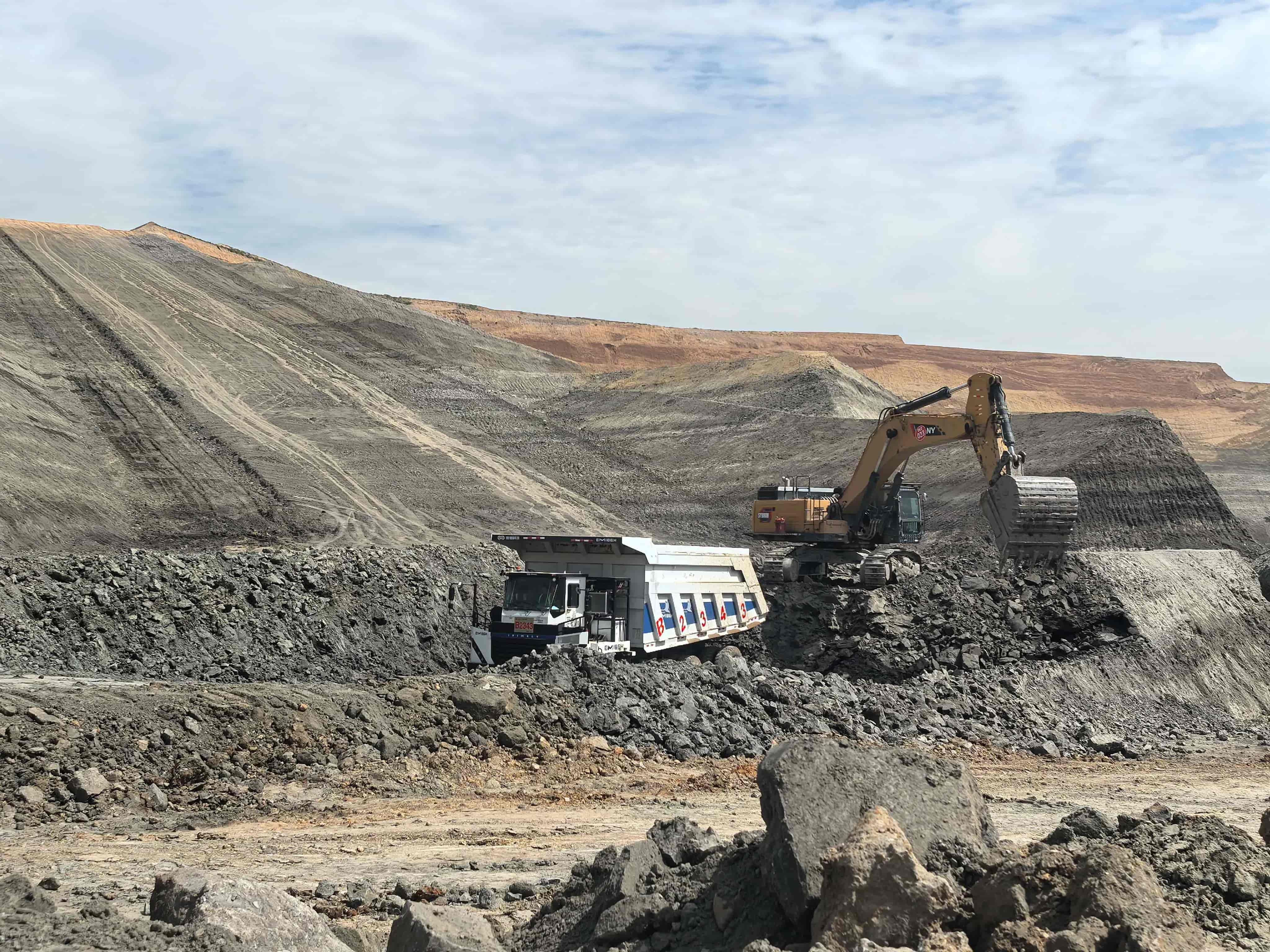

In precision land leveling, a vehicle computer does much more than display a map. It serves as the central in-cab terminal that connects GNSS/RTK positioning data, customer-developed leveling software, and the tractor’s hydraulic control system.
PDS Technology manufactures the T10 rugged vehicle computer for OEM agricultural machinery manufacturers and system integrators. With optional RTK positioning, industrial communication interfaces, and a 23-pin customizable wiring harness, the T10 integrates directly into custom-built land leveling architectures.
1. Why Precision Land Leveling Requires More Than Manual Operation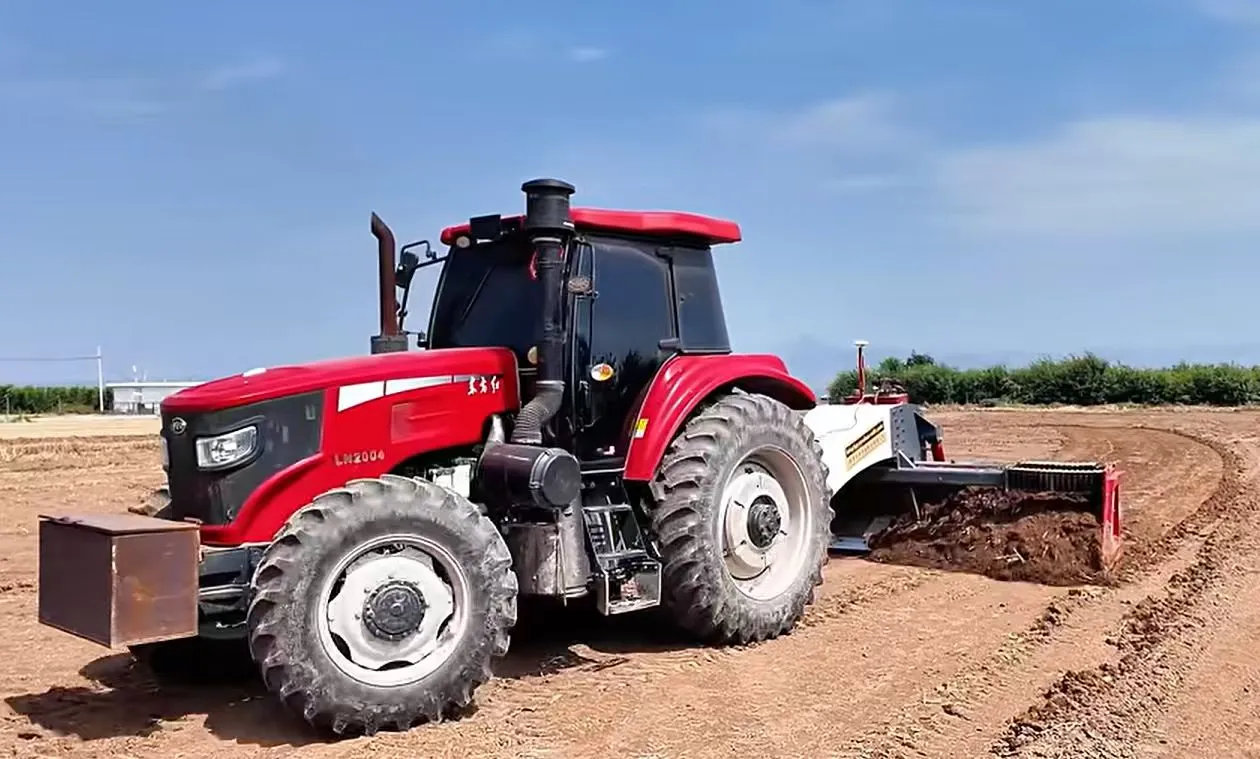
Uneven farmland disrupts surface irrigation. High spots suffer from water stress, while low spots experience waterlogging and uneven crop emergence. According to the Food and Agriculture Organization (FAO), precision land leveling significantly improves water distribution uniformity in surface irrigation systems.
Traditional leveling relies heavily on manual surveying and operator judgment, which becomes slow and inconsistent across large acreage. A GNSS/RTK-based leveling system replaces guesswork with measurable elevation data, allowing operators to grade fields to an exact slope or plane.
2. How a GNSS/RTK Land Leveling System Works
A typical GNSS/RTK land leveling setup relies on five core components working in a closed loop:
- GNSS/RTK Receiver & Antenna: Captures real-time tractor coordinates and ground elevation using satellite signals and RTK correction data.
- Vehicle Computer (e.g., PDS T10): Runs the leveling application, renders field elevation maps, and routes data between positioning hardware and controllers.
- Land Leveling Controller: Processes elevation deltas and sends control signals to the machinery’s hydraulic valves.
- Hydraulic System: Actuates the hydraulic cylinders to raise or lower the blade.
- Leveling Implement: Cuts soil from high areas and fills low areas according to the target field design.
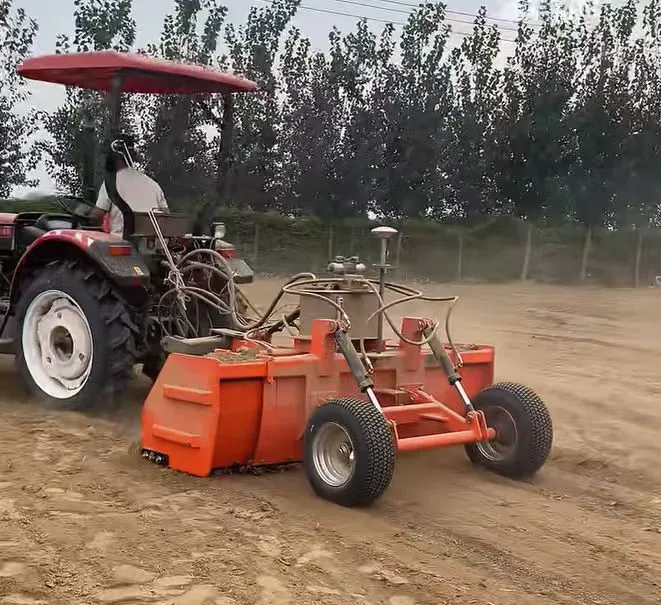
The Operating Workflow:
- Acquire Position: The GNSS/RTK receiver feeds real-time coordinates and actual elevation to the system.
- Load Target Design: The software establishes the target field elevation and grade slope.
- Calculate Elevation Delta: Customer software compares actual ground height against the target plane.
- Actuate Blade: The controller translates elevation differences into hydraulic valve commands to adjust blade height.
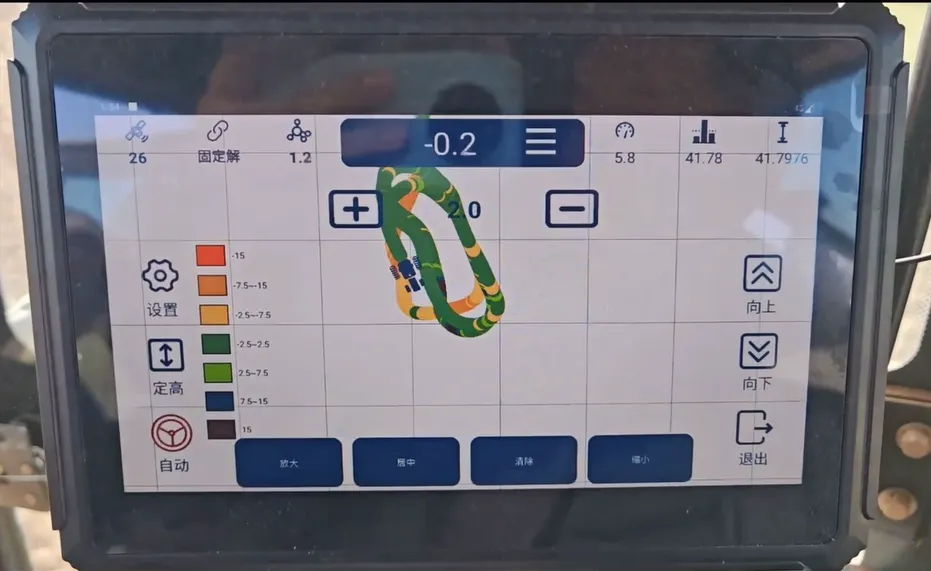
- Continuous Monitoring: Real-time cut/fill progress and equipment diagnostics are displayed on the in-cab terminal.
What About Laser Land Leveling?
Laser-based systems use a stationary laser transmitter to establish a reference plane and a mast-mounted receiver on the scraper to detect height, as detailed in the International Rice Research Institute (IRRI) manual, Laser-Controlled Land Leveling for the Philippines (2020).
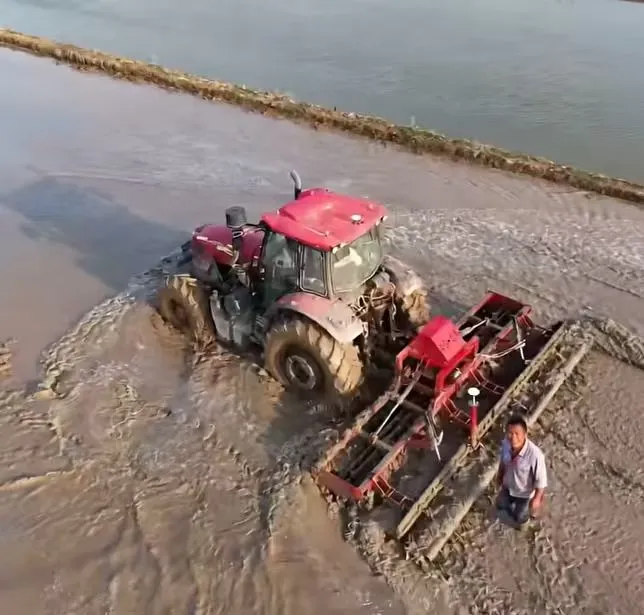
In a laser setup, a vehicle computer does not replace the dedicated laser control box. However, when compatible serial or CAN interfaces are available, the T10 can act as a secondary monitoring terminal for logging field operations and equipment status.
3. The Specific Role of the Vehicle Computer in the Cab
PDS focuses strictly on rugged industrial hardware rather than supplying turnkey leveling software. Within a customer's system architecture, the vehicle computer handles four critical tasks:
- Running Custom Leveling Software: Agricultural OEMs and integrators deploy their own Android or Linux applications directly on the terminal to calculate cut/fill volumes and manage field designs.
- Centralizing Real-Time Telemetry: Connected to an internal RTK module or external receiver, the screen consolidates vehicle trajectory, actual vs. target elevation, cut/fill maps, and system alerts into one interface.
- Bridging Multi-Device Communication: Land leveling requires reliable data exchange across different protocols. The PDS T10 features a 23-pin wiring harness supporting dual CAN, two RS232 ports, one RS485 port, 100M Ethernet, and GPIO. Engineers can wire both the GNSS receiver and the leveling controller directly to the terminal once pinouts and protocols are verified.
- Streamlining Operator Control: A responsive touchscreen replaces fragmented cab gauges, allowing operators to adjust parameters and monitor hydraulic feedback without looking away from the field.
4. Why the PDS T10 Fits Agricultural Machinery Environments
Tractor cabs expose electronics to constant engine vibration, fine dust, wide temperature swings, direct sunlight, and unstable 12V/24V alternator power. The PDS T10 is engineered specifically to survive these conditions.
PDS T10 Key Specifications
|
Feature |
PDS T10 Specification |
|
Processor |
Allwinner T507, Quad-core Cortex-A53, 1.5 GHz |
|
Display |
10.1-inch full-lamination IPS, 1280 × 800 resolution |
|
Brightness |
750 nits (sunlight-readable) |
|
Operating System |
Android 10 / Linux Buildroot |
|
RTK Positioning |
Optional built-in RTK module and external antenna |
|
Industrial Interfaces |
Dual CAN, 2 × RS232, 1 × RS485, 100M Ethernet, GPIO |
|
Main Connector |
23-pin automotive-grade wiring harness |
|
Power Input |
9–36V DC wide voltage with vehicle power protection |
|
Ingress Protection |
IP66 (dust-tight and resistant to heavy water spray) |
|
Operating Temp. |
-20°C to +70°C |
|
Vibration & Compliance |
Designed referencing MIL-STD-810F; CE certified |
Clarifying RTK Positioning vs. Finished Grading Accuracy When configured with the optional RTK module and a valid correction service, the T10 supports ~2.5 cm positioning accuracy under open-sky conditions.
However, buyers should distinguish between GNSS positioning accuracy and final field leveling accuracy. The smoothness of the finished soil surface also depends on your control algorithms, hydraulic valve response speed, blade mechanics, and soil moisture.
Built for Open-Cab and Enclosed Tractors The 750-nit full-lamination screen prevents glare washout under midday sun, while IP66 sealing protects internal boards during washdowns or dusty tillage. Wide 9–36V DC power input prevents reboots during tractor engine cranking.
5. Proven Deployment in Commercial Land Leveling
PDS vehicle computers are already deployed in over 1,000 commercial precision land leveling units worldwide. In these active fleets, the terminal acts as the primary human-machine interface (HMI) inside the tractor cab—ingesting RTK coordinates, running the integrator’s grading software, and communicating with the hydraulic controller over CAN or RS232.
6. Pre-Integration Checklist for OEMs and System Integrators
Selecting a rugged terminal involves verifying hardware and protocol compatibility before procurement. Before integrating the PDS T10, engineering teams should confirm five details:
- OS & SDK Compatibility: Verify that your leveling software runs smoothly on Android 10 or Linux Buildroot.
- GNSS/RTK Architecture: Decide between using the T10’s optional internal RTK module or connecting an existing external GNSS receiver via RS232/CAN.
- Controller Protocol: Confirm baud rates, CAN bus protocols (e.g., J1939), or serial data formats used by your hydraulic controller.
- Harness & Pinout Customization: Review the standard 23-pin harness definition. For OEM/ODM orders, PDS can customize cable lengths, connectors, and pinouts to match your cab wiring.
- Mounting & Power: Confirm RAM/VESA mounting points and ignition (ACC) power trigger requirements.
Backed by a core R&D team with over 15 years of vehicle navigation and RTK integration experience and deployments across 30+ countries, PDS software engineers provide direct support for initial device debugging, port mapping, and application compatibility testing.
7. Frequently Asked Questions (FAQ)
1. Can the PDS T10 directly drive hydraulic leveling valves?
No. The T10 is an in-cab computing and display terminal. It runs your leveling software and sends commands via CAN or serial ports to your dedicated leveling controller, which drives the hydraulic valves.
2. Does the T10 guarantee 2.5 cm finished soil leveling accuracy?
The optional RTK module delivers ~2.5 cm horizontal/vertical positioning accuracy under optimal satellite and correction conditions. Final ground grading accuracy depends on your hydraulic response, blade design, and control software.
3. Can we connect our own third-party RTK receiver instead of using the built-in module?
Yes. You can order the T10 without the internal RTK module and connect your existing GNSS/RTK receiver via RS232, RS485, CAN, or Ethernet.
4. Does PDS supply the land leveling application software?
PDS specializes in industrial vehicle computer hardware and also works with partners who offer land leveling system solutions. Customers can choose a suitable solution based on their project requirements. If customers already have their own software, our technical team can assist with application integration, device configuration, and software compatibility testing to help integrate PDS vehicle computers into their existing systems.
5. Can PDS customize the 23-pin wiring harness for our controller?
Yes. For OEM and ODM projects, our engineers can customize wire lengths, waterproof connectors, and pin definitions once you share your controller's electrical specs and pinout diagram.
6. How does the T10 handle unstable tractor battery voltage?
The T10 accepts a 9–36V DC wide voltage input with built-in surge and transient protection, preventing sudden shutdowns during engine ignition or heavy hydraulic load spikes.
Next Steps for Your Integration Project
If you are developing or upgrading a precision land leveling system, share your controller communication protocol, GNSS setup, and OS preference with the PDS engineering team. We can help verify interface compatibility and configure a tailored T10 hardware sample for your field testing.
Contact us
📧Email:[email protected]
📞Tel:+86 13421822024
🌐Website: www.szpds.com
Disclaimer
The information in this article is for reference only. PDS Technology Co., Ltd. assumes no responsibility for errors, omissions, or suitability of the content for specific applications. Product specifications are subject to change without notice. Buyers should verify all technical details with our team before use.
About PDS Technology
PDS Technology is a leading OEM/ODM manufacturer of high-precision RTK GNSS terminals and vehicle computers, serving agriculture, construction, mining, taxi, and logistics industries since 2011.
With 15+ years of automotive-grade R&D experience, we offer rugged, multi-OS (Android/Linux/OpenHarmony) devices featuring RTK centimeter-level positioning, IP66 protection, and AI-ready performance. Our IATF16949-certified factories have produced over 100,000 units deployed globally, holding 30%+ of China's agricultural auto-steering terminal market.We export to Japan, the US, UK, Turkey, Russia, and beyond.