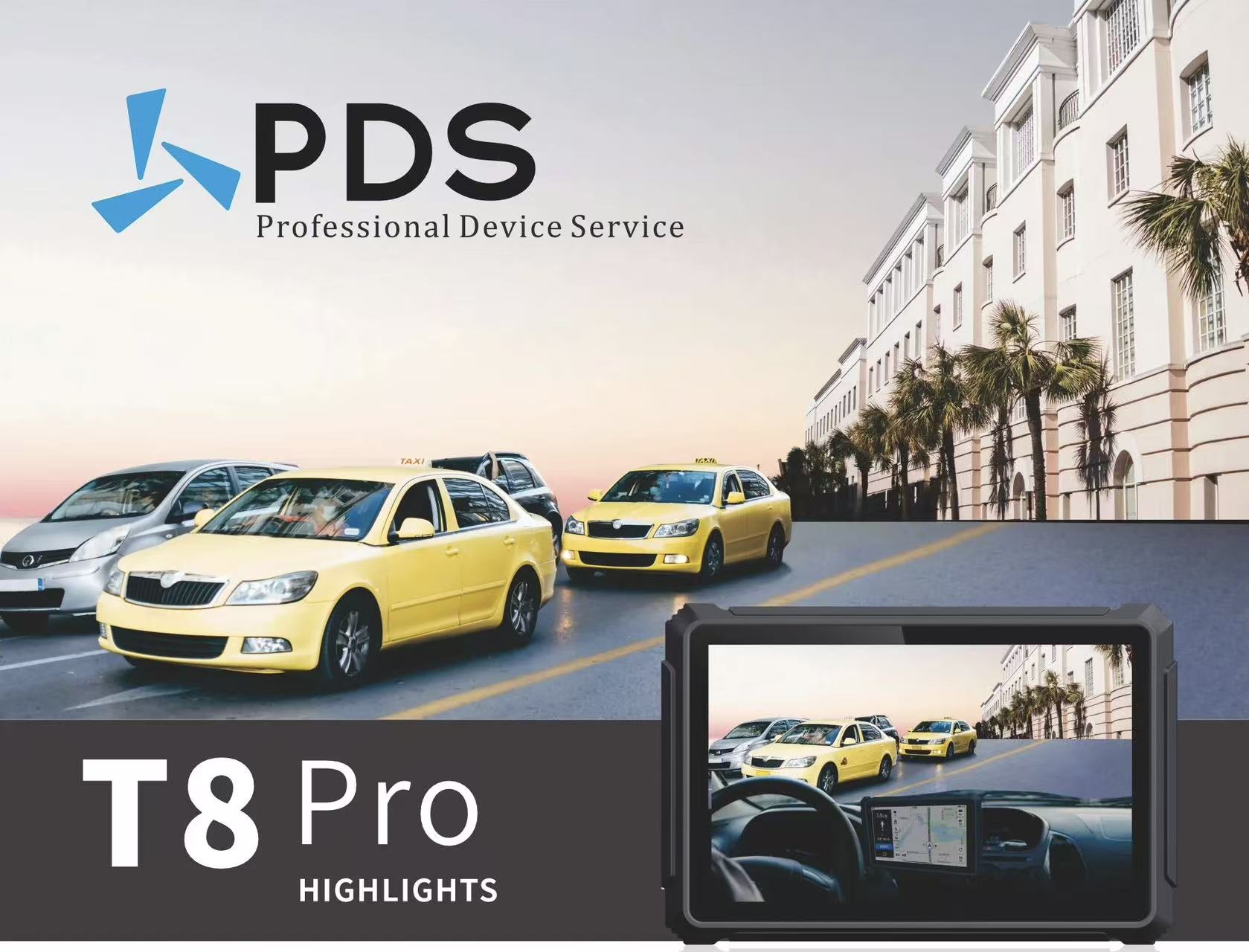
Agricultural auto-steering is not only about accurate positioning. An auto-steering system also needs a reliable vehicle computer to display guidance information, connect with vehicle systems, and give the operator a clear interface during field operations.
In real agricultural machinery applications, rugged vehicle computers are often used as the operator terminal of the system. They work together with RTK GNSS positioning, steering controllers, agricultural software, cameras, and other vehicle equipment.
PDS rugged vehicle computers have been used in agricultural auto-steering applications in China, Russia, and other markets. Depending on the machine and installation requirements, these projects use different screen sizes, including 7-inch, 10-inch and 12-inch vehicle-mounted terminals.
This article looks at how rugged vehicle computers fit into agricultural auto-steering systems and what equipment manufacturers and system integrators should consider when selecting a terminal.
What Role Does a Vehicle Computer Play in Agricultural Auto-Steering?
An agricultural auto-steering system normally includes several different components.
RTK GNSS provides high-precision positioning information. The steering system performs the steering operation. Agricultural software manages navigation routes, field information, and operating data.
The vehicle computer connects these functions from the operator's perspective.
It can be used to:
- Display RTK GNSS guidance lines and navigation information
- Show vehicle and implement information
- Provide the interface for agricultural applications
- Connect with CAN Bus and other vehicle interfaces
- Display camera images when cameras are integrated
- Communicate with external positioning and wireless modules
- Provide a touch interface for the operator
This means the vehicle computer is not necessarily the component that performs the steering itself. Instead, it provides the computing, communication, and operator interface needed to make the complete agricultural auto-steering system usable inside the cab.
Real-World Application: Rugged Terminals on Agricultural Tractors
PDS vehicle-mounted computers have been integrated into agricultural machinery used for field operations.
Different machines have different requirements. Some applications use a 7-inch terminal where a compact display is preferred, while others use a 10-inch or 12-inch vehicle computer to provide a larger working area for navigation maps, camera views and additional information.
Application 1: Tractor Field Operations
Agricultural tractors often operate for long periods in open fields, where the terminal is exposed to sunlight, vibration, dust, and changes in temperature.
In an auto-steering application, the operator needs to monitor the guidance path while also paying attention to vehicle and implement operation.
A vehicle-mounted computer provides the screen and interface for this information while remaining integrated with the vehicle's electrical and communication systems.
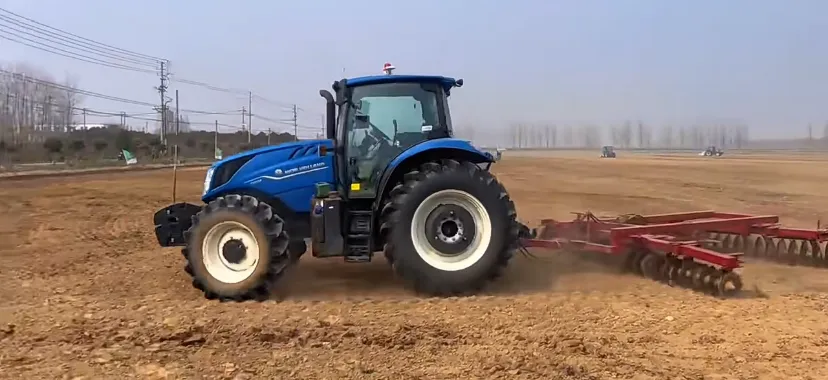
The actual configuration can vary according to the tractor, steering controller, GNSS system, and software used by the customer.
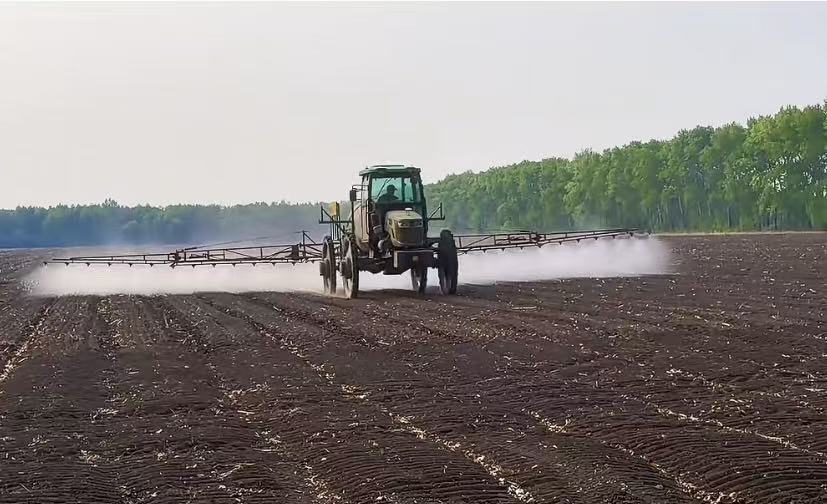
Application 2: Auto-Steering in Dusty Field Conditions
Agricultural machinery does not operate in a clean indoor environment.
During plowing, planting, spraying, harvesting, and other field operations, dust and vibration are normal parts of the working environment. The vehicle computer therefore needs to be designed for vehicle applications rather than simply adapted from consumer electronics.
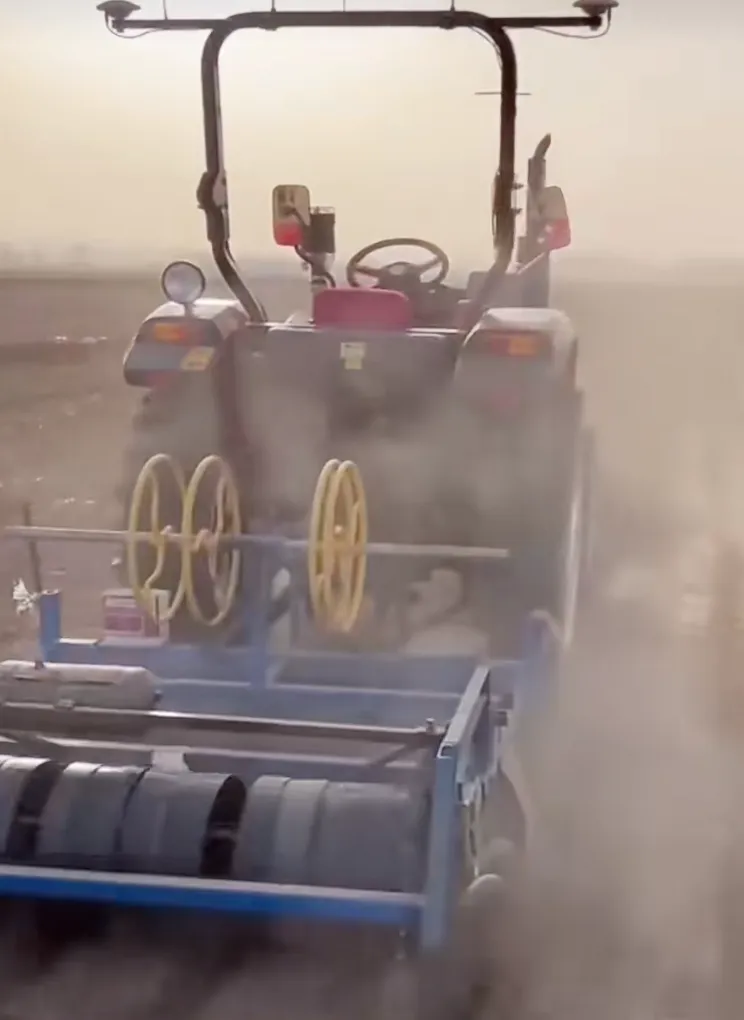
For this type of application, factors such as enclosure protection, vibration resistance, operating temperature, power input, and mounting method can be as important as processor performance.
From the Driver's Cab: How the System Comes Together
The installation inside the cab gives a better understanding of the role of the vehicle computer.
A typical agricultural auto-steering configuration may include:
RTK GNSS antenna → GNSS/positioning module → navigation or steering system → vehicle computer → operator interface
The exact architecture depends on the customer's system design.
The vehicle computer may communicate with the machine through CAN Bus or other interfaces, while displaying navigation information and application data on the screen.
Cameras can also be connected when the operator needs additional visibility around the machine.
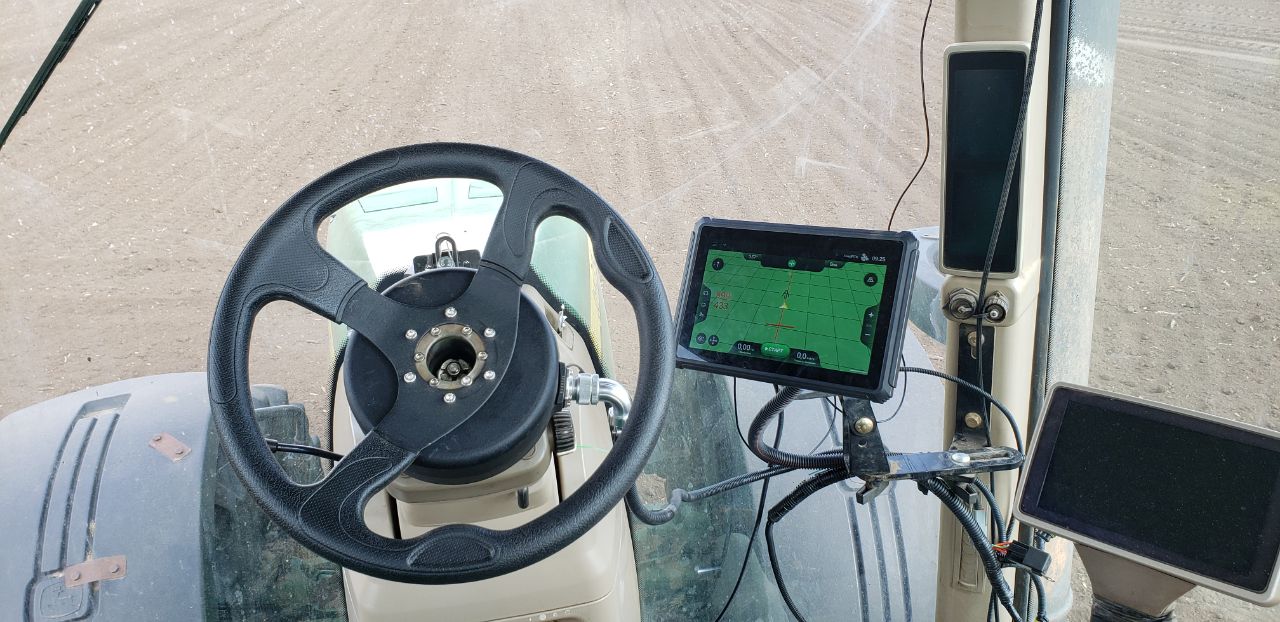
This type of integration is one reason why agricultural equipment manufacturers often require more than a standard Android tablet. The terminal needs to work as part of the complete vehicle system.
Why Ruggedness Matters in Agricultural Auto-Steering?
Sunlight and Outdoor Visibility
Agricultural auto-steering systems are commonly used outdoors, often under direct sunlight.
A screen that works well indoors may not provide the same viewing experience inside a tractor cab. High brightness, suitable viewing angles, and a touch interface designed for vehicle operation are therefore important selection points.
For applications that require larger navigation maps, camera views, or multiple information panels, a larger display can also make the operator interface easier to arrange.
Vibration and Shock
Agricultural machinery operates on uneven ground, and vibration is part of normal operation.
The vehicle computer needs to withstand the mechanical conditions associated with the machine. This includes the mounting structure as well as the computer itself.
A suitable installation should therefore consider both the computer's vibration resistance and the mechanical stability of the mounting solution.
Dust, Rain and Field Conditions
Agricultural machinery may work in dusty fields, humid environments, and changing weather conditions.
For this reason, protection against dust and water is another important consideration when selecting a rugged vehicle computer.
PDS vehicle computers are designed with IP66 protection for demanding vehicle applications.
Vehicle Power Supply
Agricultural vehicles do not use the same power environment as office equipment.
Voltage fluctuations and vehicle electrical conditions need to be considered when selecting a vehicle computer. PDS vehicle computers support a 9–36V DC input range and are designed for vehicle electrical environments.
Choosing a Vehicle Computer for an Agricultural Auto-Steering System
The best vehicle computer is not necessarily the one with the highest specifications. It should match the actual agricultural machine and application.
1. Screen Size
Screen size should be selected according to the cab layout and the amount of information that needs to be displayed.
A 7-inch terminal can be suitable when installation space is limited or a compact interface is preferred.
A 10-inch terminal provides more screen space for maps, guidance information and additional applications.
For larger agricultural machinery or applications requiring more information to be displayed at the same time, the 12.1-inch T12 provides a larger working area.
The key is to match the screen size with the operator's workflow and available installation space.
2. Operating System
The agricultural software platform should be considered before selecting the hardware.
Android can be suitable for applications that already use Android-based software, while Linux may be preferred for some embedded or customized systems.
PDS offers different vehicle computer configurations with Android and Linux options depending on the model and project requirements.
3. Communication Interfaces
Agricultural auto-steering systems may need to communicate with multiple devices.
Depending on the project, interfaces such as CAN Bus, RS232, RS485, Ethernet, USB, 4G, Wi-Fi, or Bluetooth may be required.
The actual interface requirements should be confirmed with the steering controller, GNSS module, agricultural software, cameras, and other connected equipment before the hardware is finalized.
4. RTK GNSS Compatibility
For precision agriculture applications, RTK GNSS can provide centimeter-level positioning when used with an appropriate correction source and complete system configuration.
The vehicle computer can serve as the terminal for displaying positioning and guidance information, while the actual RTK architecture depends on the customer's GNSS module, antenna, correction service, and application software.
5. Camera Integration
Cameras are becoming increasingly common on agricultural machinery.
They can provide views of the rear of the machine, implements, blind spots, or surrounding working areas.
For applications that require both navigation and camera monitoring, the vehicle computer should have enough camera connectivity and processing capability for the required configuration.
PDS Rugged Vehicle Computers for Agricultural Equipment
PDS provides rugged vehicle-mounted computers for agricultural machinery and other industrial vehicle applications.
For agricultural auto-steering projects, the product range includes compact 7-inch terminals, 10-inch vehicle computers and the larger 12-inch T12.
With 7-inch, 10-inch and 12-inch vehicle-mounted terminals available for agricultural machinery, these applications provide a practical look at how rugged computing hardware fits into an auto-steering system.
The T12 is the larger-screen option in the range. It uses a 12.1-inch IPS display with a published brightness of 750 nits. The product supports Android 13 or an optional Linux Kernel 5.15 + Qt 5.15 configuration, and RTK GNSS can be added for precision positioning applications. It also provides multiple vehicle interfaces and four camera ports for 1080P camera applications.
For larger tractors and agricultural machinery, the larger display area can provide more space for navigation maps, machine information, camera views, and other application interfaces.
The choice between 7-inch, 10-inch and 12-inch hardware should ultimately depend on the vehicle layout, software requirements, information density, and operator workflow.
From Agricultural Auto-Steering Prototype to Mass Production
For an agricultural machinery manufacturer, selecting the vehicle computer is only one part of the project.
The system also needs to be tested in the actual machine.
This normally includes:
1. Confirming the installation position and mounting structure
2. Checking power input and vehicle electrical conditions
3. Confirming CAN, serial, Ethernet and other interfaces
4. Testing GNSS and RTK communication
5. Integrating the agricultural application
6. Testing cameras and other peripherals
7. Checking screen visibility in outdoor conditions
8. Testing vibration and environmental conditions
9. Validating the complete system before mass production
This process is particularly important for OEM projects because the same vehicle computer may need to be adapted to different agricultural machines.
PDS provides OEM/ODM services for customers that require customized hardware, software, interfaces, or mechanical integration.
The goal is not simply to provide a standard tablet, but to provide a vehicle computing platform that can be integrated into the customer's complete agricultural system.
FAQ
Can a rugged vehicle computer be used for agricultural auto-steering?
Yes. A rugged vehicle computer can be used as the operator terminal for an agricultural auto-steering system, displaying guidance information and connecting with other vehicle or system components.
Does the vehicle computer provide RTK positioning?
Depending on the model and configuration, PDS vehicle computers can support an RTK GNSS module. The complete positioning performance also depends on the GNSS module, antenna, correction source, and system configuration.
What screen size is suitable for tractor auto-steering?
There is no single screen size for every tractor.
A 7-inch terminal can be suitable for compact installations. A 10-inch terminal provides more working space, while a 12.1-inch T12 can be considered for larger agricultural machinery or applications where maps, cameras, and machine information need more screen area.
Does the vehicle computer need CAN Bus?
Not every project requires CAN Bus, but it is commonly used when the vehicle computer needs to communicate with vehicle controllers or other electronic systems.
The required interfaces should be confirmed based on the actual agricultural auto-steering system.
Can the same vehicle computer be customized for different agricultural machines?
Yes. For OEM and ODM projects, the hardware, software, interfaces, mounting method, and other configurations can be adapted according to the customer's requirements.
Conclusion
An agricultural auto-steering system is made up of more than an RTK GNSS receiver and a steering controller.
The vehicle computer provides the operator with a working interface and connects navigation, vehicle information, cameras, and other system components inside the cab.
In real agricultural applications, PDS rugged vehicle computers have been used on different types of agricultural machinery and in different markets. With 7-inch, 10-inch and 12-inch options, the hardware can be selected according to the machine layout and application requirements.
For larger agricultural machinery and information-intensive applications, the 12.1-inch T12 provides a larger display area while maintaining the rugged vehicle-oriented design required for industrial environments.
For agricultural machinery manufacturers, system integrators, and precision agriculture solution providers, the right vehicle computer should be selected as part of the complete auto-steering system—not as an isolated display device.
If you are developing an agricultural auto-steering system or integrating a rugged vehicle computer into existing agricultural machinery, PDS can provide vehicle computing hardware and OEM/ODM integration support based on your project requirements.
Contact us
📧Email:[email protected]
📞Tel:+86 13421822024
🌐Website: www.szpds.com
Disclaimer
The information in this article is for reference only. PDS Technology Co., Ltd. assumes no responsibility for errors, omissions, or suitability of the content for specific applications. Product specifications are subject to change without notice. Buyers should verify all technical details with our team before use.
About PDS Technology
PDS Technology is a leading OEM/ODM manufacturer of high-precision RTK GNSS terminals and vehicle computers, serving agriculture, construction, mining, taxi, and logistics industries since 2011.
With 15+ years of automotive-grade R&D experience, we offer rugged, multi-OS (Android/Linux/OpenHarmony) devices featuring RTK centimeter-level positioning, IP66 protection, and AI-ready performance. Our IATF16949-certified factories have produced over 100,000 units deployed globally, holding 30%+ of China's agricultural auto-steering terminal market.We export to Japan, the US, UK, Turkey, Russia, and beyond.