

On the streets of Tokyo, over 15,000 taxis shuttle through the city's alleys and avenues every day. Each of these vehicles is equipped with the same 8-inch PDS Technology industrial vehicle computer - for taking orders, dispatching, reassigning, navigation, and billing, all operational instructions are completed through this device. This is not an isolated case. Globally, more and more taxi operators are replacing scattered mobile phone brackets and paper work orders with professional in-vehicle mobile data terminals (MDTs), upgrading fleet management from "man-to-man" supervision to data-driven intelligent scheduling.
Industry pain points: What are the four major practical challenges in taxi operation?
Problem 1: Loss of GPS signal, interruption of navigation, which affects the efficiency of order taking.
What do taxi drivers fear the most? When entering tunnels, underground passages or urban canyons with dense buildings, the navigation suddenly "loses connection". In cities like Tokyo, New York and Hong Kong, which have many tunnels and elevated structures, drivers may pass through dozens of signal blind spots each day. Navigation interruption not only makes drivers anxious, but also directly leads to detours, delays, a decline in passenger experience, and even triggers complaints and disputes.
Problem 2: Consumer-grade devices cannot withstand the working intensity of taxis
Taxis operate for 12 to 18 hours each day. The vehicles are bumpy and the temperature varies from minus 20 degrees in winter to over 60 degrees inside the car after being exposed to the sun in summer. Under such conditions, the batteries of ordinary tablets or mobile phones often bulge, the screens fall off, and the interfaces become loose. Frequent equipment failures mean vehicle downtime, increased maintenance costs, and drivers being unable to accept orders - every hour of downtime represents a real loss of revenue.
Problem 3: The scheduling process relies on manual operation, resulting in low efficiency and a high rate of empty runs.
Without digital dispatching, orders are assigned to drivers via phone calls or walkie-talkies. Drivers are often assigned to distant orders while there are empty vehicles nearby that no one is aware of. As a result, passengers have to wait for a long time, drivers have more empty trips, fuel consumption is high, and profits are low. Today, with ride-hailing platforms already implementing instant intelligent dispatching, the traditional dispatching methods are losing their competitiveness.
Problem 4: Peripheral devices cannot be uniformly integrated
A taxi needs to be equipped with various devices such as the meter, the roof light, the camera, and the identity recognition module. If multiple independent devices are pieced together, it not only takes up space and causes messy wiring, but also easily leads to compatibility issues. Drivers have to switch between several screens to operate, which increases the risk of safety hazards and operational errors.
PDS Technology Solution: How a professional in-vehicle computer can tackle each problem one by one
In response to these pain points, the 8-inch in-vehicle computer offers a systematic solution approach. The following will explain each point one by one, combining real cases and product functions.
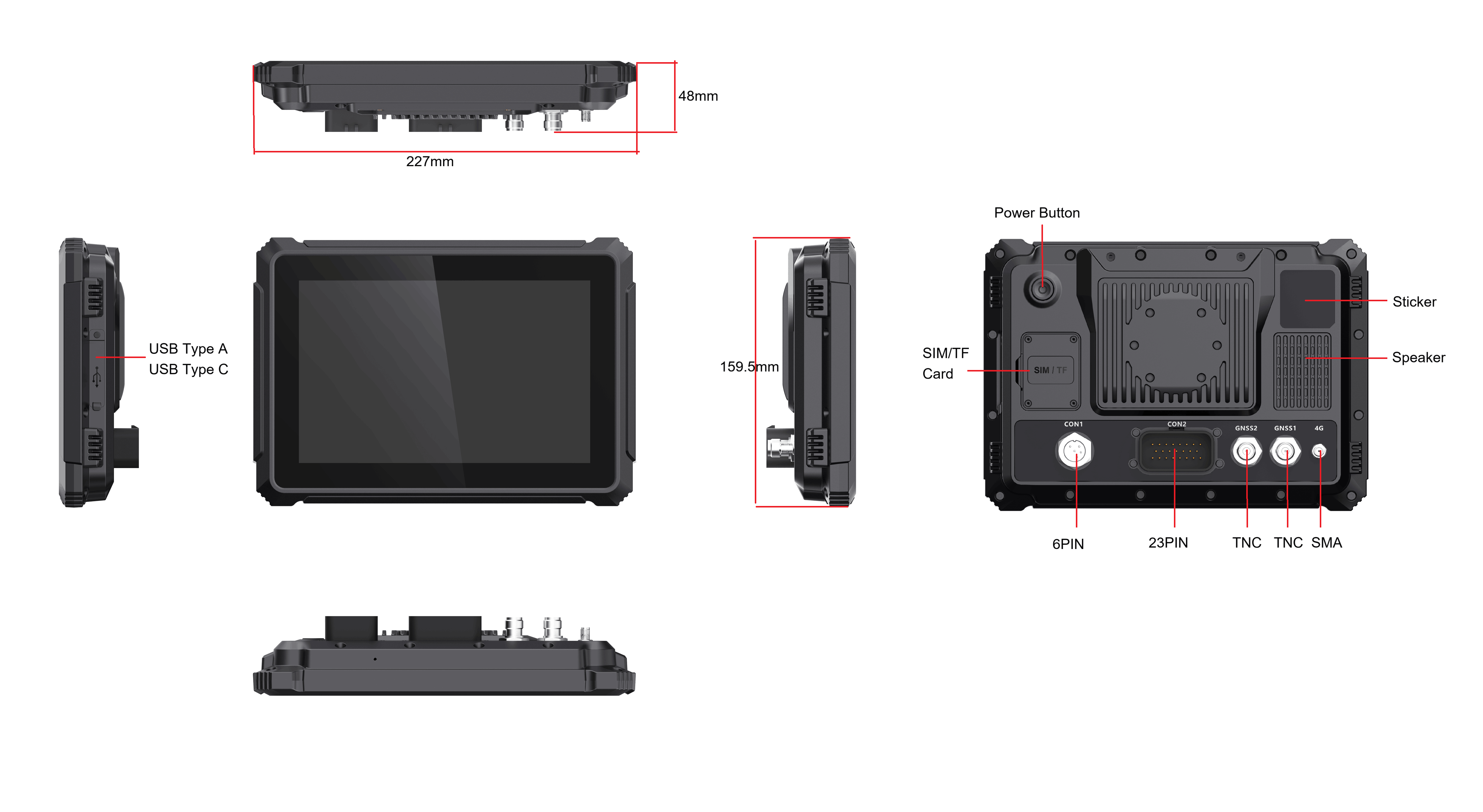
1. Inertial Navigation: Continuous navigation is possible even between tunnels and overpasses.
This is one of the most practical functions in the taxi scenario. Our equipment is equipped with u-blox M8L or M9L inertial navigation modules, specifically designed for taxi applications. When the vehicle enters a tunnel or an area where GPS signals are blocked, the system will calculate the position based on the vehicle's motion sensor data (acceleration, angular velocity, etc.) and continuously output navigation information.
In simple terms: Before entering the tunnel, how should the navigation be done? After exiting the tunnel, how should the navigation still proceed? There won't be any awkward scenes like "signal lost, repositioning in progress". For taxi drivers who constantly travel underground in the city, this means less detours, more punctual arrivals, and fewer complaints from passengers.
2. Industrial-grade Design: Designed for the Working Environment of Taxis
The average operating temperature of ordinary consumer-grade tablets is between 0°C and 35°C. However, the PDS Technology 8-inch rugged vehicle computer supports a wide temperature range of -20°C to +70°C. The power input supports a wide voltage range of 9-36V, and it is equipped with ISO 7637 automotive transient protection - this ensures that the stable operation of the device will not be affected by voltage fluctuations during vehicle startup and interference from the generator.
The design of "ACC ON" for automatic startup and "ACC OFF" for automatic shutdown also aligns with the usage habits of taxis - the driver simply starts the vehicle by turning on the ignition, and the equipment will automatically activate; when the ignition is turned off and the key is removed, the equipment will automatically and safely shut down, without the need for any additional operations.
The actual deployment data also validates the value of such devices: The deployment of similar ruggedized MDTs can reduce equipment-related maintenance costs by 25-35% and improve operational indicators by 15-25%.
3. Intelligent Scheduling and System Integration: From Manual to Systematic Approach
The core functions of this 8-inch rugged vehicle computer are order receiving, system dispatching and vehicle adjustment. It maintains real-time connection with the dispatching center via 4G LTE network. Based on the real-time location and status (empty vehicle/loaded) of the vehicles, the system can automatically match the nearest orders. Dispatching is no longer done by shouting over the phone, but by algorithms.
For fleet managers, this means:
- A decrease in idle vehicle rates, allowing each vehicle to handle more trips per day
- Shorter waiting times for passengers, leading to increased satisfaction
- Reduced labor costs for scheduling
4. Rich interfaces: All-in-one solution for fare meter, camera, and identity recognition
The equipment supports RS232/RS485 serial ports and can be connected to peripheral devices such as taxi meters, invoice printers, and ceiling lights. It also supports AHD high-definition rearview camera input and can be equipped with a front camera for driver face recognition. All peripheral devices are managed uniformly by one device, and drivers only need to face one screen and follow one set of operation logic.
Google GMS certification support means that the device can run mainstream navigation applications such as Google Maps stably, conforming to the usage habits of overseas markets.
Practical application case: 15,000 vehicle verification in Tokyo
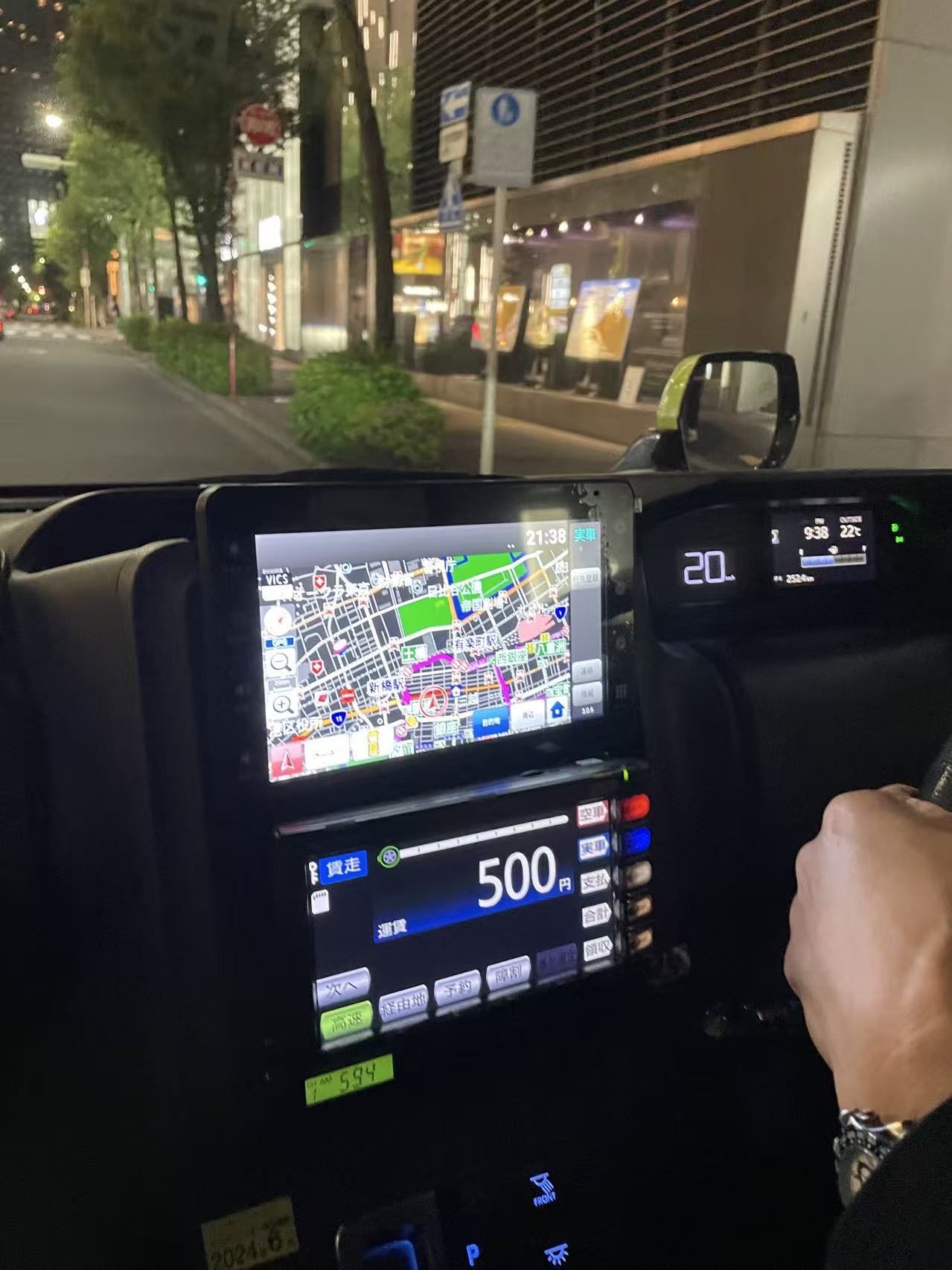
Returning to the case mentioned at the beginning of the article - in Tokyo, over 15,000 8-inch in-vehicle computers are operating stably in taxi companies there, performing core tasks such as receiving orders, dispatching, vehicle allocation, and navigation. This scale of deployment is itself the best proof of the product's reliability —— no taxi company would continue to purchase the same product when its equipment frequently breaks down.
Summary
The digitalization of the taxi industry is not a matter of whether to do it or not, but rather how to do it. A professional taxi vehicle mounted terminal is not an "intelligent hardware" that adds value; rather, it is the operational core that connects the dispatch system, the metering equipment, the navigation service, and the safety monitoring.
For taxi operators who are considering upgrading their fleets with digital technology, choosing a robust computer specifically designed for the vehicle environment is far more economical, reliable and sustainable than continuing to rely on mobile phone mounts and scattered equipment.
FAQ
Q1: Will an 8-inch screen be too small in the car?
8 inches is a balance achieved between the space constraints of the dashboard and the visibility of the operation - much larger than a mobile phone, yet not obstructing the view or being difficult to install like devices with an 10-inch or larger screen.
Q2: Which navigation maps does the device support?
The device runs on the Android system and has been certified by Google GMS. It can run mainstream navigation applications such as Google Maps, and also supports the map services provided by third-party dispatch software.
Q3: How accurate is inertial navigation?
Inertial navigation is mainly used for continuous positioning when GPS signals are temporarily lost. Its accuracy is sufficient to maintain normal navigation guidance. In scenarios such as tunnels, the system continuously outputs positioning through position calculation.
Q4: Is the equipment installation complex?
The equipment is designed for fixed installation in vehicles and supports ACC power management. Professional installers can usually complete the installation of a single unit in 1-2 hours.
Q5: Which brand of meters are supported?
The device can be connected to mainstream taxi meters via the RS232/RS485 serial port. The specific compatibility can be confirmed based on the actual meter model.
Q6:Does PDS technology offer customization services for OEM/ODM?
Yes, we support ODM/OEM.
Q7: Can multiple devices be remotely managed?
The MDM (Mobile Device Management) function is supported. Fleet managers can remotely push updates and monitor the status of the devices.
Q8: Will the equipment crash after being exposed to the sun in summer?
The operating temperature range of the equipment is -20°C to +70°C. It has an industrial-level heat dissipation design, which can cope with the high temperature inside the vehicle.
Q9: Can the vehicle recorder function be added?
Supports AHD high-definition rearview/cargo camera input, enabling video recording and real-time monitoring.
Q10: If there is already a dispatching software, can it be integrated?
The equipment runs on the standard Android system and supports API integration and installation of third-party applications. It can be integrated with the existing dispatching system.
Contact us
📧Email:[email protected]
📞Tel:+86 13421822024
🌐Website: www.szpds.com
Disclaimer
The information in this article is for reference only. PDS Technology Co., Ltd. assumes no responsibility for errors, omissions, or suitability of the content for specific applications. Product specifications are subject to change without notice. Buyers should verify all technical details with our team before use.
About PDS Technology
PDS Technology is a leading OEM/ODM manufacturer of high-precision RTK GNSS terminals and vehicle computers, serving agriculture, construction, mining, taxi, and logistics industries since 2011.
With 15+ years of automotive-grade R&D experience, we offer rugged, multi-OS (Android/Linux/OpenHarmony) devices featuring RTK centimeter-level positioning, IP66 protection, and AI-ready performance. Our IATF16949-certified factories have produced over 100,000 units deployed globally, holding 30%+ of China's agricultural auto-steering terminal market. We export to Japan, the US, UK, Turkey, Russia, and beyond.