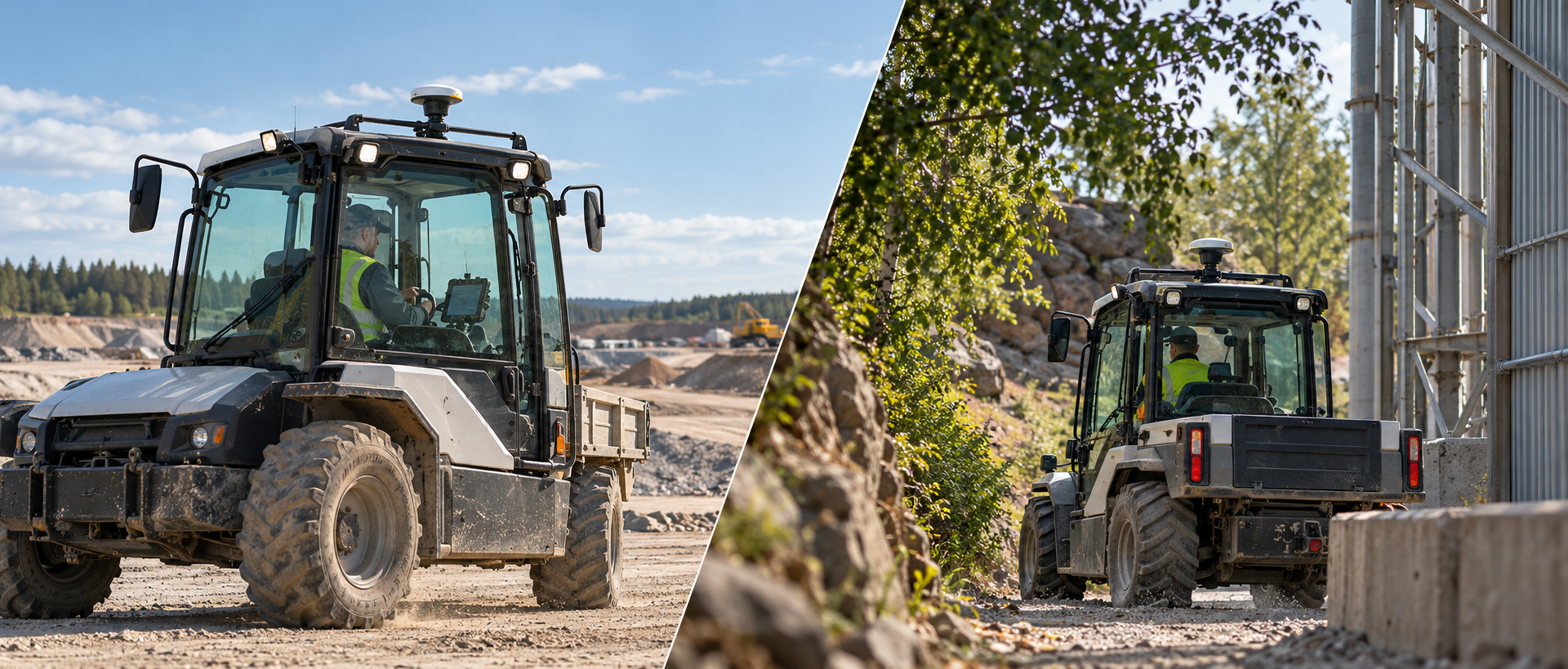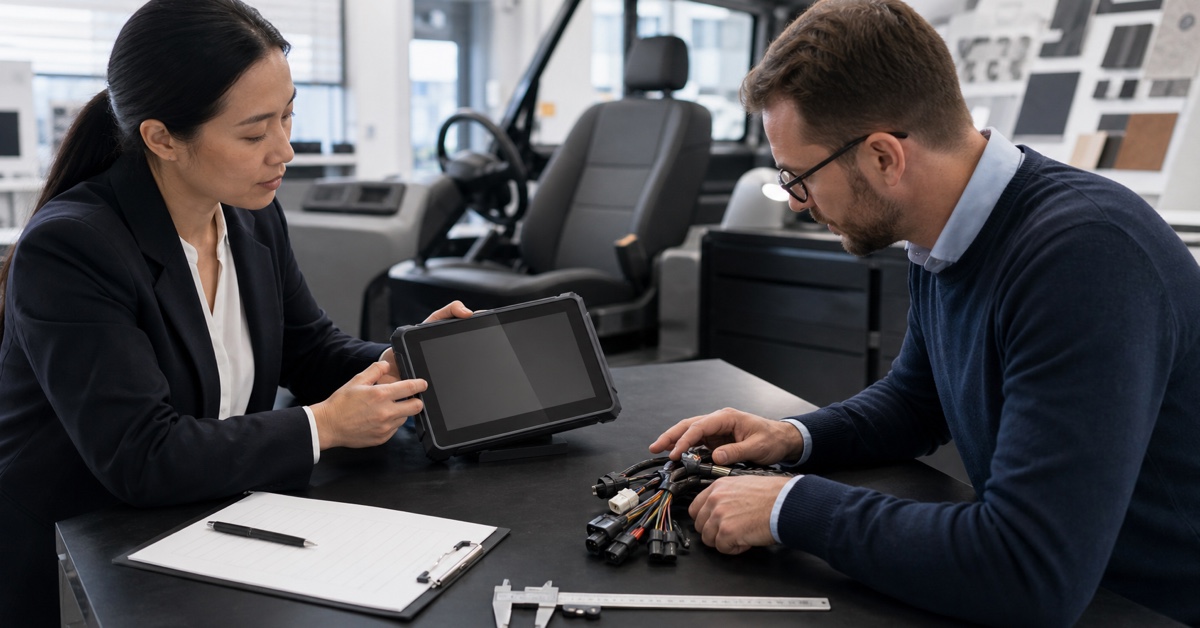

A mining vehicle terminal has to do ordinary computing work in an extraordinary operating cycle. Haul roads create persistent vibration. Fine dust settles around connectors and cooling paths. Machines may move between bright daylight, shadowed loading areas, night shifts, and washdown zones. Public mobile coverage can disappear behind a pit wall. At the same time, the operator still needs clear tasks, machine warnings, camera views, and a reliable record of the shift.
The practical buying question is therefore not “Which processor is fastest?” It is “Which complete installation will keep the workflow intact on the actual machines?” The display, bracket, harness, antennas, cameras, power logic, operating system, application, and site platform must be treated as one controlled configuration.
1. Mining conditions expose weak links quickly
Open-pit and quarry vehicles rarely fail in the same neat way as a bench test. A connector may loosen only after repeated rough-road cycles. A screen that looked bright indoors may be difficult to read when the machine turns toward the sun. A task may appear to save correctly until the network drops during an upload. Problems are usually found at the boundaries between subsystems rather than inside one specification line.
Start by separating environmental exposure from workflow exposure. Environmental questions cover dust, water, operating temperature, vibration, impact, and electrical transients. Workflow questions cover operator attention, camera priority, login, dispatch, machine identification, offline records, alarms, maintenance notes, and controlled shutdown. Both lists belong in the acceptance plan.
2. Define the operating sequence before the hardware
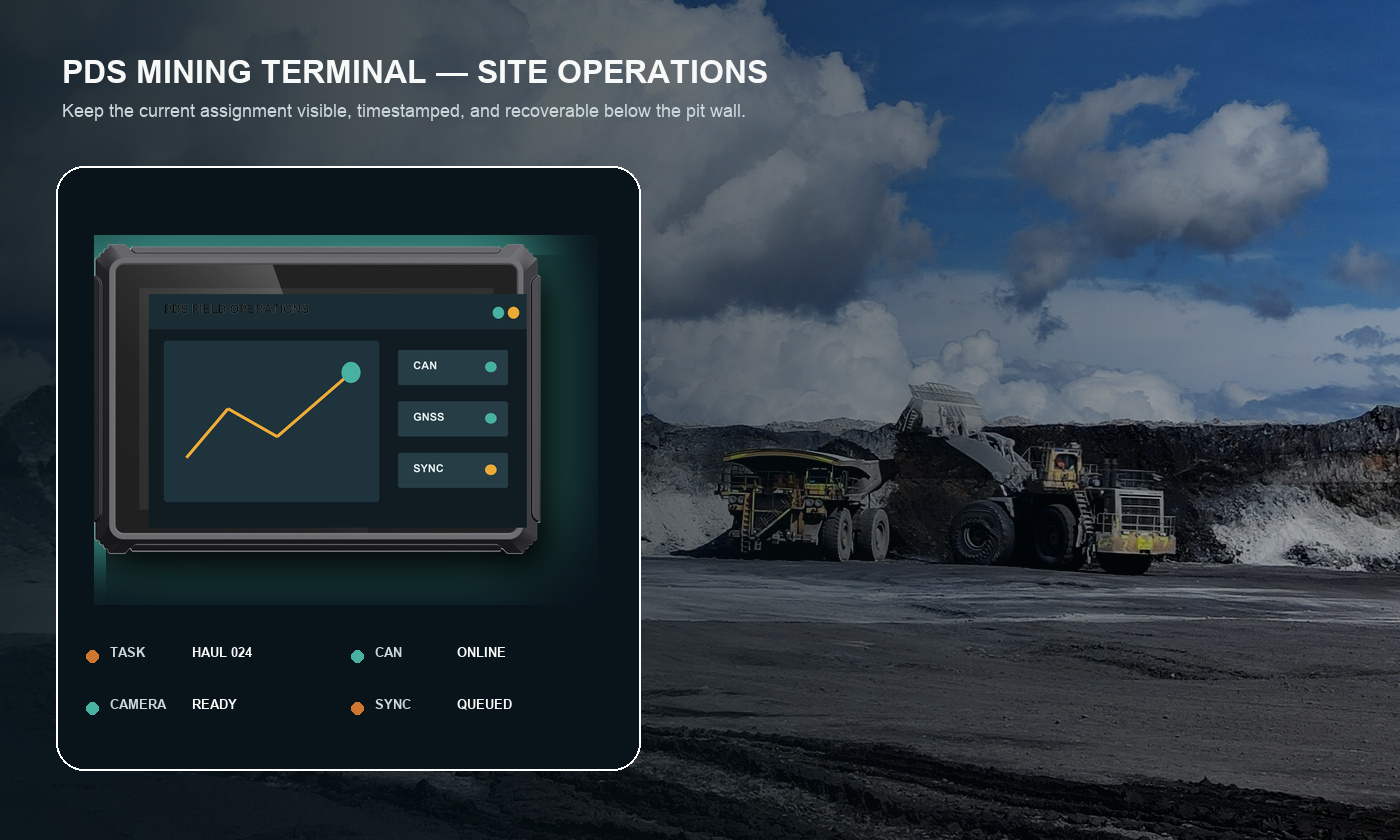
Map one complete shift. Include the first key turn, operator login, machine checks, assignment retrieval, travel to the loading point, queueing, loading, hauling, dumping, refueling, shift change, network loss, abnormal stops, and final key-off. Write down what the operator must see and what the terminal must store at each step.
This exercise turns general requirements into testable events. If a truck enters a geofenced loading zone, what changes on the screen? If the rear camera is unavailable, is there a visible failed-view warning? If the dispatch task changes while the network is unstable, which version remains authoritative? If ACC turns off with unsent records in memory, how much time is available for a safe commit?
3. Cab fit and operator visibility
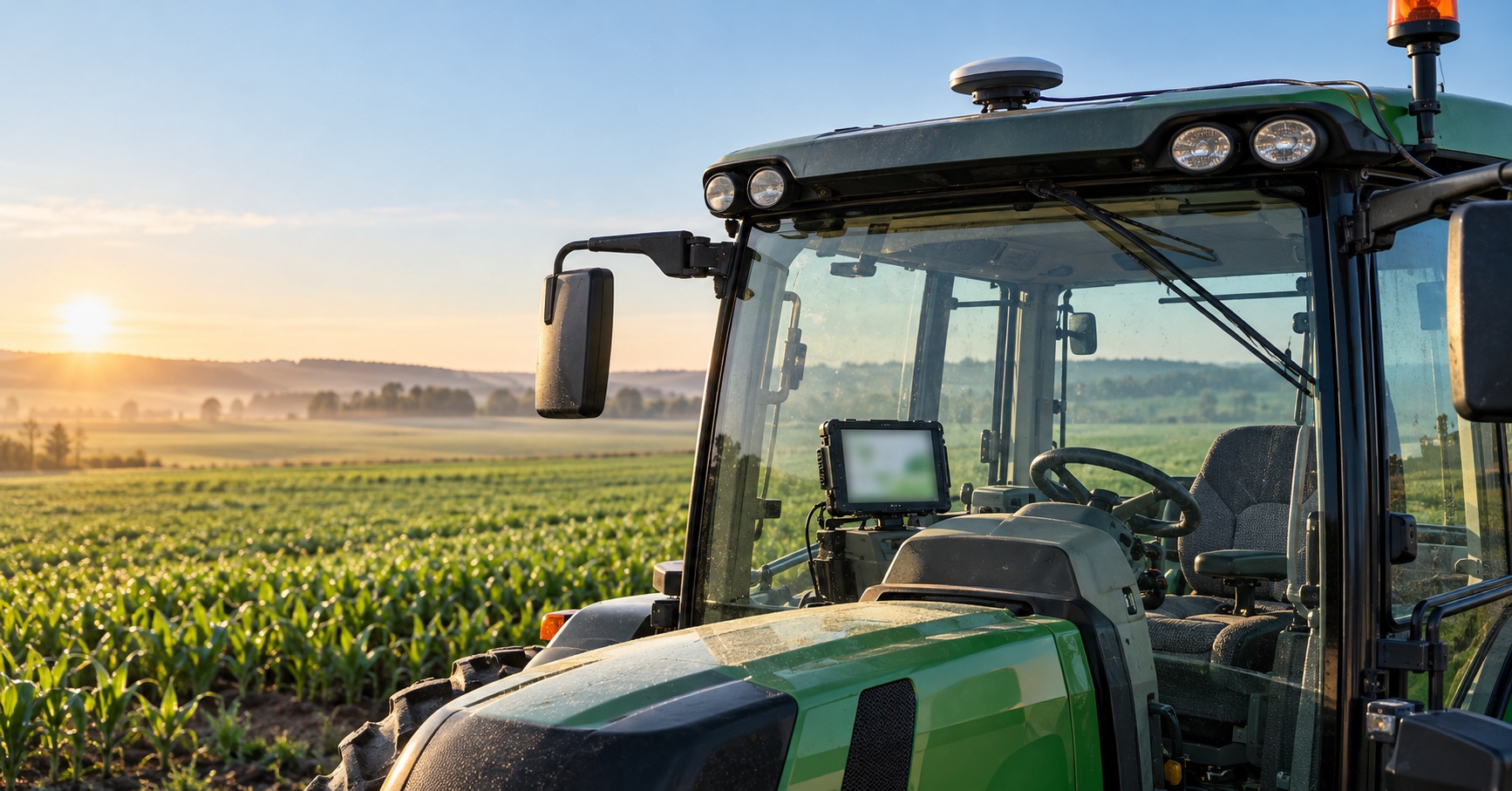
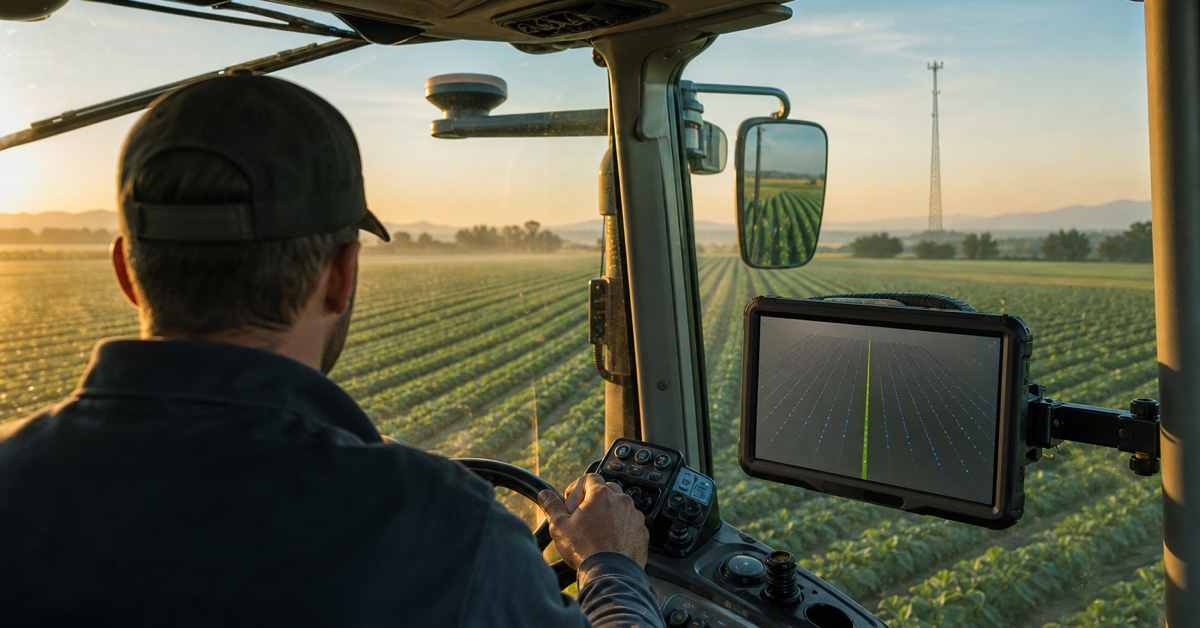
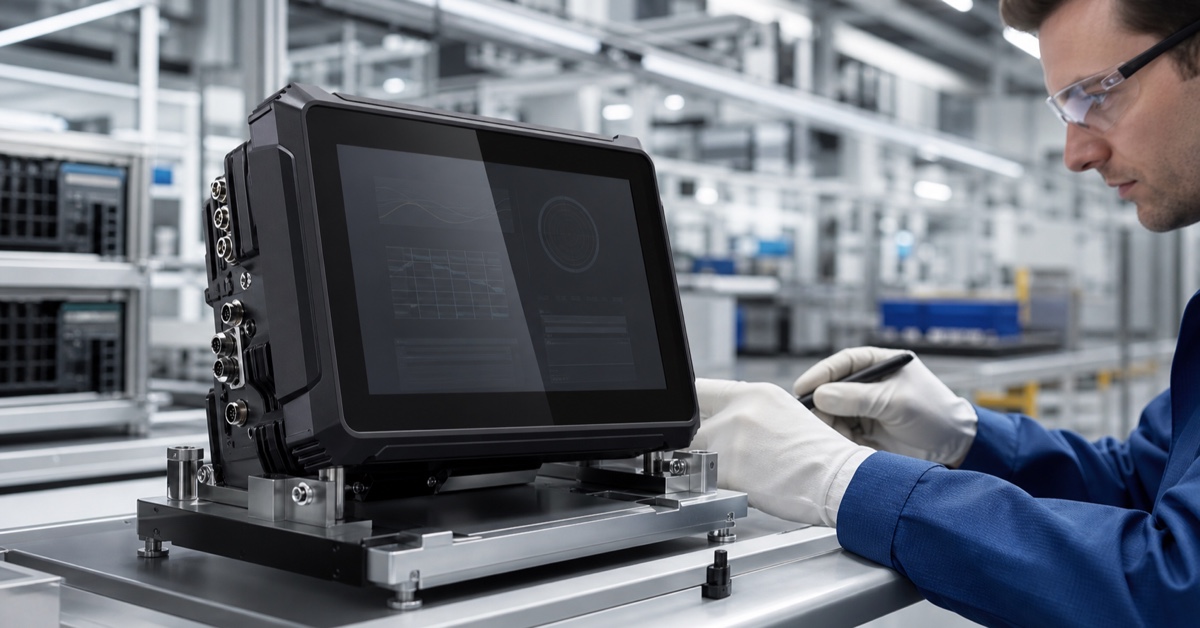
A large display is useful only when it fits the operator's normal field of view. Check the proposed bracket position from the seated eye point. It should not block mirrors, windows, machine indicators, emergency controls, or a direct view of the work area. Leave room for gloves, cable bends, connector release, and service access.
Mounting stiffness matters because a moving image or bouncing text is difficult to read even when the computer itself keeps running. Evaluate the terminal, bracket, fasteners, and mounting surface together. The final harness should be routed away from sharp edges, hot surfaces, moving joints, and places where the operator's boots or cleaning tools can pull it.
4. Protection ratings need installation evidence
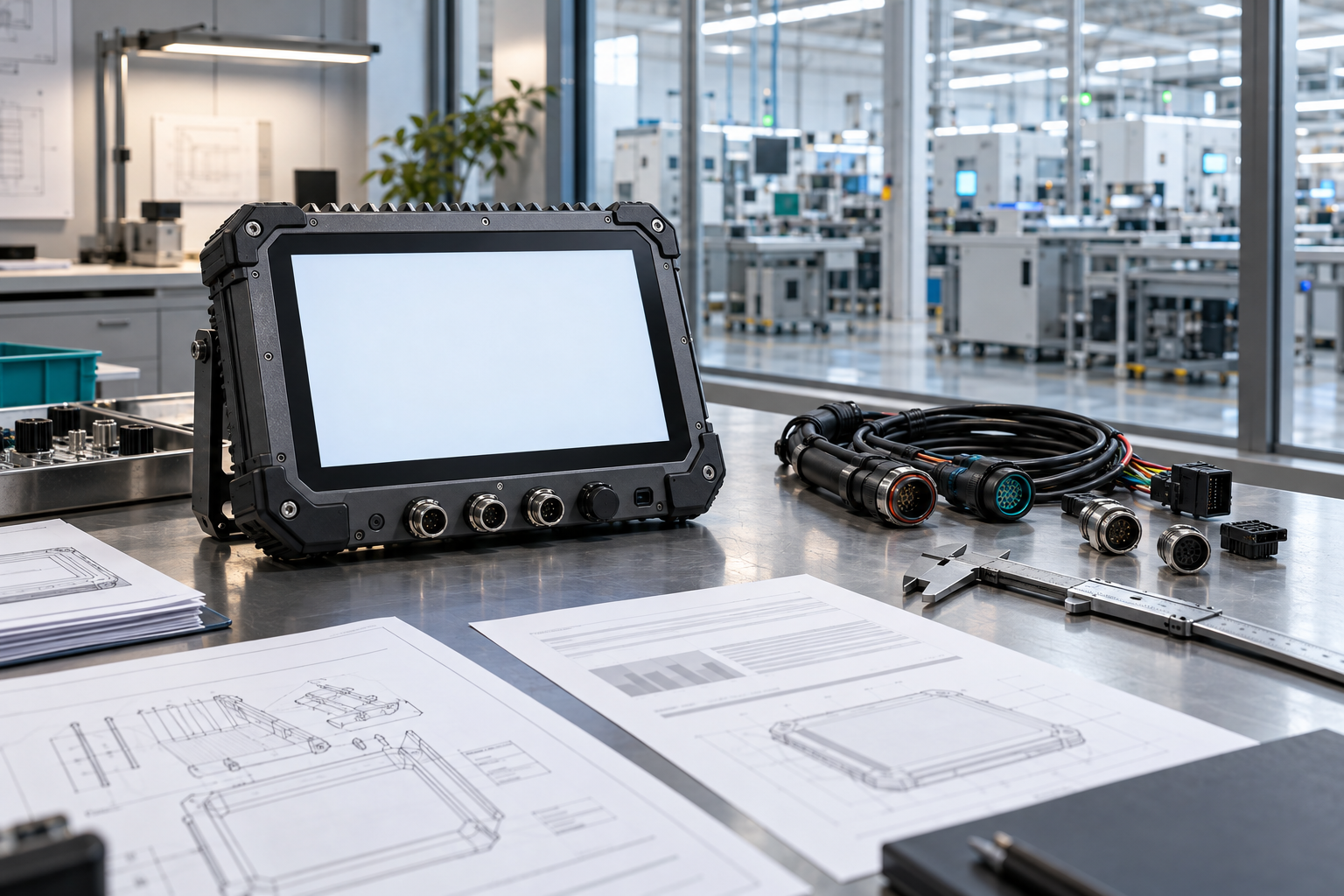
Ingress protection is a useful starting point, not a complete deployment decision. PDS T8Pro and T10Pro configurations list IP66 protection and a -20°C to +70°C operating range. Buyers should still confirm that the quoted device, connectors, harness, modem option, and enclosure details match the configuration that will be installed.
Ask how unused connectors are sealed, where cable glands face, and whether the bracket creates a path for water or abrasive dust. Review cleaning practice too. High-pressure spray aimed directly at a connector can create a different exposure from rainfall or normal washdown.
5. Power behavior is part of data integrity
Mining machines expose terminals to cranking voltage drop, alternator noise, jump-start events, aging batteries, long harness runs, and rapid key cycles. PDS T8Pro and T10Pro list 9–36V DC input, but the vehicle integration still needs a fuse plan, B+ and ACC wiring, grounding, standby-current limits, and a defined shutdown delay.
Test cold start, warm restart, repeated key cycling, low-voltage recovery, and delayed power removal on the target vehicle. A terminal that reboots without corrupting its records is more valuable than one that merely boots quickly in a demonstration.
6. Cameras, CAN, GNSS, and site connectivity
Camera inputs can support reversing, blind-spot review, bucket or body monitoring, and event documentation. Plan them from the hazard and operator task, not from the maximum channel count. Define the required view, trigger, priority, failed-camera warning, cable length, and recovery behavior.
For CAN or serial integration, confirm the channel count, electrical interface, bitrate or baud rate, termination, isolation, connector pins, message ownership, and diagnostic rules. GNSS may support fleet location, zone events, route review, or higher-accuracy applications when suitable antennas and correction services are added.
A core mining vehicle terminal workflow should remain usable when 4G coverage disappears. Keep the active job, required maps, essential machine data, and operator actions locally. Timestamp each record and test the retry logic so that reconnection does not create gaps or duplicate events.
7. PDS configurations to review
| Project situation | PDS starting point | Review focus |
|---|---|---|
| Compact cab, focused monitoring | T8Pro | 8-inch placement, configurable CAN/serial/camera interfaces, Android application |
| Multi-view HMI or richer site application | T10Pro | 10.1-inch layout, four-camera support, dual CAN, serial interfaces, optional RTK |
| Wide dashboard layout | T12 | 12.3-inch display format, custom HMI, vehicle integration, OS choice |
8. Build an evidence-based pilot
Select representative machines rather than the cleanest vehicle in the fleet. Include different cab layouts, harness lengths, battery conditions, routes, and shift patterns. Run the production-intent terminal, bracket, cameras, antennas, software image, and application. Record failures, recovery time, operator comments, and physical inspection results.
Interrupt the system deliberately. Disconnect a camera, pause the network, remove a CAN message, cycle ACC quickly, and stop power during a queued upload. The purpose is not to create a dramatic test; it is to confirm that the application reports faults clearly and returns to a known state.
9. Application example: an offline haul-cycle record
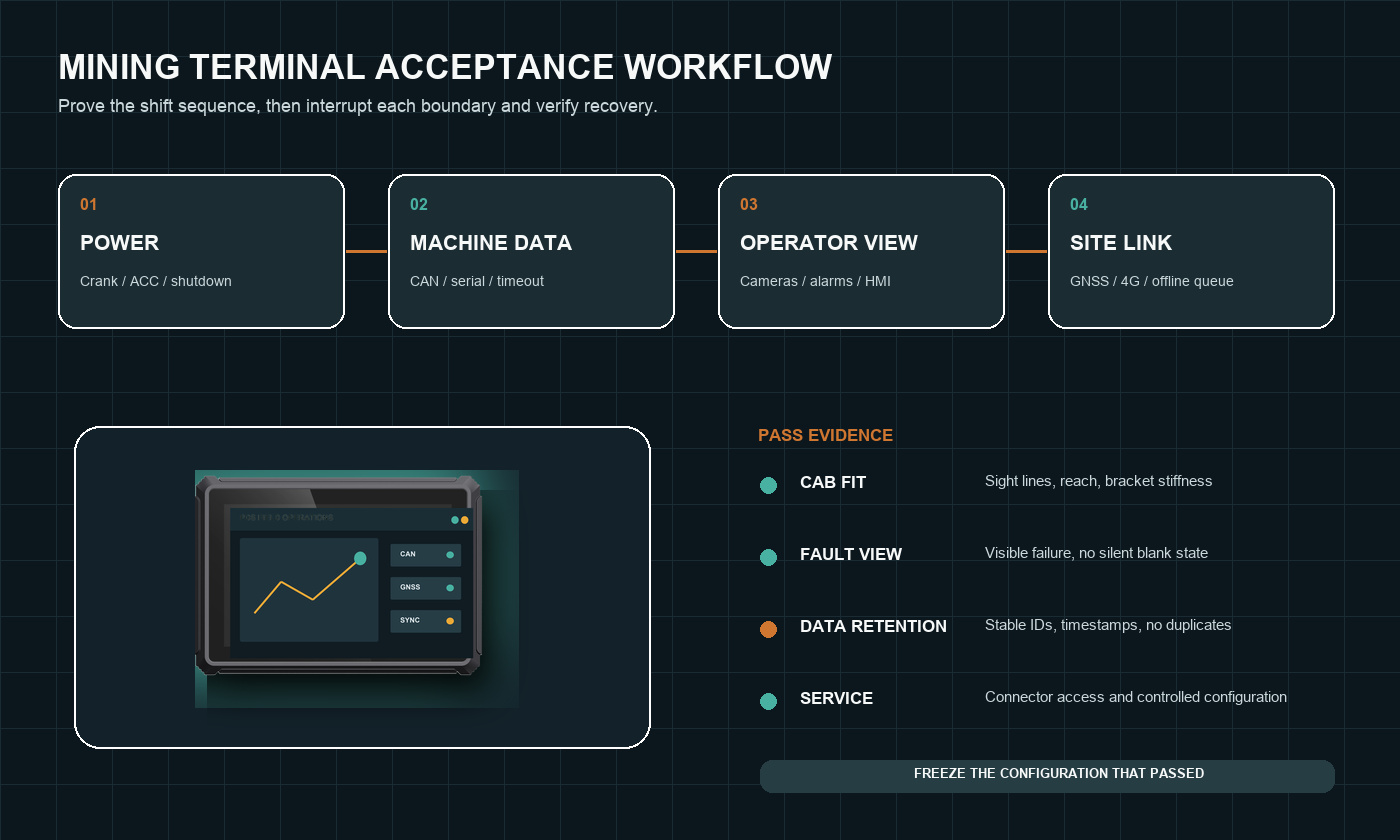
At key-on, the terminal identifies the truck, restores the latest valid assignment, and checks camera and vehicle-data connections. The operator confirms the pre-start screen and travels to the loading zone. The application records zone entry, selected machine values, and the current task locally.
Coverage disappears below the pit wall. The terminal continues to show the current assignment and stores timestamped events. After the truck reaches a connected area, the queued records upload in order. At key-off, the current haul cycle and any unsent data are committed before controlled shutdown completes.
Frequently asked questions
Is IP66 enough for every mine vehicle?
No. Review water, fine dust, connectors, operating temperature, vibration, bracket design, cable routing, and cleaning practice together. Confirm that the evidence applies to the final quoted hardware and harness.
Should a mine use an 8-inch or 10-inch terminal?
An 8-inch model may fit a restricted cab and a focused workflow. A 10.1-inch model gives more room for maps, machine data, and several camera views. Test the actual application at the proposed mounting distance.
Can the terminal keep working without mobile coverage?
It should be designed to keep essential work available locally, but the exact behavior depends on the application. Define cached tasks, local storage, timestamps, retry logic, and conflict handling before the pilot.
Choose the complete mining installation
The right mining vehicle terminal is not a screen selected in isolation. It is a validated combination of hardware, mounting, power, I/O, cameras, antennas, software, and site workflow. Define the shift first, test the production configuration on representative machines, and freeze the version that passed.
Review the PDS construction and mining solution, compare the 8-inch and 10-inch vehicle computer ranges, or contact PDS Technology with your machine list, application, interfaces, cameras, and operating conditions.
Contact us
📧Email:[email protected]
📞Tel:+86 13421822024
🌐Website: www.szpds.com
Disclaimer
The information in this article is for reference only. PDS Technology Co., Ltd. assumes no responsibility for errors, omissions, or suitability of the content for specific applications. Product specifications are subject to change without notice. Buyers should verify all technical details with our team before use.
About PDS Technology
PDS Technology is a leading OEM/ODM manufacturer of high-precision RTK GNSS terminals and vehicle computers, serving agriculture, construction, mining, taxi, and logistics industries since 2011.
With 15+ years of automotive-grade R&D experience, we offer rugged, multi-OS (Android/Linux/OpenHarmony) devices featuring RTK centimeter-level positioning, IP66 protection, and AI-ready performance. Our IATF16949-certified factories have produced over 100,000 units deployed globally, holding 30%+ of China's agricultural auto-steering terminal market. We export to Japan, the US, UK, Turkey, Russia, and beyond.