A ride hailing vehicle terminal should help a driver move from an offered job to the correct pickup and then to a completed trip without losing the assignment. For a fleet buyer, that means testing the dispatch application, vehicle installation and daily sign-in routine together. A rugged enclosure is useful, but it does not by itself resolve a cancelled booking or an incorrect pickup entrance.
Taxi and ride-hailing operations also differ from parcel rounds. The next job may arrive while the current passenger is still on board. The pickup location may change. A vehicle may be shared across shifts. The terminal needs to support those realities without turning a driver's workspace into a collection of competing screens.

AI-generated ride-hailing application illustration; not a photograph of a customer deployment.
Follow one booking from offer to completion
Ask the software provider to demonstrate the whole booking, including the less tidy steps. Offer a trip, accept it while safely parked, change the pickup instruction, cancel it and send a replacement. Check what remains on screen after each action.
The status labels need to mean the same thing in the cab and at dispatch. “Arrived” should not silently mean “passenger on board.” A message received by the device is not necessarily a message the driver has reviewed. Decide which acknowledgements are necessary, and keep the driver interaction short.
Use an anonymized example from your own operation when available. A hotel with two entrances or an airport pickup area can expose problems that a simple street address does not. Do not put real passenger names or telephone numbers into a shared demonstration account.
Ride hailing vehicle terminal fit in a passenger car
Passenger-car dashboards leave less spare space than many commercial cabs. Check the terminal's full dimensions, bracket movement and rear cable clearance. Keep air vents, controls, mirror views and airbag deployment areas clear. Have the vehicle installation reviewed by a qualified installer.
Place the running application at the intended viewing distance while the car is parked. Review a long pickup note, a destination and a cancellation message. If the driver has to lean forward or repeatedly switch screens, the interface or mounting position needs attention.
Night use deserves a separate check. A screen that is easy to read in bright daylight may be uncomfortable in a dark cabin. Test the dimming behavior, reflections in the windscreen and whether the application follows the intended day or night setting. Detailed message review and data entry should take place only when safely stopped.
Decide whether a fixed terminal solves your problem
A phone-based operation may already meet the fleet's needs. A fixed taxi vehicle mounted terminal becomes worth considering when the operator needs a managed installation, consistent vehicle power, integrated peripherals or a defined hardware configuration across shared cars.
The comparison should include support work. Who installs application updates? Who replaces a damaged cable? Can the workshop restore a spare terminal without asking a driver to lend a personal account? Put these questions next to purchase price and screen size.
Also keep the boundaries clear. A vehicle computer is not automatically a certified taximeter, payment terminal or legally required recording device. Those functions may require separate equipment and approvals. Confirm the local requirements with the responsible specialists before including them in the hardware scope.
Check the application and Google-service requirements early
An Android version number is only one part of compatibility. Give the supplier the exact application package and its dependencies. Ask whether it requires Google services, specific device certification, a managed deployment method or particular peripheral permissions.
PDS's taxi dispatch solution describes customized 8-inch deployments and Google-service compatibility in that context. Buyers should confirm the certification and software image for the exact unit being quoted. Do not assume that a feature described for an ODM project applies to every standard model or every country.
Run the application on the proposed sample. Test sign-in, location access, voice prompts, job notifications and recovery after restart. If two applications must work together, test their foreground and background behavior during a complete booking. A successful installation is not the same as successful daily operation.
PDS T8 and the 8-inch configuration discussion
The PDS T8 vehicle computer provides an 8-inch hardware starting point. Its published specification lists a 1280 × 800 IPS screen, Android 10, 9–36V input and IP66 protection. PDS also lists cellular connectivity and an external handheld intercom interface.
Specify the required modem, supported bands and intended mobile operator for the deployment. Confirm the intercom accessory and application rather than assuming a complete voice service comes with the interface. For a shared taxi, ask how ignition-linked behavior, driver sign-in and application recovery will be configured together.
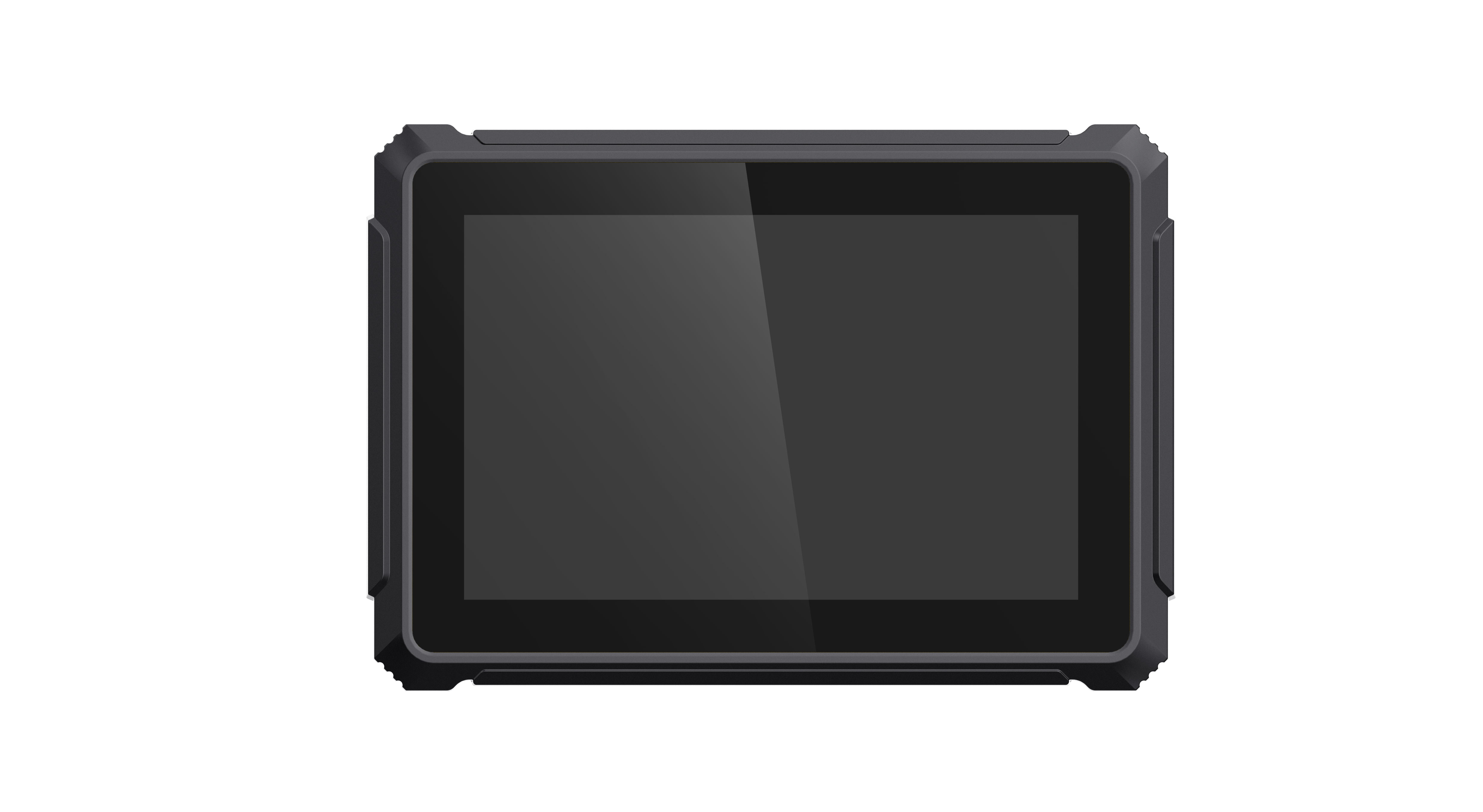
Official PDS T8 product image. Taxi software, accessories and certification must match the quoted configuration.
PDS's OEM/ODM service is relevant when the project needs a tailored enclosure arrangement, connection set or software image. Start with a written requirements list and a sample acceptance plan. Avoid treating customization as an unspecified promise to solve every issue after the production order.
Protect the handover between drivers
At a shift change, the incoming driver should receive the correct vehicle assignment without gaining unnecessary access to the previous driver's passenger records. Define sign-out behavior, retained local data and the permissions used by workshop staff.
Test an interrupted handover too. Restart the terminal before sign-out completes, then check what appears. Ask the application team how queued trip records are preserved and how the next user is prevented from accidentally changing them. These are application controls that must be designed and tested.
Where cameras or microphones are included, have the fleet's responsible team define notice, access and retention requirements for the deployment. Keep the procurement discussion precise: which device captures the data, where it is stored, who can retrieve it and how it is removed when the retention period ends.
A useful first-car trial
Choose a representative vehicle and run a controlled set of bookings with test data. Include a changed pickup, a cancellation, a short coverage loss and a shift handover. Check both the driver view and the dispatch record after each event. This is an example trial plan, not a claim of PDS performance results.
Let the installer inspect cable routing after normal use and ask drivers about glare, reach and notification clarity. Keep a list of specific corrections. Before expanding the fleet, repeat the important cases on the corrected configuration and document how a spare unit is put into service.
FAQs
Will a rugged terminal run every ride-hailing app?
No universal compatibility should be assumed. Confirm the app version, operating system, services, certification and deployment permissions on the exact proposed configuration. Test the complete booking workflow on a sample.
Do all taxi fleets need a separate fixed computer?
No. Compare a fixed terminal with the current phone workflow against the fleet's installation, support and integration requirements. A fixed device should solve a defined operational problem.
What information should accompany a quote request?
Send the car models, installation position, application requirements, target market and intended peripherals. Include the booking exceptions that must work in the trial. Contact PDS to review an 8-inch or customized ride hailing vehicle terminal before committing to a fleet order.
Contact us
📧Email:[email protected]
📞Tel:+86 13421822024
🌐Website: www.szpds.com
Disclaimer
The information in this article is for reference only. PDS Technology Co., Ltd. assumes no responsibility for errors, omissions, or suitability of the content for specific applications. Product specifications are subject to change without notice. Buyers should verify all technical details with our team before use.
About PDS Technology
PDS Technology is a leading OEM/ODM manufacturer of high-precision RTK GNSS terminals and vehicle computers, serving agriculture, construction, mining, taxi, and logistics industries since 2011.
With 15+ years of automotive-grade R&D experience, we offer rugged, multi-OS (Android/Linux/OpenHarmony) devices featuring RTK centimeter-level positioning, IP66 protection, and AI-ready performance. Our IATF16949-certified factories have produced over 100,000 units deployed globally, holding 30%+ of China's agricultural auto-steering terminal market. We export to Japan, the US, UK, Turkey, Russia, and beyond.