
Vehicle Computer Prototype Lead Time: What Shapes the Schedule
There is no useful vehicle computer prototype lead time for every project.
A catalog unit with an existing application follows a different path from a new enclosure, connector set or software image.
A vehicle computer prototype lead time estimate depends on the starting platform, how far requirements are frozen and which hardware, software and validation tasks are included.
“IATF 16949 is the global technical specification and quality management standard for the automotive industry.”
Source: IATF Global Oversight
A single date copied from another project hides those assumptions. A milestone plan exposes them.
The phases below describe a planning method.
Availability and timing for a PDS project must be confirmed for the selected configuration.
Name the starting point before asking for a date
A catalog platform uses existing hardware documentation. The project can focus on installation, interfaces and application tests.
A modified platform adds engineering. A new connector, housing change, firmware feature or unusual image needs design and review work.
A new terminal design has the widest scope. It may include industrial design, electronics, software, tooling, validation and production preparation.
These paths do not share one schedule. State which one applies before requesting an estimate.
Use the PDS product range to identify a possible base model. Describe the change through the OEM/ODM scope.
Freeze the inputs that drive work
The baseline should name the vehicle, use environment, mounting space, screen requirement, interfaces and software owner.
Add quantity, target sample date, acceptance plan and any market approval question.
A late interface can add connectors, drivers and tests. A changed screen or enclosure can reopen mounting and mechanical work.
The first conversation does not need perfect answers. A reliable plan does need controlled inputs.
Mark each requirement as confirmed, proposed or unknown. The unknown list is part of the schedule risk.
Separate hardware, software and validation
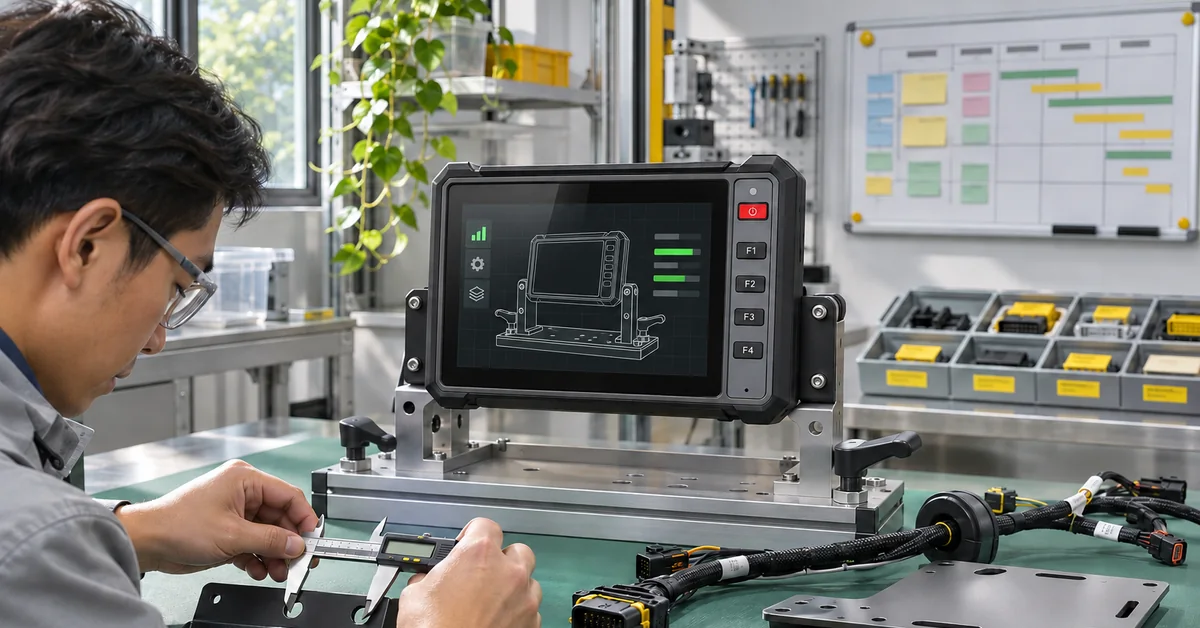
Hardware may include model selection, enclosure changes, connectors, accessories and drawings.
Software may include the image, BSP, drivers, SDK access, branding and diagnostics.
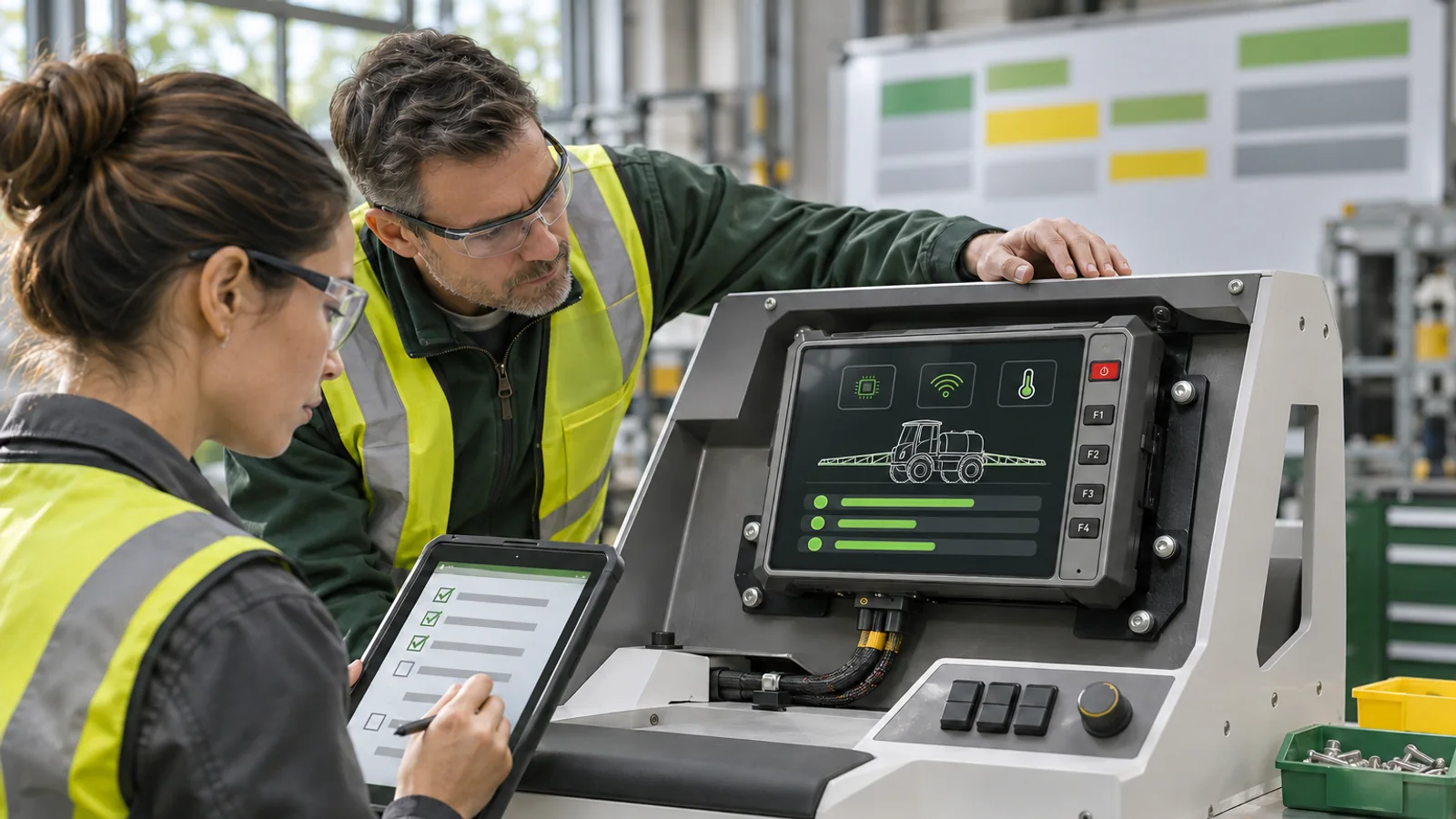
Validation may include bench checks, cab installation, power states, interface tests and requested reports.
One overall time can hide a shared dependency.
Ask which tasks can run in parallel and which need an earlier approval.
The software acceptance checklist helps expose application work before hardware build.
Put materials and tooling on the timeline
Some changes use stock materials and existing processes. Others require a new part, fixture, label or package arrangement.
Ask which items are configuration-controlled stock and which need new preparation.
A small sample can still wait on a connector drawing, approved accessory or buyer-supplied peripheral.
Provide the installation concept early.
Test the mount and cable route before the sample arrives rather than discovering a cab conflict afterward.
When tooling is required, make that dependency visible in the project plan.
Prepare the buyer's test package
The supplier may control hardware preparation while the buyer controls the application and acceptance data.
Prepare a versioned app, dependency list, nonproduction account and one repeatable operator job.
Name an engineer who can answer integration questions during the build.
For each peripheral, provide its model, firmware, cable and protocol documentation.
If hardware cannot be shipped, explain how the test will be reproduced.
An incomplete package turns a ready sample into a new scope investigation.
Plan by decision gates
| Gate | Input | Output | Schedule risk |
|---|---|---|---|
| Project definition | Application, vehicle, market and volume | Starting platform or design path | Different product classes are compared |
| Requirements freeze | Mount, power, interfaces and software | Controlled list with owners | Late changes reopen design assumptions |
| Configuration review | Options, drawings and responsibility split | Quoted configuration and open items | New engineering appears after approval |
| Sample preparation | Hardware changes and buyer test package | Identified sample and acceptance plan | Missing material or application evidence |
| Acceptance | Approved test procedure and reviewers | Pass, fail or documented limitation | No decision owner or expected result |
| Next-stage release | Closed findings and frozen baseline | Pilot or production input | A sample is treated as automatic scale-up approval |
Make the timing request easy to review
| Information | Useful format | Why it matters |
|---|---|---|
| Starting point | Catalog, modified platform or new design | Defines the engineering path |
| Vehicle and use | Machine, duty, environment and mounting | Determines configuration and evidence |
| Hardware changes | Enclosure, connectors, accessories and drawings | Exposes design and tooling work |
| Software changes | Image, BSP, SDK, app owner and recovery | Separates platform and application work |
| Quantity | Sample count and possible later batch | Supports planning without implying a commitment |
| Acceptance | Tests, evidence and decision owner | Defines when the sample is complete |
Review assumptions instead of demanding a guarantee
A schedule is a forecast built from scope. It needs assumptions, buyer dependencies and review points.
Ask which event changes the date. Examples include an unapproved interface, late application package or change after configuration review.
Assign an owner and response date to each buyer dependency.
A fixed number without a baseline is difficult to check when requirements move.
If a hard date is unavoidable, show it early. The team can then discuss acceleration, reduced scope or staged delivery.
Control changes after the sample is defined
A change can be valid even when it affects timing. The effect still needs to be visible and approved.
Record the old configuration, the proposed change and the checks it invalidates.
Update the drawing, image or acceptance plan with the decision.
Do not let a sample become an undocumented mix of the latest parts and builds.
The next unit will be impossible to compare.
The pilot-to-production checklist provides a handoff after sample approval.
Use the prototype to reduce uncertainty
The goal is not only to receive hardware.
It is to produce evidence that the selected configuration meets the project requirements.
Agree what the sample must prove before it ships. Define the job, conditions, evidence and decision owner.
A clean demonstration without a recorded build may not support the next purchase stage.
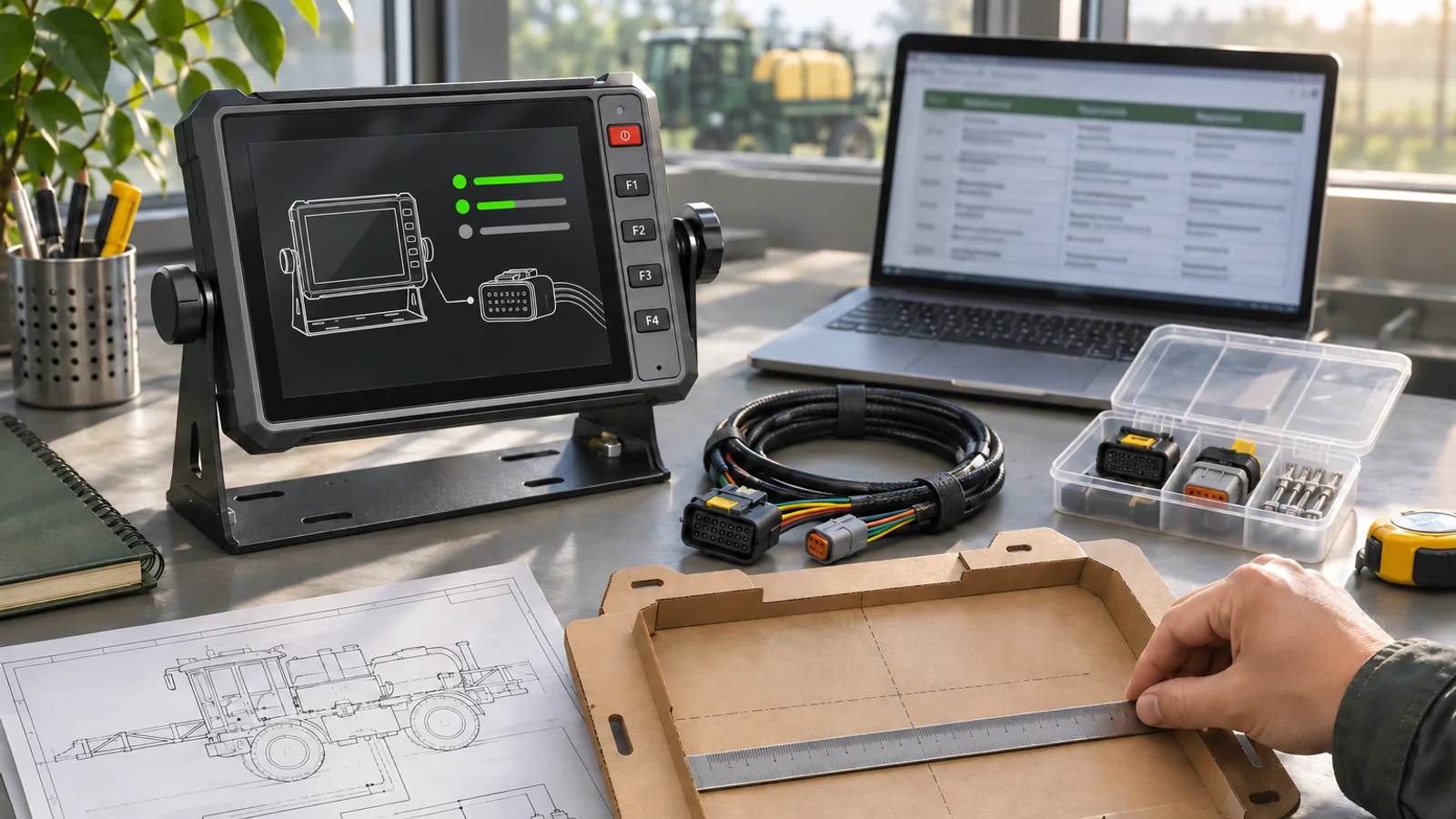
For a PDS timing discussion, prepare the RFQ inputs, review the customization scope and use the project page.
FAQ
What is the standard lead time for a vehicle computer prototype?
No single time applies to every platform and change. Define the design, requirements, software and tests first.
Is a catalog model always faster?
It usually reduces hardware engineering. An unresolved interface or app can still delay acceptance.
Which requirements should be frozen first?
Start with vehicle, mount, interfaces, software owner and acceptance plan.
Can the buyer provide the app after the sample arrives?
It may be possible, but it delays the evidence the sample can produce.
Does a sample order guarantee a production order?
No. Sample and production scopes may use different quantities, tests and terms.
What commonly changes the schedule?
Late requirements, incomplete interface data, app dependencies and changes after configuration review.
Can certification timing be estimated before the market is known?
No. The market, vehicle and wireless configuration determine which evidence may be needed.
How many samples should be requested?
The test plan, installation variants and repeatability requirement determine the count.
Should tooling appear in the prototype estimate?
Yes, when the hardware change requires new tools, fixtures or production preparation.
When can production planning begin?
When sample results and remaining exceptions are understood and the baseline is traceable.
Contact us
Email: [email protected]
Tel: +86 13421822024
Website: www.szpds.com
About PDS Technology | Contact PDS Technology | Privacy and terms inquiries
Disclaimer
The information in this article is for reference only. PDS Technology Co., Ltd. assumes no responsibility for errors, omissions, or suitability of the content for specific applications. Product specifications are subject to change without notice. Buyers should verify all technical details with our team before use.
About PDS Technology
PDS Technology is a leading OEM/ODM manufacturer of high-precision RTK GNSS terminals and vehicle computers, serving agriculture, construction, mining, taxi, and logistics markets since 2011.
With 15+ years of automotive-grade R&D experience, we offer rugged, multi-OS (Android/Linux/OpenHarmony) devices featuring RTK centimeter-level positioning, IP66 protection, and AI-ready performance. Our IATF16949-certified factories have produced over 100,000 units deployed globally, holding 30%+ of China's agricultural auto-steering terminal market. We export to Japan, the US, UK, Turkey, Russia, and beyond.